Honeycrisp Apple
Malus domestica 'Honeycrisp'
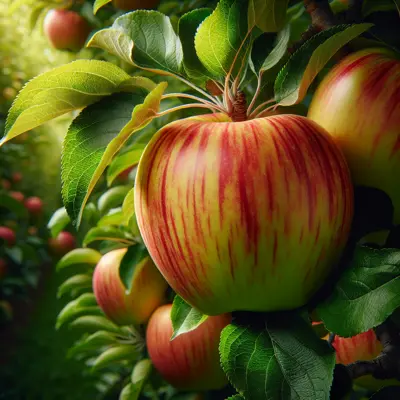
The apple that revolutionized the industry with its explosive crunch and perfect sweet-tart balance. Developed at the University of Minnesota, Honeycrisp produces large, juicy apples with cells that burst with flavor when bitten. This cold-hardy variety stores exceptionally well and consistently ranks as America's favorite apple for fresh eating.
Harvest
120-150d
Days to harvest
Sun
Full sun to partial shade
Zones
4–9
USDA hardiness
Height
15-30 feet
Planting Timeline
Showing dates for Honeycrisp Apple in USDA Zone 7
All Zone 7 fruit-tree →Zone Map
Click a state to update dates
Honeycrisp Apple · Zones 4–9
Growing Details
Complete Growing Guide
Light: Full sun (6 or more hours of direct sunlight a day), Partial Shade (Direct sunlight only part of the day, 2-6 hours). Soil: Clay, Loam (Silt), Sand. Soil pH: Alkaline (>8.0), Neutral (6.0-8.0). Drainage: Good Drainage, Moist, Occasionally Dry. Height: 15 ft. 0 in. - 30 ft. 0 in.. Spread: 15 ft. 0 in. - 30 ft. 0 in.. Spacing: 24-60 feet. Growth rate: Medium. Maintenance: High. Propagation: Grafting, Seed. Regions: Coastal, Mountains, Piedmont.
Harvesting
Large, round, firm fruits that often have a waxy coating. Some varieties ripen late summer and some in the fall.
Color: Gold/Yellow, Green, Red/Burgundy. Type: Pome. Length: > 3 inches. Width: > 3 inches.
Garden value: Edible
Harvest time: Fall, Summer
Edibility: Fruits can be eaten raw and cooked in a variety of dishes.
Storage & Preservation
Fresh Honeycrisp apples store exceptionally well when kept at 32-35°F with 90-95% humidity – conditions found in most refrigerator crisper drawers. They'll maintain quality for 3-4 months under proper storage, far longer than most apple varieties. Avoid storing at room temperature for more than a week, as the cellular structure breaks down quickly in warm conditions.
For preservation, Honeycrisp freezes beautifully when sliced and treated with lemon juice to prevent browning. Their firm texture makes them excellent for dehydrating into apple chips. While they can be used for applesauce, their premium eating quality makes this somewhat wasteful – save bruised or smaller fruits for sauce-making. Consider making apple butter or canning slices in light syrup to preserve their distinctive flavor profile through winter months.
History & Origin
Origin: Central Asia to Afghanistan
Advantages
- +Attracts: Pollinators, Small Mammals
- +Edible: Fruits can be eaten raw and cooked in a variety of dishes.
Considerations
- -High maintenance
Companion Plants
Chives and nasturtiums planted around the drip line pull their weight in a couple of ways. Chives are credited with deterring aphids and suppressing apple scab, though the evidence is more folk than peer-reviewed — still, they're low-effort and don't compete aggressively for water. Nasturtiums act as a trap crop, drawing aphids away from the tree while also pulling in predatory wasps and hoverflies. Clover under the canopy fixes nitrogen and keeps pollinators active during bloom, which matters for a variety that needs a second cultivar nearby to set fruit reliably. Comfrey is worth a spot too — its roots go down 6 feet or more, pulling up calcium and potassium that shallower roots can't reach, and the cut leaves break down fast as a surface mulch under the tree.
Black walnut (Juglans nigra) is the one to site carefully around any apple planting. The roots release juglone, which moves through soil and can stunt or kill Malus domestica — Cornell Cooperative Extension puts the danger zone at up to 60 feet from the trunk. Solid grass turf is a quieter problem: it doesn't poison the tree, but it competes hard for nitrogen and water and can genuinely slow a young Honeycrisp's establishment by a full season. Keep a bare or mulched ring at least 4 feet out from the trunk. Fennel has a similar suppressive effect on neighboring plants through root exudates, so keep it on the far edge of any mixed planting.
Plant Together
Chives
Repels aphids, improves tree health, and deters Japanese beetles
Nasturtiums
Acts as trap crop for aphids and cucumber beetles, repels woolly aphids
Marigolds
Repels nematodes, aphids, and other harmful insects while attracting beneficial predators
Comfrey
Deep roots bring nutrients to surface, leaves make excellent mulch and fertilizer
Clover
Fixes nitrogen in soil, provides ground cover, and attracts beneficial insects
Dill
Attracts beneficial insects like lacewings and parasitic wasps that control apple pests
Tansy
Repels ants, mice, and various flying insects that can damage apple trees
Lavender
Repels moths and other flying pests while attracting pollinators
Keep Apart
Black Walnut
Produces juglone toxin that inhibits apple tree growth and can cause root damage
Grass Turf
Competes heavily for water and nutrients, inhibits root development
Fennel
Allelopathic properties inhibit growth of apple trees and most other plants
Nutrition Facts
Per 100g serving. % Daily Value based on 2,000 calorie diet. Source: USDA FoodData Central (FDC #168171)
Pests & Disease Resistance
Resistance
Moderate resistance to apple scab, susceptible to fire blight and bitter pit
Common Pests
Apple maggot, codling moth, aphids, scale insects
Diseases
Fire blight, apple scab, powdery mildew, bitter pit
Troubleshooting Honeycrisp Apple
What you'll see, why it happens, and what to do about it.
Fruitlets dropping prematurely in early summer, often with a small brown entry hole near the stem end
Likely Causes
- Codling moth (Cydia pomonella) larvae tunneling into developing fruit
- Apple maggot (Rhagoletis pomonella) fly activity, especially July through September
What to Do
- 1.Hang 1-2 red sticky ball traps per tree by petal fall to monitor and catch apple maggot adults
- 2.Apply kaolin clay spray to fruit every 7-10 days starting at petal fall to deter codling moth egg-laying
- 3.Pick up and destroy all dropped fruitlets immediately — don't leave them on the ground
New shoot tips wilting suddenly, turning dark brown or black, and curling into a shepherd's crook shape
Likely Causes
- Fire blight (Erwinia amylovora) — a bacterial disease that spreads rapidly during warm, wet bloom periods (65-85°F with rain)
- Infection through open blossoms or fresh pruning wounds during humid spring weather
What to Do
- 1.Prune out affected shoots 8-12 inches below the visible infection, cutting into healthy wood
- 2.Sterilize pruning tools between every single cut with a 10% bleach solution or 70% isopropyl alcohol — this is not optional
- 3.Avoid high-nitrogen fertilization in spring, which pushes the soft, fast growth that fire blight loves
Olive-green to brown velvety spots on leaves and fruit surface, appearing shortly after petal fall
Likely Causes
- Apple scab (Venturia inaequalis) — a fungal disease that overwinters in fallen leaves and releases spores during wet spring weather
What to Do
- 1.Rake and remove all fallen leaves in autumn — composting them isn't enough if your pile doesn't get hot; bag and dispose instead
- 2.Apply a copper-based or sulfur fungicide starting at green tip (before bud break) and continue on a 7-14 day schedule through petal fall
- 3.Thin the canopy with annual pruning to improve airflow, which speeds drying after rain
Sunken, brown, corky spots just under the skin of ripe or stored fruit, concentrated near the calyx end
Likely Causes
- Bitter pit — a calcium deficiency disorder in the developing fruit, even when soil calcium levels test as adequate
- Irregular watering causing inconsistent calcium uptake, or excess potassium and magnesium crowding out calcium at the root
What to Do
- 1.Apply foliar calcium sprays (calcium chloride at 0.5 lb per 100 gallons of water) every 2 weeks from 4 weeks after petal fall through harvest — NC State Extension recommends 3-6 applications for susceptible varieties, and Honeycrisp sits near the top of that susceptibility list
- 2.Hold soil moisture steady at 1-2 inches per week; calcium moves into fruit through the water stream, so drought stress translates directly to bitter pit
- 3.Thin fruit to one per cluster, spacing clusters roughly 6 inches apart — over-cropping spreads available calcium too thin across too many developing fruit
Frequently Asked Questions
How long does it take for Honeycrisp apple trees to produce fruit?▼
Can you grow Honeycrisp apples in containers?▼
What apple varieties pollinate Honeycrisp?▼
Why are my Honeycrisp apples developing dark spots?▼
When should I plant Honeycrisp apple trees?▼
Is Honeycrisp good for beginner apple growers?▼
Zone-by-Zone Planting Calendar
Growing Guides from Wind River Greens
Sources & References
External authority sources used in compiling this guide.
See the Methodology page for how this data is sourced, what's AI-assisted, and known limitations.