Stark Saturn Peach
Prunus persica 'Stark Saturn'
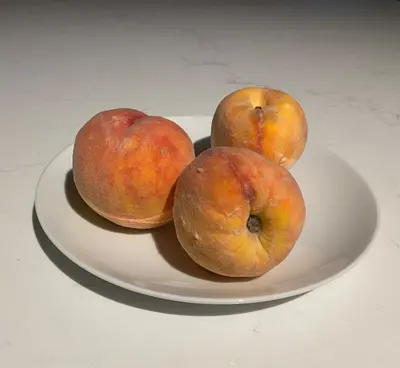
The original donut peach that revolutionized backyard fruit growing with its unique flat, disc shape and incredibly sweet, low-acid flavor that appeals to everyone, especially children. This freestone variety offers all the juiciness of traditional peaches in a fun, easy-to-eat package that's perfect for fresh snacking. The tree is vigorous and productive, making it an excellent choice for home orchards seeking something special.
Harvest
85-90d
Days to harvest
Sun
Full sun
Zones
5–9
USDA hardiness
Height
15-25 feet
Planting Timeline
Showing dates for Stark Saturn Peach in USDA Zone 7
All Zone 7 fruit-tree →Zone Map
Click a state to update dates
Stark Saturn Peach · Zones 5–9
Growing Details
Complete Growing Guide
The Stark Saturn Peach requires full sun exposure of at least six hours daily to develop its signature honey-like sweetness and maintain the low-acid profile that defines this cultivar. Plant in well-draining soil and prune aggressively in late winter to maintain an open canopy, as this variety's vigorous growth habit can become dense without intervention. Watch closely for brown rot, which is particularly problematic in humid climates and can devastate the flat fruit surface; ensure excellent air circulation and remove any mummified fruit promptly. The 85-90 day maturity means earlier harvesting than standard peaches, typically by mid-summer depending on your region. A practical tip: thin fruit to one peach every four to six inches when they reach marble size to ensure the characteristic large, sweet fruit and prevent branch breakage from the tree's heavy productivity. Avoid excessive nitrogen fertilizing, which encourages vegetative growth at the expense of fruiting.
Light: Full sun (6 or more hours of direct sunlight a day). Soil: Clay, High Organic Matter, Loam (Silt), Sand. Soil pH: Acid (<6.0), Neutral (6.0-8.0). Drainage: Good Drainage, Moist. Height: 15 ft. 0 in. - 25 ft. 0 in.. Spread: 15 ft. 0 in. - 25 ft. 0 in.. Growth rate: Rapid. Maintenance: High. Regions: Coastal, Mountains, Piedmont.
Harvesting
Harvest Stark Saturn Peaches when the flat disc reaches full size with a deep golden-yellow background color and rosy-red blush covering at least half the surface, indicating peak sweetness in this low-acid variety. The fruit should yield slightly to gentle pressure but remain firm enough to handle without bruising. These freestone peaches mature over several weeks rather than all at once, so plan for continuous harvesting every two to three days during peak season to catch fruit at its sweetest stage. A crucial timing tip: pick Saturn Peaches in early morning when temperatures are cool, as the honey-like sweetness is most concentrated before afternoon heat, and the cooler fruit handles better during storage and transport without softening excessively.
Juicy fleshy fruit in summer is yellow to orange, tinged with red with a large, rough pit (stone). They are fuzzy with hairs and called peaches. A recessive gene can cause the fruit to be smooth and hairless and they are called nectarines. Generally round or slightly oval and 3 x 3 inches.
Color: Gold/Yellow, Orange, Red/Burgundy. Type: Drupe. Length: 1-3 inches. Width: 1-3 inches.
Garden value: Edible
Harvest time: Summer
Edibility: Fruit edible raw or cooked. The seed contains hydrogen cyanide and should be discarded
Storage & Preservation
Fresh Saturn peaches keep 3-5 days at room temperature to complete ripening, developing maximum sweetness and aroma. Once fully ripe, refrigerate for up to one week in the crisper drawer. Their low-acid content makes them more perishable than traditional peaches.
For freezing, slice and remove pits, then treat with lemon juice to prevent browning. Freeze on trays before transferring to bags—frozen Saturn peaches work excellently in smoothies and baked goods for up to 8 months. Their sweet, mild flavor makes them perfect for dehydrating into chewy fruit leather or dried rings.
Canning requires added lemon juice due to the low natural acidity. The unique flat shape makes them ideal for grilling—slice in half, remove the pit, and grill cut-side down for 3-4 minutes for caramelized desserts. Their honey-like sweetness concentrates beautifully when preserved.
History & Origin
The Stark Saturn Peach emerged from Stark Bros. Nurseries' breeding efforts in the mid-20th century, representing their pioneering work with flat, disc-shaped peach mutations. While detailed documentation of the specific breeder and exact year remains limited in publicly available sources, the variety belongs to the broader "donut peach" lineage that gained prominence through commercial cultivation in China and subsequent Western introduction. Stark Bros., renowned for developing improved fruit varieties, capitalized on the novelty and consumer appeal of these naturally occurring flat peaches, establishing Saturn as their signature cultivar. The variety's vigorous growth and exceptional sweetness reflect decades of selection within this distinctive peach breeding line.
Origin: China
Advantages
- +Unique flat donut shape makes it visually distinctive and fun for children.
- +Exceptionally sweet, low-acid flavor appeals to most palates without tartness.
- +Freestone variety allows easy pit removal, perfect for fresh eating.
- +Vigorous and productive tree delivers consistent harvests in home orchards.
- +Early ripening in 85-90 days provides mid-summer fruit production.
Considerations
- -Susceptible to brown rot, requiring careful fungal disease management practices.
- -Peach leaf curl and bacterial spot require preventive spraying schedules.
- -Vulnerable to peach tree borer and oriental fruit moth infestations.
- -Moderate growing difficulty demands proper pruning and pest monitoring commitment.
Companion Plants
Chives and garlic planted around the drip line pull double duty — alliums deter aphids and produce sulfur compounds that may discourage peach tree borer (Synanthedon exitiosa) adults from laying eggs at the trunk base. Comfrey is the most practical ground cover under a peach: tap roots that can reach 6 feet down pull up calcium and potassium, and cutting the top growth two or three times a season gives you a free mulch layer without any hauling. Black walnut needs to stay out of the picture entirely — juglone moves through soil with every rain, and Prunus species are among the most sensitive genera; you'll see gradual decline before you figure out the cause.
Plant Together
Chives
Repels aphids, scale insects, and other pests that commonly attack peach trees
Garlic
Deters boring insects and fungal diseases while improving soil health
Comfrey
Deep roots bring nutrients to surface, leaves make excellent mulch and fertilizer
Nasturtiums
Acts as trap crop for aphids and cucumber beetles while attracting beneficial predatory insects
Marigolds
Repels nematodes and various garden pests with their strong scent
Lavender
Attracts pollinators and repels moths, fleas, and other harmful insects
Tansy
Repels ants, mice, and flying insects that can damage fruit
Clover
Fixes nitrogen in soil and attracts beneficial insects while providing living mulch
Keep Apart
Black Walnut
Produces juglone toxin that inhibits growth and can kill peach trees
Tomatoes
Both susceptible to similar fungal diseases and pests, increasing disease pressure
Cherry Trees
Share common pests like oriental fruit moth and diseases like brown rot
Nutrition Facts
Per 100g serving. % Daily Value based on 2,000 calorie diet. Source: USDA FoodData Central (FDC #325430)
Pests & Disease Resistance
Resistance
Susceptible to peach leaf curl, bacterial spot
Common Pests
Peach tree borer, oriental fruit moth, aphids
Diseases
Brown rot, peach leaf curl, bacterial spot
Troubleshooting Stark Saturn Peach
What you'll see, why it happens, and what to do about it.
Leaves curling, puckering, and turning red or purple in early spring, often before you notice much else is wrong
Likely Causes
- Peach leaf curl (Taphrina deformans) — a fungal disease that infects during cool, wet weather as buds swell
- Missing the spray window — once leaves have opened, fungicide does nothing
What to Do
- 1.Apply a copper-based fungicide (copper hydroxide or Bordeaux mixture) in late winter, right before bud swell — once in late January or February is usually enough in zones 6–8
- 2.Strip and bag any severely distorted leaves; don't compost them
- 3.If the tree drops most of its leaves, it will likely push a second flush — water and fertilize normally to help it recover, but expect reduced fruit that year
Fruit developing soft brown patches that spread fast, often with tan fuzzy spore tufts, right as peaches approach ripeness
Likely Causes
- Brown rot (Monilinia fructicola) — the most common reason a peach goes bad on the tree, especially in humid summers with temps between 70–85°F
- Any wound on the skin — insect puncture, hail damage, or cracking — gives the fungus an entry point
What to Do
- 1.Pick up and dispose of all mummified fruit on the ground and in the canopy — those are the primary inoculum source for next season
- 2.Thin fruit to 6–8 inches apart by late May so air moves through the canopy
- 3.If brown rot has been bad two years running, apply a myclobutanil or captan fungicide on a 7–10 day schedule starting at petal fall through harvest
Frequently Asked Questions
How long does it take for Stark Saturn peach trees to produce fruit?▼
Can you grow Stark Saturn peaches in containers?▼
What do Stark Saturn peaches taste like compared to regular peaches?▼
When should I plant Stark Saturn peach trees?▼
Do Stark Saturn peaches need another peach tree to pollinate?▼
Are Stark Saturn peaches good for beginners?▼
Zone-by-Zone Planting Calendar
Growing Guides from Wind River Greens
Sources & References
External authority sources used in compiling this guide.
See the Methodology page for how this data is sourced, what's AI-assisted, and known limitations.