Liberty Apple
Malus domestica 'Liberty'
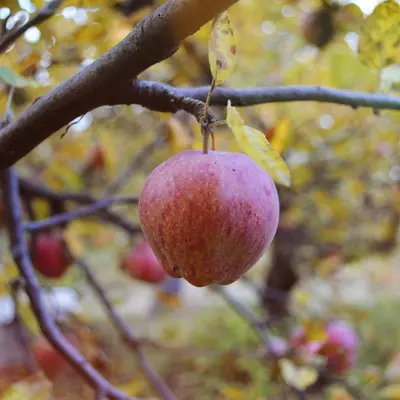
A disease-resistant apple variety bred specifically for organic and low-spray growing, making it perfect for home gardeners who want beautiful apples without intensive pest management. This medium-sized red apple offers excellent eating quality with crisp, juicy flesh and a well-balanced sweet-tart flavor reminiscent of McIntosh. Liberty trees are vigorous, productive, and their outstanding resistance to major apple diseases makes them one of the best choices for sustainable home orcharding.
Harvest
130-140d
Days to harvest
Sun
Full sun to partial shade
Zones
4–9
USDA hardiness
Height
15-30 feet
Planting Timeline
Showing dates for Liberty Apple in USDA Zone 7
All Zone 7 fruit-tree →Zone Map
Click a state to update dates
Liberty Apple · Zones 4–9
Growing Details
Complete Growing Guide
Liberty apples thrive best in full sun with well-draining soil and benefit from planting in late fall or early spring to establish roots before the growing season. Unlike many heirloom varieties, Liberty's disease resistance means you can skip routine fungicide sprays for apple scab and cedar-apple rust, though late-season cedar leaf rust can occasionally appear in humid regions—prune lower branches to improve air circulation if needed. These vigorous trees mature quickly and require consistent pruning to maintain shape and prevent overcrowding of fruit-bearing wood; thin competing branches in the dormant season rather than during growth. Water deeply once weekly during dry spells, especially in the first two years. A practical tip: plant at least two Liberty trees or a compatible pollinator nearby, as they produce better yields with cross-pollination, and thin fruit to one apple per six inches of branch in early summer to maximize size and sweetness at harvest around mid-September.
Light: Full sun (6 or more hours of direct sunlight a day), Partial Shade (Direct sunlight only part of the day, 2-6 hours). Soil: Clay, Loam (Silt), Sand. Soil pH: Alkaline (>8.0), Neutral (6.0-8.0). Drainage: Good Drainage, Moist, Occasionally Dry. Height: 15 ft. 0 in. - 30 ft. 0 in.. Spread: 15 ft. 0 in. - 30 ft. 0 in.. Spacing: 24-60 feet. Growth rate: Medium. Maintenance: High. Propagation: Grafting, Seed. Regions: Coastal, Mountains, Piedmont.
Harvesting
Liberty apples reach peak harvest readiness when the background color shifts from green to yellow-gold beneath the red blush, and the fruit achieves a firm but slightly yielding feel when gently squeezed. Harvest begins in mid- to late September in most regions, and unlike some varieties, Liberty benefits from a continuous picking approach rather than waiting for a single all-at-once harvest—pick mature fruit every 7-10 days as it reaches full color and size, allowing remaining apples to continue developing. A practical timing tip: taste-test one apple from the sunny side of the tree first; if it already exhibits the characteristic crisp texture and balanced sweet-tart flavor, the rest of the crop is likely ready for picking.
Large, round, firm fruits that often have a waxy coating. Some varieties ripen late summer and some in the fall.
Color: Gold/Yellow, Green, Red/Burgundy. Type: Pome. Length: > 3 inches. Width: > 3 inches.
Garden value: Edible
Harvest time: Fall, Summer
Edibility: Fruits can be eaten raw and cooked in a variety of dishes.
Storage & Preservation
Fresh Liberty apples store exceptionally well when handled properly. For longest storage, keep them at 32-35°F with 90% humidity — a refrigerator crisper drawer works well for small quantities. Under ideal conditions, Liberty apples maintain quality for 3-4 months, longer than most McIntosh-type varieties.
For short-term storage, keep unrefrigerated apples in a cool, dark place and use within 2-3 weeks. Never store with damaged fruits, which accelerate spoilage through ethylene production.
Liberty's firm texture makes it excellent for freezing — peel, core, and slice, then treat with ascorbic acid to prevent browning. The crisp flesh also dehydrates beautifully into apple chips. For sauce and butter, Liberty's balanced sweet-tart flavor requires less added sugar than many varieties. The natural pectin content makes Liberty ideal for jellies and preserves that set easily without additional pectin.
History & Origin
Liberty apple was developed at Cornell University's New York State Agricultural Experiment Station in Geneva during the 1960s as part of a deliberate breeding program focused on disease resistance for low-input orcharding. Created by crossing Macoun and Purdue 12-75 (itself a disease-resistant breeding line), Liberty was released in 1978. The variety was specifically engineered to inherit resistance to apple scab, mildew, and cedar-apple rust—the three most problematic fungal diseases in eastern North America. This parentage and strategic breeding methodology established Liberty as a cornerstone variety for organic and sustainable apple cultivation, particularly appealing to home gardeners seeking reduced pesticide dependency without sacrificing fruit quality.
Origin: Central Asia to Afghanistan
Advantages
- +Highly disease-resistant variety perfect for organic and low-spray gardening
- +Excellent sweet-tart flavor with crisp, juicy texture similar to McIntosh
- +Vigorous and productive trees requiring minimal pest management intervention
- +Medium-sized red apples offer beautiful appearance with outstanding eating quality
- +Ideal for home gardeners seeking sustainable orchard management practices
Considerations
- -Requires 130-140 frost-free days, limiting growing in short-season climates
- -Codling moth and apple maggot still present occasional pest pressure
- -May need cross-pollinator tree for optimal fruit set and yield
Companion Plants
Comfrey is probably the most useful plant you can grow under a Liberty Apple. Its taproot can reach 6 feet down, pulling calcium and potassium up from below where the apple roots are competing, and the leaves break down fast into a nutrient-dense mulch right at the drip line. Chives and garlic planted around the base make a low-maintenance perennial border that may disrupt aphid host-finding, and neither one puts a real dent in the moisture or fertility the tree needs. Nasturtiums and yarrow bring in parasitic wasps and hoverflies that knock back early pest pressure before it compounds — useful insurance on a tree that's already doing most of the disease-resistance work itself.
Keep grass cleared within the drip line. Turf right up to the trunk competes hard for nitrogen and — more importantly — gives voles a sheltered runway to girdle the bark over a single winter. A 3-4 inch layer of wood chip mulch from the trunk flare out to the drip line solves both problems at once. Black walnut (Juglans nigra) is a harder constraint: juglone leaches through the soil continuously, and a young apple tree planted within 15-20 feet of one is unlikely to thrive long-term.
Plant Together
Nasturtiums
Trap crop for aphids and repels woolly aphids, cucumber beetles, and codling moths
Chives
Repels aphids, improves apple flavor, and deters Japanese beetles
Marigolds
Repels nematodes, aphids, and other harmful insects while attracting beneficial predators
Comfrey
Deep roots bring nutrients to surface, acts as dynamic accumulator for potassium
Tansy
Repels ants, mice, and flying insects that can damage apple trees
Garlic
Natural fungicide properties help prevent apple scab and fire blight
Yarrow
Attracts beneficial insects and improves soil health through deep root system
Lavender
Repels moths, fleas, and mice while attracting pollinators
Keep Apart
Black Walnut
Produces juglone which is toxic to apple trees and inhibits their growth
Grass
Competes heavily for water and nutrients, especially problematic for young apple trees
Pine Trees
Acidify soil and create conditions favorable to apple scab disease
Nutrition Facts
Per 100g serving. % Daily Value based on 2,000 calorie diet. Source: USDA FoodData Central (FDC #168171)
Pests & Disease Resistance
Resistance
Excellent resistance to scab, fire blight, cedar apple rust, and powdery mildew
Common Pests
Codling moth, apple maggot, aphids (generally fewer pest issues)
Diseases
Highly resistant to major apple diseases, occasional minor leaf spot
Troubleshooting Liberty Apple
What you'll see, why it happens, and what to do about it.
Small, perfectly round holes bored into ripening fruit, with a ribbon of brown frass just under the skin
Likely Causes
- Codling moth (Cydia pomonella) — larvae tunnel straight to the core after hatch
- Poor timing on spray or pheromone trap monitoring
What to Do
- 1.Hang codling moth pheromone traps at petal fall and check them twice a week to time any intervention accurately
- 2.Apply kaolin clay (Surround WP) every 7-10 days from petal fall through mid-summer, reapplying after rain
- 3.Pick up and destroy dropped fruit immediately — larvae exit the fruit into the soil to pupate
Small, raised, corky bumps on fruit skin, sometimes with a dimple at the center, noticed at harvest
Likely Causes
- Apple maggot (Rhagoletis pomonella) — adult fly lays eggs just under the skin in mid-summer
- Adult fly pressure going unmonitored through June and July
What to Do
- 1.Hang red sticky sphere traps (1 per dwarf tree, 1-2 per standard-size tree) by mid-June and replace when covered
- 2.Bag individual fruit clusters with footies or paper bags at 10-12mm fruit diameter — labor-intensive but highly effective without sprays
- 3.Remove all mummified or dropped fruit weekly; maggot populations build from neglected windfalls
Small, irregular brown or purple spots on leaves in mid-summer, no rapid spread, no significant defoliation
Likely Causes
- Minor fungal leaf spot — Liberty's resistance covers apple scab (Venturia inaequalis), fire blight (Erwinia amylovora), and cedar apple rust (Gymnosporangium juniperi-virginianae), but some secondary leaf spot fungi can still get a foothold in wet summers
- Restricted airflow from an unpruned, overcrowded canopy
What to Do
- 1.Prune for an open center or modified central leader shape — if you can't toss a hat through the canopy, thin it out more
- 2.Rake and bag fallen leaves in autumn rather than leaving them to overwinter under the tree
- 3.No fungicide is typically warranted for Liberty — track severity year over year before reaching for a spray
Frequently Asked Questions
How long does Liberty apple take to grow and produce fruit?▼
Is Liberty apple good for beginner gardeners?▼
Can you grow Liberty apple trees in containers?▼
What does Liberty apple taste like compared to other varieties?▼
When should I plant Liberty apple trees?▼
Do Liberty apple trees need a pollinator?▼
Zone-by-Zone Planting Calendar
Growing Guides from Wind River Greens
Sources & References
External authority sources used in compiling this guide.
- ExtensionNC State Extension
- USDAUSDA FoodData Central
See the Methodology page for how this data is sourced, what's AI-assisted, and known limitations.