Dwarf Red Delicious Apple
Malus domestica 'Red Delicious' (dwarf rootstock)
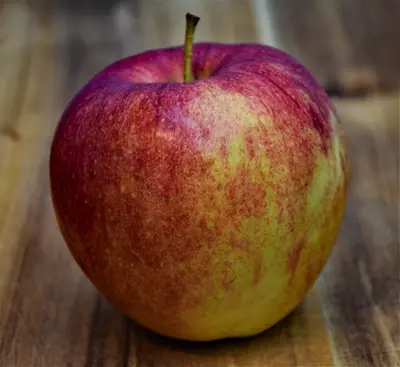
The classic American apple in a space-saving dwarf form that makes it perfect for small yards and containers. Despite mixed reviews of commercial fruit, home-grown Red Delicious apples offer much better flavor and the iconic deep red color that made this variety famous. This dwarf version produces full-sized apples on a tree that stays manageable for easy harvesting.
Sun
Full sun to partial shade
Zones
4–9
USDA hardiness
Height
15-30 feet
Planting Timeline
Showing dates for Dwarf Red Delicious Apple in USDA Zone 7
All Zone 7 fruit-tree →Zone Map
Click a state to update dates
Dwarf Red Delicious Apple · Zones 4–9
Growing Details
Complete Growing Guide
Plant Dwarf Red Delicious in full sun (minimum six hours daily) and well-draining soil to prevent root rot, a particular concern for this rootstock. Space trees 12-15 feet apart to ensure adequate air circulation, which reduces scab and powdery mildew—fungal diseases that compromise the signature deep red coloring. Red Delicious requires cross-pollination with a compatible variety like Gala or Honeycrisp; without it, fruit set suffers dramatically. Prune in late winter while dormant to maintain the compact dwarf form and improve interior light penetration, which directly affects color development in the fruit. Monitor closely for codling moth and apple maggot, which are attracted to this variety's sweet flesh; use pheromone traps or bagging techniques starting in early summer. One essential tip: thin fruit to one apple every six inches in late spring to ensure full-sized apples with superior flavor and vibrant color, rather than numerous undersized specimens.
Light: Full sun (6 or more hours of direct sunlight a day), Partial Shade (Direct sunlight only part of the day, 2-6 hours). Soil: Clay, Loam (Silt), Sand. Soil pH: Alkaline (>8.0), Neutral (6.0-8.0). Drainage: Good Drainage, Moist, Occasionally Dry. Height: 15 ft. 0 in. - 30 ft. 0 in.. Spread: 15 ft. 0 in. - 30 ft. 0 in.. Spacing: 24-60 feet. Growth rate: Medium. Maintenance: High. Propagation: Grafting, Seed. Regions: Coastal, Mountains, Piedmont.
Harvesting
Dwarf Red Delicious apples reach peak harvest readiness when they display the signature deep crimson color covering at least 75 percent of the fruit surface and feel slightly soft when gently squeezed. The apples should detach easily from the branch with a simple twist—resistance indicates they need more time. Unlike single-harvest varieties, Red Delicious produces fruit over an extended period, allowing you to pick selectively over several weeks rather than all at once. Harvest in late September through October for optimal sweetness and crispness, as premature picking results in mealy, bland fruit. Check your tree every few days once color development begins, as home-grown Red Delicious apples develop significantly better flavor than commercial counterparts when allowed to fully ripen on the branch.
Large, round, firm fruits that often have a waxy coating. Some varieties ripen late summer and some in the fall.
Color: Gold/Yellow, Green, Red/Burgundy. Type: Pome. Length: > 3 inches. Width: > 3 inches.
Garden value: Edible
Harvest time: Fall, Summer
Edibility: Fruits can be eaten raw and cooked in a variety of dishes.
Storage & Preservation
Fresh Red Delicious apples store best in the refrigerator at 32-35°F with high humidity (90-95%). Place in perforated plastic bags in the crisper drawer where they'll maintain quality for 2-3 months. Home-grown Red Delicious stores better than commercial varieties due to optimal harvest timing.
For counter storage, keep in a cool location away from direct sunlight for up to 2 weeks. Don't store with bananas or other ethylene-producing fruits, which accelerate ripening.
Preservation options include dehydrating into apple chips at 135°F for 8-12 hours, maintaining the variety's sweet flavor well. Red Delicious makes excellent applesauce when combined with tarter varieties like Granny Smith. For longer-term storage, peel and freeze slices with lemon juice to prevent browning – frozen slices work perfectly in baked goods and maintain texture for up to 8 months.
History & Origin
The Red Delicious apple originated in Iowa around 1880 as a chance seedling discovered on Jesse Hiatt's farm, initially called "Hawkeye." Commercial propagation began in the 1890s, and the variety became America's most planted apple throughout the twentieth century. The dwarf form emerged later through grafting onto dwarfing rootstocks—a horticultural technique standardized across the nursery industry rather than a distinct breeding achievement. While specific documentation of which nursery first commercialized the dwarf Red Delicious variant remains unclear, the practice of creating dwarf fruit trees through rootstock selection became widespread by mid-century, allowing home gardeners access to standard varieties in compact forms suitable for smaller properties.
Origin: Central Asia to Afghanistan
Advantages
- +Dwarf form fits small yards and container growing perfectly
- +Home-grown fruit tastes much better than commercial Red Delicious
- +Produces full-sized apples on a manageable, easy-to-harvest tree
- +Iconic deep red color and classic American apple appeal
- +Moderate difficulty makes it accessible for most home gardeners
Considerations
- -Highly susceptible to apple scab and powdery mildew diseases
- -Requires regular pest management for codling moths and aphids
- -Needs cross-pollination from another apple variety for fruit production
- -Fire blight can rapidly kill branches in humid climates
Companion Plants
Chives and garlic planted around the drip line pull actual weight — their sulfur compounds are thought to deter aphids and reduce apple scab pressure, and at that distance they don't compete seriously for root resources. Nasturtiums and marigolds draw in predatory wasps and lacewings that keep aphid populations from building, and nasturtiums have the added trick of acting as a trap crop, pulling aphids off the tree and onto themselves. Comfrey is worth situating a few feet out from the trunk: its taproot reaches 6 feet or more and mines calcium and potassium you can chop-and-drop as a slow surface mulch. Clover in the understory fixes nitrogen and feeds ground beetles that prey on codling moth pupae overwintering in the soil.
Black walnut belongs nowhere near an apple planting — juglone leaches from the roots and decomposing hulls and will stress or kill apple trees within a wide radius. Grass is the subtler problem: in our zone 7 Georgia garden, a dense turf run right to the trunk competes hard for water and nutrients through dry summers and noticeably slows establishment in the first 3 years. Keep a cleared, mulched circle at least 3 feet out from the base. Fennel is allelopathic in its own right and tends to suppress most tree fruit planted within a few feet of it.
Plant Together
Chives
Repels aphids and helps prevent apple scab disease
Nasturtiums
Acts as trap crop for aphids and attracts beneficial predatory insects
Marigolds
Deters nematodes and aphids while attracting pollinators
Comfrey
Deep roots bring nutrients to surface, leaves make excellent mulch
Garlic
Repels aphids, borers, and other apple tree pests
Dill
Attracts beneficial insects like ladybugs and parasitic wasps
Clover
Fixes nitrogen in soil and provides ground cover to retain moisture
Lavender
Repels moths and attracts pollinators, deer resistant
Keep Apart
Black Walnut
Produces juglone which is toxic to apple trees and inhibits growth
Grass
Competes heavily for water and nutrients, especially problematic for young trees
Fennel
Allelopathic properties inhibit growth of nearby fruit trees
Nutrition Facts
Per 100g serving. % Daily Value based on 2,000 calorie diet. Source: USDA FoodData Central (FDC #168171)
Pests & Disease Resistance
Resistance
Susceptible to fire blight, apple scab, and cedar apple rust
Common Pests
Codling moth, apple maggot, aphids, scale insects
Diseases
Fire blight, apple scab, powdery mildew, cedar apple rust
Troubleshooting Dwarf Red Delicious Apple
What you'll see, why it happens, and what to do about it.
Small, circular holes bored into developing fruit, often with a ribbon of brown frass just under the skin
Likely Causes
- Codling moth (Cydia pomonella) larvae tunneling toward the core shortly after petal fall
- Missed spray window — codling moth must be treated within 250 degree-days after peak moth flight
What to Do
- 1.Hang codling moth pheromone traps in late March to track adult flight and time your spray window accurately
- 2.Apply kaolin clay or spinosad-based spray at petal fall and again 10–14 days later
- 3.Pick up and dispose of any dropped fruit immediately — don't leave it on the ground to let larvae complete their cycle
New shoot tips and blossoms turning dark brown or black, wilting into a shepherd's-crook shape in spring
Likely Causes
- Fire blight (Erwinia amylovora) — a bacterial disease that spreads fast during warm, wet weather between 65–86°F
- Overhead irrigation or rain splashing bacteria into open blossoms
What to Do
- 1.Prune out infected wood at least 8–12 inches below visible symptoms; sterilize your pruners in 70% isopropyl alcohol between every cut
- 2.Dispose of pruned material in the trash, not the compost pile
- 3.Apply a copper-based bactericide at early pink bud stage next season, before bloom opens
Olive-green to brown velvety spots on leaves and fruit surface, appearing in early spring
Likely Causes
- Apple scab (Venturia inaequalis) — a fungal disease that overwinters in leaf litter and releases spores during wet spring weather
- Poor air circulation from a crowded canopy or turf growing right up to the trunk
What to Do
- 1.Rake and remove fallen leaves every autumn — don't leave them under the tree
- 2.Prune annually to open the canopy so air can move through; modified leader or open center pruning both work for dwarf stock
- 3.Apply a sulfur-based fungicide starting at green tip in early spring, repeating every 7–10 days during wet periods
Bright orange or rust-colored spots on upper leaf surfaces by midsummer, sometimes with tube-like growths on the undersides
Likely Causes
- Cedar apple rust (Gymnosporangium juniperi-virginianae) — a fungal disease requiring two hosts: apple and Eastern red cedar (Juniperus virginiana)
- High populations of Eastern red cedar within a quarter-mile radius, which is nearly unavoidable across the Southeast
What to Do
- 1.Remove Eastern red cedars within 100 feet of the tree if feasible — that's the primary infection reservoir
- 2.Apply myclobutanil or sulfur fungicide from pink bud through 4–5 weeks post-petal fall, which is the window when spores are actively releasing
- 3.Note that Red Delicious carries moderate susceptibility to rust; if you're replanting after a bad run, consider a rust-resistant variety like 'Liberty' or 'Enterprise'
Frequently Asked Questions
How long does it take for dwarf Red Delicious apple trees to produce fruit?▼
Can you grow dwarf Red Delicious apple trees in containers?▼
What apple varieties pollinate dwarf Red Delicious?▼
Is dwarf Red Delicious good for beginner apple growers?▼
Why do home-grown Red Delicious apples taste better than store-bought?▼
How much space does a dwarf Red Delicious apple tree need?▼
Zone-by-Zone Planting Calendar
Growing Guides from Wind River Greens
Sources & References
External authority sources used in compiling this guide.
See the Methodology page for how this data is sourced, what's AI-assisted, and known limitations.