Dorsett Golden Apple
Malus domestica 'Dorsett Golden'
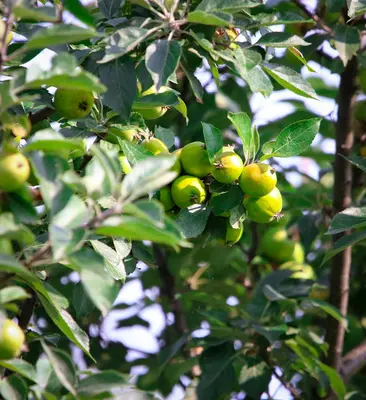
A unique apple variety specifically bred for warm climates, thriving where other apples fail in zones 8-10. This low-chill variety produces crisp, sweet apples with beautiful golden-yellow skin and can fruit in areas with mild winters. Originally developed in the Bahamas, it's perfect for southern gardeners who thought they couldn't grow apples.
Sun
Full sun to partial shade
Zones
4–9
USDA hardiness
Height
15-30 feet
Planting Timeline
Showing dates for Dorsett Golden Apple in USDA Zone 7
All Zone 7 fruit-tree →Zone Map
Click a state to update dates
Dorsett Golden Apple · Zones 4–9
Growing Details
Complete Growing Guide
This low-chill cultivar breaks the mold by requiring only 100-300 chilling hours, allowing fruit set in zones 8-10 where standard apples demand colder winters. Plant in full sun with well-draining soil and ensure consistent moisture during establishment and fruiting periods, as warm climates increase water demand. Dorsett Golden exhibits earlier bloom times than traditional varieties—typically February in southern regions—making late frost a genuine risk despite mild winters, so site it in frost-protected areas or near heat-radiating structures. The cultivar shows moderate resistance to common apple diseases but remains susceptible to fungal issues in humid southern summers; improve air circulation through selective pruning and monitor for spider mites and scale insects during dry spells. A practical approach: plant a compatible pollenizer like Anna or Ein Shemer nearby, as Dorsett Golden produces better crops with cross-pollination despite some self-fruitfulness.
Light: Full sun (6 or more hours of direct sunlight a day), Partial Shade (Direct sunlight only part of the day, 2-6 hours). Soil: Clay, Loam (Silt), Sand. Soil pH: Alkaline (>8.0), Neutral (6.0-8.0). Drainage: Good Drainage, Moist, Occasionally Dry. Height: 15 ft. 0 in. - 30 ft. 0 in.. Spread: 15 ft. 0 in. - 30 ft. 0 in.. Spacing: 24-60 feet. Growth rate: Medium. Maintenance: High. Propagation: Grafting, Seed. Regions: Coastal, Mountains, Piedmont.
Harvesting
Dorsett Golden apples reach peak harvest readiness when the skin transforms from green to a deep golden-yellow hue, typically in early to mid-summer depending on your region. The fruit should feel firm yet yield slightly to gentle pressure, and individual apples will naturally detach from the branch with a light twist when fully ripe. Unlike single-harvest varieties, Dorsett Golden produces fruit in a continuous succession over several weeks, allowing you to pick selectively rather than harvesting the entire crop at once. For optimal sweetness, wait until the apples develop their characteristic tropical undertones and the base color shifts completely golden—picking too early results in tartness that doesn't fully develop. This staggered ripening pattern actually benefits warm-climate growers by extending the harvest season and preventing sudden overwhelming yields.
Large, round, firm fruits that often have a waxy coating. Some varieties ripen late summer and some in the fall.
Color: Gold/Yellow, Green, Red/Burgundy. Type: Pome. Length: > 3 inches. Width: > 3 inches.
Garden value: Edible
Harvest time: Fall, Summer
Edibility: Fruits can be eaten raw and cooked in a variety of dishes.
Storage & Preservation
Fresh Dorsett Golden apples store best in the refrigerator at 32-35°F with high humidity, lasting 2-3 months when properly stored. For short-term storage, keep at room temperature for up to one week, though the crisp texture diminishes quickly in warm climates. Store in perforated plastic bags or the crisper drawer to maintain humidity.
For preservation, these apples excel in applesauce and light baking applications where their sweet-tart flavor and tropical notes shine. Slice and dehydrate at 135°F for 8-12 hours to create apple chips. They also freeze well when sliced and treated with lemon juice to prevent browning – blanch slices for 2 minutes before freezing for best texture retention. The natural sweetness makes them ideal for unsweetened applesauce that captures their unique flavor profile.
History & Origin
Originally developed in the Bahamas during the mid-20th century, the Dorsett Golden emerged from efforts to breed apple varieties capable of thriving in tropical and subtropical climates where traditional apples struggle. While specific breeder attribution and exact dates remain somewhat obscured in readily available documentation, the variety represents part of a broader low-chill breeding initiative focused on expanding apple cultivation beyond temperate zones. The cultivar's parentage and the institutional programs behind its development are not extensively documented in mainstream horticultural records, though its successful introduction to warm-climate regions demonstrates deliberate breeding for heat and humidity tolerance alongside fruit quality characteristics.
Origin: Central Asia to Afghanistan
Advantages
- +Thrives in warm climates where standard apples cannot grow successfully.
- +Produces sweet, crisp apples with beautiful golden-yellow skin and tropical flavor.
- +Low-chill variety fruits reliably in zones 8-10 with mild winters.
- +Originally developed in the Bahamas for warm-climate gardeners seeking apple varieties.
Considerations
- -Susceptible to apple scab and powdery mildew in humid subtropical conditions.
- -Requires vigilant pest management against codling moths and fruit flies.
- -May need cross-pollination for optimal fruit set and consistent yields.
Companion Plants
Chives planted around the drip line earn their keep through chemistry — their sulfur compounds deter aphids, which tend to cluster on new Dorsett Golden growth in early spring. Nasturtiums pull double duty as a trap crop, drawing those same aphids away from the tree, and you can yank the whole plant and compost it once it's loaded. Comfrey is one of the better understory choices under an apple: its taproot pulls calcium and potassium from 6 feet down, and when you cut it back 2-3 times a season, those minerals end up in the top few inches of soil where the tree's feeder roots actually work. Clover as a ground cover fixes atmospheric nitrogen and keeps the soil from compacting under foot traffic — especially useful in our zone 7 Georgia summers when the ground bakes between waterings.
Keep turf grass away from the trunk, at minimum out to the drip line. It competes aggressively for water and nitrogen, and that competition measurably slows establishment in the first 2-3 years. Black walnut is the one to avoid outright — it produces juglone, a compound that's directly toxic to Malus species, and the roots spread far enough that a walnut on a neighboring property line can be the reason your apple never thrives.
Plant Together
Chives
Repels aphids and improves apple tree health through natural pest deterrence
Nasturtiums
Acts as trap crop for aphids and attracts beneficial insects like ladybugs
Marigolds
Deters nematodes and various pests while attracting pollinators
Comfrey
Deep roots bring nutrients to surface and leaves make excellent mulch
Clover
Fixes nitrogen in soil and provides ground cover to retain moisture
Lavender
Repels moths and other pests while attracting beneficial pollinators
Dill
Attracts beneficial insects like parasitic wasps that control apple pests
Tansy
Deters ants, mice, and various insects that can damage apple trees
Keep Apart
Black Walnut
Produces juglone which is toxic to apple trees and inhibits growth
Grass
Competes heavily for water and nutrients, especially problematic for young trees
Pine Trees
Acidifies soil and needle drop creates unfavorable growing conditions
Nutrition Facts
Per 100g serving. % Daily Value based on 2,000 calorie diet. Source: USDA FoodData Central (FDC #168171)
Pests & Disease Resistance
Resistance
Good resistance to fire blight, moderate scab resistance
Common Pests
Codling moth, aphids, scale insects, fruit flies
Diseases
Apple scab, powdery mildew, fire blight
Troubleshooting Dorsett Golden Apple
What you'll see, why it happens, and what to do about it.
Small, brown-headed larvae tunneling through fruit, leaving frass-filled holes; fruit drops early
Likely Causes
- Codling moth (Cydia pomonella) — larvae bore into developing fruit shortly after petal fall
- Missed spray timing window; codling moth is most vulnerable at egg hatch, not after entry
What to Do
- 1.Hang one codling moth pheromone trap per tree at petal fall to track adult flight and time your response
- 2.Apply kaolin clay (Surround WP) every 7-10 days starting at petal fall as a physical barrier — reapply after rain
- 3.Pick up and destroy all dropped fruit immediately; don't leave it on the ground to cycle larvae back into the soil
Olive-green to brown scabby patches on fruit skin and leaves, sometimes causing fruit to crack or drop
Likely Causes
- Apple scab (Venturia inaequalis) — fungal disease that overwinters in fallen leaves and spreads by rain splash in cool, wet spring weather
What to Do
- 1.Rake and remove all fallen leaves in autumn — don't compost them, bag them
- 2.Apply sulfur-based fungicide (like lime-sulfur) at green tip, then every 7-14 days through petal fall during wet springs
- 3.Prune for an open canopy so the tree dries out faster after rain; aim for a central leader with no crossing branches
New shoot tips wilting suddenly and turning dark brown to black, as if scorched; the bent-over tip is called a 'shepherd's crook'
Likely Causes
- Fire blight (Erwinia amylovora) — bacterial disease that enters through blossoms and fresh wounds; spreads fastest during warm, humid weather between 75-85°F
- Over-fertilizing with nitrogen, which pushes soft, fast growth that fire blight colonizes readily
What to Do
- 1.Prune infected shoots 8-12 inches below the last visibly diseased tissue; sterilize pruners between every single cut with 70% isopropyl alcohol or a 10% bleach solution
- 2.Burn or bag the prunings — don't leave them in the garden
- 3.Back off nitrogen fertilizer; the lush flush of growth it produces is exactly what the bacteria move into
White powdery coating on new leaves and shoot tips, often causing leaves to curl or stay stunted
Likely Causes
- Powdery mildew (Podosphaera leucotricha) — fungal pathogen that thrives in warm days and cool nights; unlike most fungi, it doesn't need wet leaf surfaces to spread
What to Do
- 1.Prune off and discard heavily infected shoot tips as soon as you spot them
- 2.Apply potassium bicarbonate or neem oil every 7-10 days during active infection; sulfur works too but skip it when temps exceed 90°F or you'll burn the foliage
- 3.Thin the canopy annually — Podosphaera leucotricha hits hardest on crowded trees where air barely moves through the interior
Frequently Asked Questions
How many chill hours does Dorsett Golden apple need?▼
Can you grow Dorsett Golden apple in containers?▼
What does Dorsett Golden apple taste like?▼
When should I plant Dorsett Golden apple trees?▼
Do Dorsett Golden apples need a pollinator?▼
How long does it take for Dorsett Golden apple to bear fruit?▼
Zone-by-Zone Planting Calendar
Growing Guides from Wind River Greens
Sources & References
External authority sources used in compiling this guide.
See the Methodology page for how this data is sourced, what's AI-assisted, and known limitations.