Anna Apple
Malus domestica 'Anna'
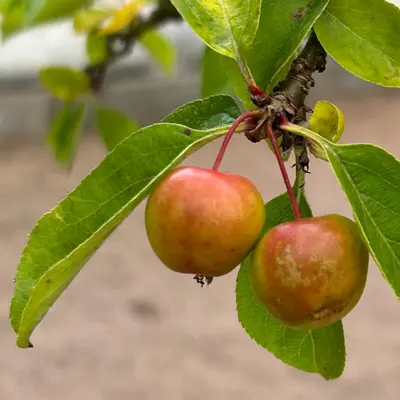
A remarkable low-chill apple variety that thrives in warm climates where traditional apples fail. Developed in Israel, Anna produces crisp, sweet-tart fruits with beautiful red striping over yellow skin. This early-ripening variety is perfect for southern gardeners who thought they couldn't grow apples in their climate.
Harvest
90-100d
Days to harvest
Sun
Full sun to partial shade
Zones
4–9
USDA hardiness
Height
15-30 feet
Planting Timeline
Showing dates for Anna Apple in USDA Zone 7
All Zone 7 fruit-tree →Zone Map
Click a state to update dates
Anna Apple · Zones 4–9
Growing Details
Complete Growing Guide
Anna Apple's low-chill requirement (fewer than 300 hours below 45°F) makes it invaluable for USDA zones 8-11, where standard apples won't set fruit. Plant in full sun with well-draining soil and space trees 15-20 feet apart to ensure good air circulation. This cultivar flowers extremely early—sometimes in late winter—so protect blossoms from unexpected frosts by avoiding frost pockets or low-lying areas. Anna is self-fertile but produces better yields with cross-pollination from other low-chill varieties like Dorsett Golden. Watch for fire blight in humid regions; prune out infected branches immediately and sterilize tools between cuts. The trees grow vigorously and may need annual pruning to maintain shape and encourage fruiting. For best results, thin fruit when marble-sized to encourage larger harvests and sweeter apples by mid-summer.
Light: Full sun (6 or more hours of direct sunlight a day), Partial Shade (Direct sunlight only part of the day, 2-6 hours). Soil: Clay, Loam (Silt), Sand. Soil pH: Alkaline (>8.0), Neutral (6.0-8.0). Drainage: Good Drainage, Moist, Occasionally Dry. Height: 15 ft. 0 in. - 30 ft. 0 in.. Spread: 15 ft. 0 in. - 30 ft. 0 in.. Spacing: 24-60 feet. Growth rate: Medium. Maintenance: High. Propagation: Grafting, Seed. Regions: Coastal, Mountains, Piedmont.
Harvesting
Anna apples reach peak harvest readiness when the background yellow skin becomes fully evident beneath the red striping and the fruit achieves medium to large size with a slight give when gently squeezed. Unlike single-harvest varieties, Anna produces fruit over an extended period, allowing gardeners to pick selectively as individual apples mature rather than harvesting the entire crop at once. For optimal flavor development, wait until late spring or early summer when the characteristic sweet-tart profile fully develops, as premature picking results in less pronounced tropical undertones. Multiple passes through the tree over two to three weeks yield the best results.
Large, round, firm fruits that often have a waxy coating. Some varieties ripen late summer and some in the fall.
Color: Gold/Yellow, Green, Red/Burgundy. Type: Pome. Length: > 3 inches. Width: > 3 inches.
Garden value: Edible
Harvest time: Fall, Summer
Edibility: Fruits can be eaten raw and cooked in a variety of dishes.
Storage & Preservation
Fresh Anna apples store exceptionally well for an early-season variety, maintaining quality for 2-3 months under proper conditions. Store unwashed apples in perforated plastic bags in your refrigerator's crisper drawer at 32-35°F with high humidity. Check weekly and remove any fruits showing soft spots to prevent spoilage spread.
For longer preservation, Anna apples excel in applesauce and can be frozen in slices after brief blanching in lemon water to prevent browning. Their firm texture makes them ideal for dehydrating—slice thinly and dry at 135°F for 8-12 hours until leathery but still pliable. The sweet-tart flavor concentrates beautifully when dried, creating excellent snacks or baking ingredients. Anna apples also ferment well into cider due to their balanced sugar and acid content.
History & Origin
Developed in Israel during the mid-20th century, the Anna apple emerged from breeding programs focused on creating low-chill varieties suitable for warm Mediterranean climates where standard apple cultivars struggled. While specific breeder attribution and exact development year remain incompletely documented in widely accessible sources, the variety represents a deliberate horticultural effort to expand apple cultivation beyond traditional temperate regions. Anna's genetic lineage reflects crosses designed to combine cold-hour requirements low enough for subtropical conditions with desirable fruit quality characteristics. The cultivar subsequently gained prominence throughout warm-climate regions globally, including southern United States, making it a foundational variety in modern warm-weather apple breeding programs.
Origin: Central Asia to Afghanistan
Advantages
- +Thrives in warm climates where traditional apple varieties cannot grow
- +Early ripening at 90-100 days provides fruit sooner than most apples
- +Sweet-tart flavor with crisp texture appeals to most fresh eating preferences
- +Requires low chill hours, making it ideal for southern gardeners
- +Beautiful red striping over yellow skin adds ornamental garden value
Considerations
- -Susceptible to multiple diseases including apple scab and powdery mildew
- -Vulnerable to codling moth and apple maggot pest damage
- -Requires cross-pollination with another compatible apple variety for best yield
- -Tropical undertones may not appeal to traditional apple flavor preferences
Companion Plants
Chives and lavender planted at the base pull double duty — both deter aphids and draw in predatory wasps that work the canopy above them. Comfrey is worth growing nearby for the leaves alone: chop and drop them as mulch and you're putting potassium and calcium back into the root zone without buying a bag of anything. Clover in the understory fixes nitrogen at ground level and stays low enough that it doesn't seriously compete for water once the tree is established. Marigolds and nasturtiums add to the pest-confusion effect and don't ask much in return.
Keep grass — tall fescue, unmowed turf, anything that gets over 6 inches — well back from the drip line. Dense sod competes for water in the same top 12 inches where Anna's feeder roots live, and it gives voles a highway to your trunk all winter. Black walnut is a flat no: juglone, the compound it releases through its roots, is phytotoxic to Malus, and the affected zone around a mature walnut can extend well past where you'd think. Potato belongs out of this neighborhood too — not because of any shared chemistry, but because rotating a disease-prone vegetable crop through an orchard understory creates more problems than it solves.
Plant Together
Chives
Repels aphids and prevents apple scab disease
Comfrey
Deep roots bring nutrients to surface and attract beneficial insects
Marigolds
Repel nematodes and attract pest-controlling beneficial insects
Nasturtiums
Act as trap crop for aphids and attract predatory insects
Clover
Fixes nitrogen in soil and provides ground cover to retain moisture
Dill
Attracts beneficial wasps and ladybugs that control apple pests
Lavender
Repels moths and ants while attracting pollinators
Tansy
Deters ants and mice that can damage apple trees
Keep Apart
Black Walnut
Produces juglone toxin that inhibits apple tree growth and fruit production
Grass (tall varieties)
Competes for water and nutrients, reducing apple tree vigor and yield
Potato
Increases susceptibility to blight diseases that can affect apple trees
Nutrition Facts
Per 100g serving. % Daily Value based on 2,000 calorie diet. Source: USDA FoodData Central (FDC #168171)
Pests & Disease Resistance
Resistance
Good resistance to fire blight, moderate resistance to apple scab
Common Pests
Codling moth, apple maggot, aphids, scale insects
Diseases
Apple scab, powdery mildew, fire blight, cedar apple rust
Troubleshooting Anna Apple
What you'll see, why it happens, and what to do about it.
Small, circular brown-gray spots on fruit surface with a worm tunnel inside at harvest
Likely Causes
- Codling moth (Cydia pomonella) — larvae bore into developing fruit shortly after petal fall
- Missed spray window; codling moth must be targeted within 250 degree-days after petal fall
What to Do
- 1.Hang codling moth pheromone traps in late winter to track adult flight and time your intervention
- 2.Apply kaolin clay or spinosad at petal fall and repeat every 7-14 days through June
- 3.At harvest, cull and bag any wormy fruit — don't leave drops on the ground to overwinter larvae
Olive-green to brown velvety spots on leaves and fruit skin, appearing in spring
Likely Causes
- Apple scab (Venturia inaequalis) — fungal disease that spreads rapidly during wet springs above 55°F
- Dense canopy with poor airflow that keeps foliage wet for extended periods
What to Do
- 1.Apply copper fungicide or sulfur at green tip and again at half-inch green, before symptoms appear
- 2.Rake and remove fallen leaves in autumn — scab overwinters in leaf litter, not in the soil
- 3.Prune the canopy to open up airflow; aim for a structure where sunlight hits the interior branches
Shoot tips wilting and turning dark brown or black in a shepherd's crook shape, often in spring
Likely Causes
- Fire blight (Erwinia amylovora) — bacterial disease that enters through blossoms and fresh wounds, spreads fast in warm, wet weather above 65°F
- Excess nitrogen pushing soft, fast-growing shoots that are more susceptible
What to Do
- 1.Prune out infected wood immediately, cutting 8-12 inches below the visible infection into healthy tissue
- 2.Sterilize pruners between every single cut with 70% isopropyl alcohol — fire blight spreads on your blade
- 3.Back off nitrogen fertilizer; don't side-dress with high-N amendments after bloom
Bright orange or rust-colored spots on the upper leaf surface, sometimes with tube-like structures on the underside, appearing early summer
Likely Causes
- Cedar apple rust (Gymnosporangium juniperi-virginianae) — fungal disease requiring both an apple host and a nearby eastern red cedar (Juniperus virginiana) to complete its life cycle
- Proximity — infection pressure rises sharply within a quarter mile of infected junipers
What to Do
- 1.Apply myclobutanil or sulfur fungicide starting at pink bud stage and repeat through petal fall
- 2.Remove eastern red cedars within 100 feet of the tree if feasible — that breaks the disease cycle
- 3.Scout nearby junipers each spring for the orange gelatinous galls and cut them off before they release spores
Frequently Asked Questions
How many chill hours does Anna apple need?▼
Can you grow Anna apple trees in containers?▼
What does Anna apple taste like?▼
Does Anna apple need a pollinator tree?▼
When should I plant Anna apple trees?▼
How long does Anna apple take to produce fruit?▼
Zone-by-Zone Planting Calendar
Growing Guides from Wind River Greens
Sources & References
External authority sources used in compiling this guide.
See the Methodology page for how this data is sourced, what's AI-assisted, and known limitations.