Scarlet Queen Turnip
Brassica rapa
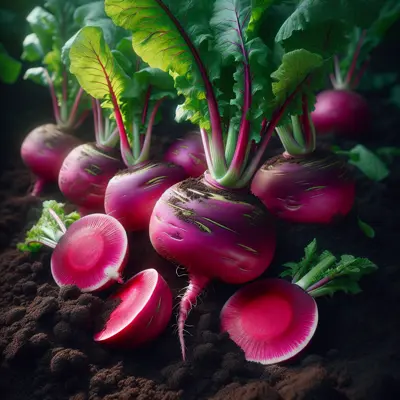
A Chinese specialty also known as Kailaan. The young plants produce quantities of long, pencil-thin, red-purple, budded flower stems. Pleasing, mild mustard taste for use raw in salads or lightly cooked in stir-fries or soups. For multiple harvesting of tender stems and leaves. Can be spring sown, but yields best when sown June through October for harvest from mid summer through winter (in mild areas). Hand harvest 8-10" long shoots by snapping them. Shoots that do not easily snap are overmature.
Harvest
37d
Days to harvest
Sun
Full sun to partial shade
Zones
5–10
USDA hardiness
Height
3 feet
Planting Timeline
Showing dates for Scarlet Queen Turnip in USDA Zone 7
All Zone 7 brassica →Zone Map
Click a state to update dates
Scarlet Queen Turnip · Zones 5–10
Growing Details
Zone-by-Zone Planting Calendar
| Zone | Indoor Start | Transplant | Direct Sow | Harvest |
|---|---|---|---|---|
| Zone 3 | March – April | May – June | May – June | June – October |
| Zone 4 | March – April | May – June | April – June | June – October |
| Zone 5 | February – March | April – May | April – May | May – November |
| Zone 6 | February – March | April – May | April – May | May – November |
| Zone 7 | February – March | April – May | March – May | April – November |
| Zone 8 | January – February | March – April | March – April | April – December |
| Zone 9 | January – January | February – March | February – March | March – December |
| Zone 10 | January – January | February – March | January – March | February – December |
Complete Growing Guide
Start preparing your turnip bed in early spring by working compost into well-draining soil—Scarlet Queen thrives in loose, fertile ground with a pH between 6.0-7.0. While this variety tolerates heavier soils better than most turnips, adding sand or aged compost will improve root development and prevent the splitting issues common in clay.
Direct sow seeds 2-4 weeks before your last frost date for spring crops, or 10-12 weeks before first fall frost for the sweetest roots. Plant seeds ¼ inch deep in rows 12 inches apart, then thin seedlings to 4-6 inches apart when they're 2 inches tall—don't skip thinning or you'll get all greens and no roots. For continuous harvest, succession plant every 2-3 weeks through early summer.
Fertilize at planting with a balanced 10-10-10 fertilizer, then side-dress with nitrogen when plants are 4 inches tall to boost leafy growth. Avoid high-nitrogen fertilizers after this point or you'll get oversized leaves and undersized roots. Consistent moisture is crucial—aim for 1 inch per week, including rainfall.
In zones 3-6, focus on fall crops as hot summers cause bitter, woody roots and premature bolting. Southern gardeners (zones 7-10) should plant in late fall through winter for best flavor. Mulch around plants to maintain soil moisture and suppress weeds, but keep mulch away from the root crown to prevent rot.
Avoid the common mistake of harvesting too late—Scarlet Queen roots become fibrous and lose their mild sweetness if left in ground beyond 60 days. In heavy clay soils, consider raised beds or containers to ensure proper drainage and easier harvest.
Harvesting
Harvest Scarlet Queen turnip greens when they're 4-6 inches tall, typically 35-40 days from sowing. Cut outer leaves first, leaving the center to continue producing. For roots, begin checking at 45 days—mature turnips should be 2-3 inches in diameter with vibrant red-purple shoulders visible above soil line.
Test readiness by gently brushing soil away from the shoulder and checking for firm, smooth skin without cracks. The best eating quality occurs when roots are golf ball to tennis ball sized. Harvest in morning when plants are fully hydrated for crispest texture.
Twist and pull roots straight up, or use a garden fork to loosen soil around larger specimens. Don't delay harvest once roots reach maturity—Scarlet Queen maintains its mild flavor longer than most turnips, but will eventually become woody and develop a stronger bite if left too long in warm soil.
Storage & Preservation
Remove greens immediately after harvest, leaving 1 inch of stem to prevent moisture loss. Store unwashed roots in perforated plastic bags in the refrigerator crisper drawer at 32-35°F—they'll keep 2-3 months under proper conditions.
For longer storage, layer roots in slightly damp sand or peat moss in a cool basement or root cellar. Turnip greens should be used within 3-5 days of harvest for best flavor and nutrition.
Scarlet Queen roots freeze well when blanched for 3 minutes, then cooled and packaged. They're excellent for fermented vegetables like turnip kraut, and the colorful skin makes beautiful pickles using standard cucumber pickle recipes. Avoid canning turnip roots as they become mushy, but greens can be pressure-canned like other leafy vegetables.
History & Origin
Scarlet Queen represents modern hybrid breeding focused on combining visual appeal with practical garden performance. Developed in the late 20th century, this variety emerged from crossing traditional purple-top turnips with selections bred for improved color intensity and dual-purpose capability.
The breeding program specifically targeted the farmers market trade, where the striking red-purple coloration commands premium prices compared to standard white turnips. Unlike many heirloom turnips that were selected purely for storage or livestock feed, Scarlet Queen was designed for fresh market sales and home gardeners wanting ornamental vegetables.
This hybrid represents the modern trend toward 'beautiful food'—vegetables that perform well in both the garden and on Instagram. The development focused on eliminating common turnip problems like splitting, excessive pith development, and bitter flavor, while maximizing the visual impact that makes vegetables marketable to contemporary consumers who eat with their eyes first.
Advantages
- +Exceptional dual-purpose harvest provides both tender greens and sweet roots from single planting
- +Superior bolt resistance allows extended growing season compared to standard turnip varieties
- +Eye-catching red-purple skin creates premium market value and ornamental garden appeal
- +Maintains mild, sweet flavor longer than most turnips before developing peppery bite
- +Excellent crack and split resistance even during irregular watering or heavy rains
- +Adapts to partial shade better than most root vegetables while still producing quality roots
- +Fast 35-day greens harvest provides quick returns while waiting for root development
Considerations
- -Higher seed cost typical of hybrid varieties compared to open-pollinated turnip types
- -Cannot save seeds for replanting due to hybrid genetics producing inconsistent offspring
- -More susceptible to flea beetle damage on young leaves than some thick-leafed turnip varieties
- -Requires consistent thinning for proper root development—overcrowded plantings produce poor roots
- -Color intensity fades if grown in too much shade, reducing its main ornamental advantage
Companion Plants
Plant Together
Nasturtiums
Acts as trap crop for flea beetles and aphids that commonly attack brassicas
Onions
Repels cabbage worms, root maggots, and other brassica pests with strong sulfur compounds
Marigolds
Deters nematodes and general garden pests while attracting beneficial insects
Garlic
Natural fungicide properties help prevent clubroot and other soil-borne diseases
Dill
Attracts beneficial wasps that parasitize cabbage worms and other brassica pests
Spinach
Shallow roots don't compete with turnips, provides living mulch and efficient space use
Carrots
Deep taproot breaks up soil for turnip development, different nutrient requirements reduce competition
Radishes
Fast-growing companion that can be harvested before turnips need full space, helps break up soil
Keep Apart
Tomatoes
Heavy nitrogen feeders that compete with turnips and may stunt root development
Fennel
Produces allelopathic compounds that inhibit growth of most brassicas including turnips
Strawberries
Compete for similar nutrients and space, both are susceptible to similar fungal diseases
Nutrition Facts
Per 100g serving. % Daily Value based on 2,000 calorie diet. Source: USDA FoodData Central (FDC #170465)
Pests & Disease Resistance
Resistance
Good resistance to splitting and bolting
Common Pests
Flea beetles, root maggots, aphids, cabbage worms
Diseases
Clubroot, black rot, powdery mildew