French Breakfast Radish
Raphanus sativus
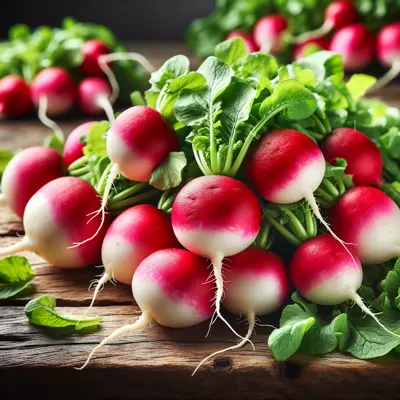
A well-maintained strain of this market staple. Longer than Nelson, with more white on the tip. Large healthy tops. After trying many strains we found this to be the best. NOTE: For longer, straighter roots, sow 15-20% more seeds per row 1/2 to 1 cm deeper, and do not irrigate unless absolutely necessary.
Harvest
21d
Days to harvest
Sun
Full sun to partial shade
Zones
2–11
USDA hardiness
Height
0-3 feet
Planting Timeline
Showing dates for French Breakfast Radish in USDA Zone 7
All Zone 7 brassica →Zone Map
Click a state to update dates
French Breakfast Radish · Zones 2–11
Growing Details
Zone-by-Zone Planting Calendar
| Zone | Indoor Start | Transplant | Direct Sow | Harvest |
|---|---|---|---|---|
| Zone 3 | March – April | May – June | May – June | May – October |
| Zone 4 | March – April | May – June | April – June | May – October |
| Zone 5 | February – March | April – May | April – May | May – November |
| Zone 6 | February – March | April – May | April – May | April – November |
| Zone 7 | February – March | April – May | March – May | April – November |
| Zone 8 | January – February | March – April | March – April | March – December |
| Zone 9 | January – January | February – March | February – March | February – December |
| Zone 10 | January – January | February – March | January – March | February – December |
Complete Growing Guide
French Breakfast radishes thrive in cool weather, making them perfect for early spring and fall plantings. Start preparing your garden bed by loosening soil to at least 6 inches deep—compacted soil will cause roots to become stunted and woody. Work in a 1-inch layer of compost, but avoid fresh manure which can cause forking and excessive leaf growth at the expense of root development.
Direct sow seeds outdoors 2-4 weeks before your last frost date. Plant seeds ½ inch deep and space them 1 inch apart in rows 6 inches apart. The key to continuous harvests is successive planting—sow new rows every 10-14 days through spring, then resume in late summer for fall crops. In zones 9-10, you can grow French Breakfast radishes through winter.
Skip starting seeds indoors entirely. Radishes develop taproots that resent transplanting, and disturbing them leads to misshapen, bitter roots. The quick 22-28 day growing cycle makes direct seeding the most reliable method.
Fertilizing is minimal—too much nitrogen creates lush tops but small, weak roots. If your soil is poor, side-dress with a balanced 10-10-10 fertilizer at planting time only. Focus instead on consistent moisture, providing about 1 inch of water weekly. Uneven watering is the biggest mistake home gardeners make with radishes, leading to woody, cracked, or pithy roots.
Thin seedlings to 2 inches apart once they're 2 inches tall—overcrowded radishes won't form proper roots. Use the thinned greens in salads. In hot climates above zone 7, provide afternoon shade during summer months to prevent bolting. French Breakfast radishes handle light frost well, actually becoming sweeter after exposure to temperatures in the low 30s.
Watch for flea beetles on young seedlings—row covers provide excellent protection during the first two weeks. Remove covers once plants are established, as the quick growing cycle usually outpaces pest damage.
Harvesting
Harvest French Breakfast radishes when roots reach 3-4 inches long and about ¾ inch wide at the shoulder. The distinctive red-and-white coloration should be vibrant, with the white bottom third clearly defined. Check readiness by gently brushing soil away from the shoulder—if it's the width of your thumb, it's ready.
Test for harvest by gently pulling one radish. Mature French Breakfast radishes should come up easily with a gentle tug and firm twist. If you meet resistance, wait another few days. The flesh should feel firm when squeezed lightly—any give indicates the radish is past prime.
Harvest in the morning when roots are crisp and full of moisture. Don't wait too long past the 28-day mark, as French Breakfast radishes quickly become woody and develop a harsh bite in warm weather. Unlike storage radishes, these are bred for immediate consumption at peak tenderness. Pull the entire crop if temperatures are climbing toward 75°F, as quality deteriorates rapidly in heat.
Storage & Preservation
Remove greens immediately after harvest, leaving ½ inch of stem to prevent bleeding. Store unwashed radishes in perforated plastic bags in the refrigerator crisper drawer at 32-40°F with high humidity. Properly stored French Breakfast radishes maintain crispness for 2-3 weeks, though flavor is best within the first week.
For longer preservation, try quick pickling—slice radishes thin and pack in rice vinegar with a touch of sugar and salt. The mild flavor takes on pickling spices beautifully and keeps for 2 months refrigerated. Lacto-fermentation also works well; quarter the radishes and ferment with 2% salt brine for tangy, probiotic-rich radishes ready in 5-7 days.
Freezing isn't recommended as it destroys the crisp texture that makes French Breakfast radishes special. Instead, plant successive crops every two weeks for continuous fresh harvests throughout the growing season.
History & Origin
French Breakfast radishes originated in France during the early 1800s, becoming a staple of Parisian breakfast tables by the 1860s. The variety was specifically developed for the French custom of eating fresh radishes with butter and coarse salt as a morning meal—a practice that continues in French cafés today.
Unlike the round radishes common in other parts of Europe, French plant breeders selected for this distinctive oblong shape and bicolor pattern to create an elegant presentation suitable for fine dining. The variety was bred for mildness rather than the sharp bite of other radishes, making it palatable early in the day.
French Breakfast made its way to American gardens through seed catalogs in the 1880s, where it gained popularity among French immigrants and sophisticated gardeners seeking European varieties. The heirloom has remained virtually unchanged since its introduction, prized for the same qualities that made it popular in 19th-century France: quick maturity, reliable germination, and that distinctive mild flavor that pairs perfectly with good butter and sea salt.
Advantages
- +Exceptionally quick 22-28 day harvest cycle allows multiple successions per season
- +Mild, sweet flavor appeals to children and those who find other radishes too peppery
- +Distinctive oblong shape and red-white coloration creates elegant presentation
- +Excellent bolt resistance in cool weather extends spring growing season
- +Rarely affected by diseases due to rapid maturity before problems develop
- +Handles light frost well, actually becoming sweeter after cold exposure
- +Perfect size for container growing in small spaces
Considerations
- -Quality deteriorates rapidly in temperatures above 75°F, limiting summer growing
- -Short storage life of 2-3 weeks compared to winter radish varieties
- -Becomes woody and pithy quickly if harvest is delayed even a few days
- -Young seedlings susceptible to flea beetle damage in early spring
- -Requires consistent moisture—uneven watering causes cracking and poor texture
Companion Plants
Plant Together
Lettuce
Radishes break up soil for shallow lettuce roots and mature quickly without competing for space
Spinach
Compatible growth habits and radishes help loosen soil for spinach root development
Carrots
Radishes break up compacted soil making it easier for carrots to grow straight and deep
Nasturtiums
Act as trap crop for flea beetles and aphids that commonly attack radishes
Chives
Repel root maggots and other soil pests that damage radish roots
Marigolds
Deter nematodes and other soil-dwelling pests harmful to radish root development
Peas
Fix nitrogen in soil benefiting radishes, and radishes mature before peas need full space
Cucumber
Radishes repel cucumber beetles and striped cucumber beetles
Keep Apart
Brassica Crops
Attract same pests like flea beetles and cabbage root maggots, increasing pest pressure
Fennel
Produces allelopathic compounds that inhibit germination and growth of radishes
Grape Vines
Radishes can stunt grape growth and negatively affect grape flavor development
Nutrition Facts
Per 100g serving. % Daily Value based on 2,000 calorie diet. Source: USDA FoodData Central (FDC #169276)
Pests & Disease Resistance
Resistance
Generally disease-free due to quick maturity. Good bolt resistance in cool weather.
Common Pests
Flea beetles, aphids, cabbage root maggots
Diseases
Rarely affected due to quick growing cycle. Occasional damping-off in overly wet conditions.