Prime-Ark Freedom Blackberry
Rubus subgenus Eubatus 'Prime-Ark Freedom'
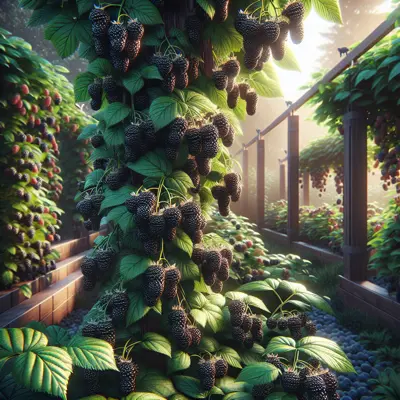
A game-changing primocane blackberry that produces two crops annually on thornless canes, combining the best of both worlds - convenience and productivity. This University of Arkansas release offers large, firm berries with excellent flavor and the unique advantage of fruiting on first-year canes, extending your harvest season significantly.
Sun
Full sun
Zones
6–9
USDA hardiness
Difficulty
Moderate
Planting Timeline
Showing dates for Prime-Ark Freedom Blackberry in USDA Zone 7
All Zone 7 berry →Zone Map
Click a state to update dates
Prime-Ark Freedom Blackberry · Zones 6–9
Growing Details
Complete Growing Guide
Prime-Ark Freedom's primocane habit demands a different pruning calendar than traditional blackberries—remove floricanes (second-year canes) immediately after summer harvest to redirect energy into productive first-year growth, which fruits again in fall. Plant in full sun with well-draining soil and consistent moisture, as these thornless canes are vigorous but benefit from afternoon shade in zones 8+ to prevent cane scald. Watch closely for double-blossom disease and cane spot fungus, both favored by high humidity; prune selectively for airflow and avoid overhead watering. The variety has a tendency toward excessive vegetative growth if over-fertilized with nitrogen, so use balanced or phosphorus-weighted fertilizer instead. A practical tip: in cooler climates, leave first-year canes unpruned through winter and head them back in early spring to encourage branching, which maximizes the summer crop before fall production begins.
Light: Full sun (6 or more hours of direct sunlight a day). Soil: Clay, High Organic Matter, Loam (Silt), Sand. Soil pH: Acid (<6.0). Drainage: Good Drainage, Moist, Occasionally Dry. Growth rate: Rapid. Maintenance: Medium. Regions: Coastal, Mountains, Piedmont.
Harvesting
Prime-Ark Freedom berries reach peak harvest when they achieve a deep, glossy black color and feel slightly soft to the touch, signaling optimal sugar content and flavor development. Unlike traditional blackberries that fruit once annually, this primocane variety produces continuous harvests throughout the season—first from first-year canes in late summer, then from second-year floricanes the following spring, effectively extending your picking window considerably. To maximize yield and berry quality, harvest every two to three days during peak season, as the firm berries will continue ripening on the plant and maintaining consistent picking intervals encourages sustained production on both cane types.
Fruits vary in size and color with many maturing to black or red. Usually edible but vary in taste and sugar content. They also vary as to when they are available.
Type: Aggregate, Drupe.
Garden value: Edible
Storage & Preservation
Fresh Prime-Ark Freedom berries keep 3-5 days refrigerated at 32-35°F with high humidity. Store unwashed in shallow containers lined with paper towels, covering loosely with plastic wrap. Don't wash until ready to use, as moisture accelerates decay.
For freezing, spread clean berries on parchment-lined baking sheets and freeze individually before transferring to freezer bags - this prevents clumping. Frozen berries maintain quality for 8-10 months. The firm texture of Prime-Ark Freedom makes them excellent for jam-making, as they hold their shape well and have natural pectin. They also dehydrate beautifully - slice lengthwise and dry at 135°F for 12-16 hours for leather-like treats that store for months in airtight containers.
History & Origin
Prime-Ark Freedom was developed by the University of Arkansas breeding program under Dr. John Clark, released in 2013 as part of their revolutionary Prime-Ark series. This variety represents a breakthrough in blackberry breeding, combining the thornless trait with primocane-fruiting ability - a combination previously thought impossible to achieve.
The University of Arkansas has been the leader in blackberry improvement since the 1960s, and Prime-Ark Freedom emerged from crosses involving 'Prime-Jim' and 'Prime-Jan', earlier primocane varieties that had thorns. The breeding program specifically targeted commercial and home growers who wanted extended harvest seasons without the safety concerns of thorned varieties.
The name reflects its 'freedom' from thorns while maintaining the primocane fruiting characteristic. This variety has become increasingly popular among sustainable farmers and home gardeners because it allows for simplified pruning systems and extends fresh berry availability well into fall, filling the gap when summer-bearing varieties finish production.
Advantages
- +Thornless canes eliminate painful picking and pruning injuries entirely
- +Two annual crops extend harvest season significantly compared to summer-only varieties
- +Large, firm berries with excellent flavor command premium prices at market
- +First-year primocane fruiting means productive plants in year one
- +University of Arkansas breeding ensures disease resistance and cold hardiness
Considerations
- -Spotted wing drosophila and cane borers require intensive integrated pest management
- -Gray mold and anthracnose demand excellent air circulation and fungicide programs
- -Moderate difficulty rating means less forgiving than established thornless cultivars
- -Double blossom disease can devastate spring blooms in susceptible years
Companion Plants
Chives, garlic, and marigolds are the most practical companions for blackberries. Chives and garlic emit sulfur compounds that deter aphids — which tend to cluster on new blackberry growth and can vector mosaic viruses over a season of repeated feeding. French marigolds (Tagetes patula) planted at row ends draw hoverflies whose larvae eat those same aphids. Comfrey earns a spot nearby too: its deep taproots mine calcium and potassium from lower soil layers, and chopped leaves break down fast as a surface mulch around the canes. Tansy and yarrow pull in predatory wasps that keep spider mite populations from spiking in hot, dry spells.
Black walnut (Juglans nigra) is the one to take seriously — its roots and decaying leaf litter release juglone, a compound that disrupts root respiration in Rubus species and can kill canes outright within the drip line. Fennel won't cause that kind of damage, but it's broadly allelopathic and suppresses neighbors without offering much back; it belongs in its own isolated bed, not threaded through a berry planting.
Plant Together
Chives
Repels aphids and improves soil health with sulfur compounds
Garlic
Deters aphids, spider mites, and fungal diseases naturally
Marigolds
Repel nematodes and aphids while attracting beneficial insects
Tansy
Repels ants, mice, and various flying pests that damage berries
Yarrow
Attracts predatory insects and improves soil mineral availability
Comfrey
Deep roots mine nutrients and leaves provide potassium-rich mulch
Nasturtiums
Trap crop for aphids and cucumber beetles, edible flowers
Mint
Deters rodents and ants, but plant in containers to prevent spread
Keep Apart
Black Walnut
Produces juglone toxin that inhibits blackberry root development
Fennel
Allelopathic compounds inhibit growth of most nearby plants
Pine Trees
Acidify soil and create dense shade that reduces berry production
Nutrition Facts
Per 100g serving. % Daily Value based on 2,000 calorie diet. Source: USDA FoodData Central (FDC #173946)
Pests & Disease Resistance
Resistance
Good resistance to anthracnose and orange rust
Common Pests
Spotted wing drosophila, aphids, spider mites, cane borers
Diseases
Gray mold, anthracnose, cane blight, double blossom
Troubleshooting Prime-Ark Freedom Blackberry
What you'll see, why it happens, and what to do about it.
Small, collapsing or mushy berries that look fine from the outside but are full of tiny maggots at harvest
Likely Causes
- Spotted wing drosophila (Drosophila suzukii) — lays eggs inside ripening fruit before you can see any external damage
- Late-season fruit left on canes too long, giving SWD more time to build population pressure
What to Do
- 1.Pick every ripe berry every 2-3 days — don't let overripe fruit sit on the cane
- 2.Hang red-sphere sticky traps near the planting to monitor adult populations starting in June
- 3.If pressure is high, apply spinosad (an OMRI-listed organic option) on a 7-day schedule during ripening, following label timing carefully to protect pollinators
Gray fuzzy coating on ripe or nearly-ripe berries, especially after a stretch of wet or humid weather
Likely Causes
- Gray mold (Botrytis cinerea) — thrives in humid conditions and dense canopy where air doesn't move
- Overcrowded canes or excessive nitrogen pushing lush, soft growth
What to Do
- 1.Thin canes aggressively in late winter — aim for 4-6 strong primocanes per plant and remove everything else
- 2.Pull affected berries off the plant and bag them; don't compost them
- 3.Avoid overhead irrigation during fruiting; drip tape or soaker hose at the base keeps foliage drier
Canes wilting or dying back from the tip down, sometimes with dark brown streaking under the bark
Likely Causes
- Cane blight (Leptosphaeria coniothyrium) — enters through pruning cuts or winter injury
- Cane borers (Agrilus ruficollis or Oberea bimaculata) — larvae tunnel inside the cane, cutting off vascular flow
What to Do
- 1.Cut the affected cane back 6 inches below the discolored tissue into clean, white wood; sterilize your pruners with 70% isopropyl between cuts
- 2.Dispose of removed canes in the trash, not the compost pile
- 3.For borer damage, look for a small entry hole near the wilted tip — if you find one, cut further down until you hit the larval tunnel and destroy the cane entirely
Blossoms look distorted, ruffled, or doubled — like a flower inside a flower — with little to no fruit setting
Likely Causes
- Double blossom (Cercosporella rubi) — a fungal disease spread by the blackberry mite (Acalitus essigi); the mite carries spores from infected to healthy flowers
- Warm, wet spring conditions that favor both mite activity and fungal sporulation
What to Do
- 1.Remove and destroy every distorted bloom cluster as soon as you spot them — do not compost
- 2.Prune out all old floricanes to the ground immediately after harvest each year to reduce overwintering mite habitat
- 3.Sulfur-based fungicide applications at bud swell can reduce infection rates; time applications before bloom opens, per label directions
Frequently Asked Questions
How long does Prime-Ark Freedom take to produce fruit?▼
Can you grow Prime-Ark Freedom blackberries in containers?▼
What does Prime-Ark Freedom taste like compared to other blackberries?▼
When should I plant Prime-Ark Freedom blackberry canes?▼
Is Prime-Ark Freedom good for beginners?▼
Prime-Ark Freedom vs Triple Crown blackberry - what's the difference?▼
Zone-by-Zone Planting Calendar
Growing Guides from Wind River Greens
Sources & References
External authority sources used in compiling this guide.
See the Methodology page for how this data is sourced, what's AI-assisted, and known limitations.