Ouachita Thornless Blackberry
Rubus 'Ouachita'
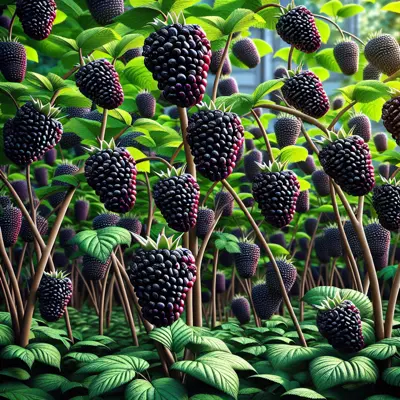
A premium thornless blackberry that produces exceptionally large, sweet berries with outstanding flavor and firm texture. Developed by the University of Arkansas, this erect variety offers excellent disease resistance and consistent heavy yields without the hassle of thorns. Ouachita's berries maintain their quality longer than most varieties, making them perfect for fresh market sales or extended harvest enjoyment.
Sun
Full sun
Zones
6–9
USDA hardiness
Difficulty
Easy to moderate
Planting Timeline
Showing dates for Ouachita Thornless Blackberry in USDA Zone 7
All Zone 7 berry →Zone Map
Click a state to update dates
Ouachita Thornless Blackberry · Zones 6–9
Growing Details
Complete Growing Guide
Plant Ouachita in early spring or fall in full sun with well-draining soil enriched with organic matter, as this variety demands excellent drainage to prevent root rot—a particular concern for thornless blackberries. Unlike many erect varieties, Ouachita shows a tendency toward vigorous cane growth that benefits from annual pruning in late winter to maintain shape and air circulation, reducing susceptibility to anthracnose and orange rust. Scout regularly for spider mites, which favor the dense foliage of thornless cultivars. Space plants 3 feet apart to accommodate their upright, compact growth habit and allow adequate light penetration. One key advantage: Ouachita's firm berries tolerate mechanical harvesting better than softer varieties, so don't hesitate to strip canes aggressively during peak season without compromising quality or yield.
Light: Full sun (6 or more hours of direct sunlight a day). Soil: Clay, High Organic Matter, Loam (Silt), Sand. Soil pH: Acid (<6.0). Drainage: Good Drainage, Moist, Occasionally Dry. Growth rate: Rapid. Maintenance: Medium. Regions: Coastal, Mountains, Piedmont.
Harvesting
Ouachita blackberries reach peak ripeness when they display a deep, glossy black color and feel slightly soft to gentle pressure, indicating maximum sugar development and optimal juice content. Harvest berries in the morning after dew dries but before afternoon heat, as this timing preserves firmness and flavor intensity. Unlike single-harvest varieties, Ouachita produces continuously throughout the season, typically spanning four to six weeks, so plan for multiple picking sessions rather than one concentrated harvest. Check plants every two to three days during peak production, as ripe berries will detach easily from the cane when gently lifted, a sign they've reached their ideal maturity window.
Fruits vary in size and color with many maturing to black or red. Usually edible but vary in taste and sugar content. They also vary as to when they are available.
Type: Aggregate, Drupe.
Garden value: Edible
Storage & Preservation
Fresh Ouachita berries store exceptionally well compared to other blackberry varieties. Keep unwashed berries in the refrigerator in a shallow container lined with paper towels, where they'll maintain quality for 5-7 days at 32-35°F. Don't wash until ready to use, as moisture accelerates spoilage.
For freezing, arrange clean berries in a single layer on baking sheets and freeze solid before transferring to bags—this prevents clumping. Frozen Ouachita berries retain their firm texture better than most varieties. The high sugar content and firm flesh also make them excellent for jam-making, requiring less added pectin than softer varieties. Their superior shipping quality means they hold up well to water bath canning for preserves and pie fillings.
History & Origin
Ouachita was developed by Dr. John Clark at the University of Arkansas Fruit Research Station and released in 2003 as part of their ambitious blackberry breeding program. Named after Arkansas's Ouachita Mountains, this variety was bred specifically to combine the large berry size and excellent flavor of thorny varieties with the convenience of thornless canes.
The breeding program aimed to create commercial-quality thornless blackberries that could compete with traditional thorny varieties in both yield and fruit quality. Ouachita was selected from thousands of seedlings over nearly a decade of testing. It represents a significant breakthrough in thornless blackberry development, as earlier thornless varieties often sacrificed fruit quality for convenience. The University of Arkansas has become renowned for their blackberry innovations, with Ouachita joining other successful releases like Triple Crown and Apache in revolutionizing home and commercial blackberry growing.
Advantages
- +Thornless canes eliminate injuries during harvesting and maintenance work.
- +Exceptionally large berries with superior flavor and firm texture command premium prices.
- +University of Arkansas breeding ensures reliable disease resistance and consistent heavy yields.
- +Berries maintain quality longer than most varieties, extending fresh market window.
- +Erect growth habit requires less trellising support than sprawling thornless competitors.
Considerations
- -Susceptible to orange rust and rosette virus, requiring vigilant disease management.
- -Spotted wing drosophila and other pest pressure demands regular monitoring and intervention.
- -Crown gall disease can devastate plantings in poorly drained or compacted soil.
- -Requires adequate irrigation and fertility to consistently produce premium-sized berries annually.
Companion Plants
Garlic and chives are the most practical companions here — both release sulfur compounds that deter aphids, which cluster on new cane growth in spring. Plant them at the base of the trellis row where they won't compete for light. Tansy and yarrow attract parasitic wasps and predatory beetles that keep spider mite and aphid populations from getting out of hand; yarrow also tolerates the slightly acidic soil pH (5.8–6.8) that Ouachita prefers. Comfrey earns its spot nearby differently than the others — its taproot can reach 6 feet down, pulling up calcium and potassium that shallower roots can't touch. Cut the leaves and drop them as mulch at the base of your canes; no digging required.
Black walnut is the one plant to keep well clear of — its roots release juglone, a compound that's broadly toxic to Rosaceae family members, and blackberries aren't reliably tolerant. Given that you're putting in a planting you expect to produce for 15 or 20 years, the spacing math matters: a mature walnut's root zone can extend well past its drip line. Potatoes and tomatoes belong in a separate bed entirely; both share Verticillium wilt with brambles, and rotating them out doesn't help if they're planted side by side.
Plant Together
Tansy
Repels ants, aphids, and cucumber beetles while attracting beneficial insects
Chives
Deters aphids and Japanese beetles, improves soil health
Garlic
Natural fungicide properties help prevent fungal diseases common in blackberries
Marigold
Repels nematodes and attracts beneficial predatory insects
Yarrow
Attracts beneficial insects and may improve fruit flavor through companion planting
Comfrey
Deep taproot brings nutrients to surface, excellent mulch and fertilizer source
Nasturtium
Acts as trap crop for aphids and cucumber beetles, deters squash bugs
Mint
Repels rodents and ants, but should be contained to prevent spreading
Keep Apart
Black Walnut
Produces juglone toxin that inhibits growth and can kill blackberry plants
Potato
Shares common diseases like verticillium wilt and attracts similar pests
Tomato
Both susceptible to similar fungal diseases and may compete for nutrients
Nutrition Facts
Per 100g serving. % Daily Value based on 2,000 calorie diet. Source: USDA FoodData Central (FDC #173946)
Pests & Disease Resistance
Resistance
Excellent resistance to anthracnose and stem blight
Common Pests
Spotted wing drosophila, aphids, spider mites, cane borers
Diseases
Orange rust, crown gall, rosette (double blossom)
Troubleshooting Ouachita Thornless Blackberry
What you'll see, why it happens, and what to do about it.
Bright orange powdery pustules covering the undersides of leaves, canes looking stunted
Likely Causes
- Orange rust (Gymnoconia nitens or Phragmidium species) — a systemic fungal disease that infects the whole plant, not just individual leaves
- Planting infected stock, or spread from nearby wild brambles
What to Do
- 1.Dig out and destroy the entire infected plant — orange rust is systemic, so pruning won't fix it
- 2.Don't compost infected material; bag it and trash it
- 3.Source certified disease-free canes for any replacements, and keep a 100-foot buffer from wild Rubus if possible
Distorted, witchy-broom-style growth at shoot tips in spring — lots of small, crinkled shoots bunched together
Likely Causes
- Rosette disease (also called double blossom), caused by the fungal pathogen Cercosporella rubi, spread by the feeding of the blackberry mite (Acalitus essigi)
What to Do
- 1.Cut out all affected canes at the soil line as soon as you spot them, before the distorted flowers open and spread spores
- 2.Burn or bag the cuttings — don't leave them on the ground
- 3.There's no cure once a planting is heavily infected; full renovation (mow everything to the ground and start over) is sometimes the only realistic option
Small, soft fruit full of tiny maggots at harvest — fruit looks fine from the outside until you bite into it
Likely Causes
- Spotted wing drosophila (Drosophila suzukii) — females lay eggs in ripening fruit before it's even fully colored
What to Do
- 1.Pick fruit every 2-3 days at peak season; ripe fruit left on the cane is the main invitation
- 2.Cover canes with fine insect netting (1mm mesh or smaller) as fruit begins to color
- 3.Dispose of any soft or damaged fruit in a sealed bag — don't leave it on the ground to breed another generation
Canes wilting or dying back from the tip down, sometimes with sawdust-like frass visible near the base
Likely Causes
- Raspberry crown borer (Pennisetia marginata) larvae tunneling inside the cane
- Red-necked cane borer (Agrilus ruficollis), which causes swollen galls on the cane before dieback
What to Do
- 1.Cut wilted canes back to healthy tissue — look for a larval tunnel in the center pith and keep cutting until the cross-section is clean and white
- 2.Dispose of cut canes immediately; don't leave them near the planting
- 3.Check new canes each fall and remove any that show swollen borer galls at the base before larvae overwinter
Frequently Asked Questions
How long does it take for Ouachita blackberry to produce fruit?▼
Can you grow Ouachita blackberries in containers?▼
What does Ouachita blackberry taste like compared to other varieties?▼
When should I plant Ouachita blackberry plants?▼
Is Ouachita blackberry good for beginners?▼
Ouachita vs Triple Crown blackberry - what's the difference?▼
Zone-by-Zone Planting Calendar
Growing Guides from Wind River Greens
Sources & References
External authority sources used in compiling this guide.
See the Methodology page for how this data is sourced, what's AI-assisted, and known limitations.