Natchez Thornless Blackberry
Rubus species 'Natchez'
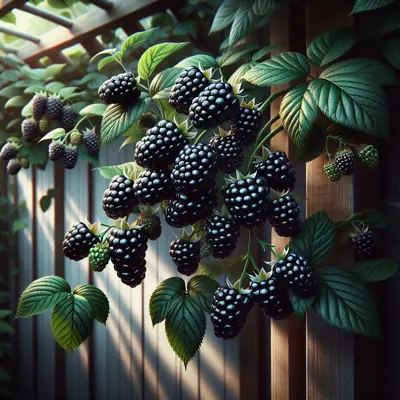
The earliest ripening thornless blackberry variety, producing huge, sweet berries up to two weeks before other cultivars. Developed by the University of Arkansas, Natchez offers exceptional flavor, impressive berry size, and vigorous disease-resistant canes that make harvesting a pleasure without thorns.
Sun
Full sun
Zones
6–9
USDA hardiness
Difficulty
Moderate
Planting Timeline
Showing dates for Natchez Thornless Blackberry in USDA Zone 7
All Zone 7 berry →Zone Map
Click a state to update dates
Natchez Thornless Blackberry · Zones 6–9
Growing Details
Complete Growing Guide
The Natchez thornless blackberry demands strategic timing since its early ripening—often two weeks ahead of standard varieties—means you should prune canes in late winter before growth accelerates, allowing maximum vigor for abundant spring flowering. Plant in full sun with well-draining soil amended with compost, as Natchez's vigorous canes thrive in fertile conditions but are susceptible to root rot in poorly drained sites. While the variety shows strong disease resistance overall, monitor for cane spot and orange rust in humid climates by ensuring adequate air circulation between canes. One crucial tip: because Natchez produces heavily on primocanes, selectively thin new growth to five to seven strong canes per hill in spring rather than allowing crowding, which concentrates energy into larger berries and reduces fungal pressure while simplifying thornless harvesting.
Light: Full sun (6 or more hours of direct sunlight a day). Soil: Clay, High Organic Matter, Loam (Silt), Sand. Soil pH: Acid (<6.0). Drainage: Good Drainage, Moist, Occasionally Dry. Growth rate: Rapid. Maintenance: Medium. Regions: Coastal, Mountains, Piedmont.
Harvesting
Natchez blackberries reach peak harvest readiness when berries develop a deep, glossy black color with a slight give when gently squeezed, indicating optimal sweetness and juice content. Unlike single-harvest varieties, Natchez produces fruit continuously over several weeks, requiring multiple passes through the canes every two to three days during peak season. The thornless canes make frequent picking comfortable and efficient, allowing you to selectively harvest only fully ripe berries while leaving slightly underripe ones to mature. A valuable timing tip: begin harvesting in early morning when berries are cool and firm, as they soften quickly in afternoon heat and become prone to crushing during collection.
Fruits vary in size and color with many maturing to black or red. Usually edible but vary in taste and sugar content. They also vary as to when they are available.
Type: Aggregate, Drupe.
Garden value: Edible
Storage & Preservation
Fresh Natchez berries keep best when stored unwashed in the refrigerator at 32-35°F with high humidity. Line shallow containers with paper towels and don't stack berries more than two layers deep. Under ideal conditions, they'll maintain quality for 5-7 days, longer than most blackberry varieties.
For freezing, wash gently and pat dry completely before spreading on baking sheets. Freeze individually before transferring to containers - this prevents clumping. Natchez's firm texture makes it excellent for whole-berry applications after thawing. The berries also excel in jam-making due to their natural pectin content and balanced sweetness. Their low acidity means you'll need to add lemon juice when canning to ensure safe pH levels. Dehydrated Natchez berries retain their sweetness well and make excellent additions to trail mixes.
History & Origin
Natchez was developed by Dr. John Clark and the University of Arkansas fruit breeding program, released in 2007 as part of their ongoing mission to create superior thornless blackberry varieties for commercial and home production. The university's blackberry breeding program, established in 1964, has produced numerous award-winning cultivars by crossing selected wild Arkansas blackberries with cultivated varieties.
Natchez emerged from crosses involving 'Ark. 1506' and 'APF-12', combining the best traits of both parents: exceptional earliness, large berry size, and thornless canes. Named after the historic Mississippi River city, Natchez was specifically bred to extend the blackberry harvest season by ripening significantly earlier than existing varieties. The University of Arkansas program has revolutionized blackberry production in the Southern United States, with their varieties now grown commercially across multiple continents. Natchez quickly gained popularity among both commercial growers and home gardeners for its reliability and exceptional fruit quality in hot, humid climates where traditional blackberries often struggle.
Advantages
- +Earliest ripening thornless blackberry variety available commercially today
- +Produces exceptionally large, sweet berries with firm texture
- +Thornless canes make harvesting significantly easier and safer
- +Vigorous, disease-resistant growth habit reduces maintenance demands
- +University of Arkansas breeding ensures reliable performance
Considerations
- -Susceptible to anthracnose and cane blight in humid climates
- -Requires careful management to prevent Japanese beetle and spider mite damage
- -Moderate difficulty level demands proper training and pruning techniques
- -Orange rust can devastate plants if environmental conditions favor disease
Companion Plants
Garlic and chives planted at the base of your blackberry trellis pull their weight. Both emit sulfur compounds that knock back aphids — Aphis rubicola hits new Rubus growth hard — and their shallow roots don't compete with the canes for water or nutrients. French marigolds (Tagetes patula) along the bed edge draw parasitic wasps that work through spider mite populations before August heat lets them explode. In our zone 7 Georgia summers, that pressure arrives fast, so having those wasps already present in the planting matters. Comfrey is worth including too, positioned 18–24 inches out from the canes as a chop-and-drop mulch plant; its deep taproot mines calcium and potassium that feed the blackberries as the leaves break down.
Black walnut (Juglans nigra) is the one to take seriously — its roots release juglone into the soil, and Rubus species are sensitive enough that you'll see slow decline before you think to trace it back to that tree on the property line. Fennel causes a different kind of trouble: it's broadly allelopathic and tends to suppress neighboring plants, small fruits included. Give it a container or its own bed, nowhere near the berries.
Plant Together
Garlic
Repels aphids, spider mites, and other pests while improving soil health
Chives
Deters aphids and Japanese beetles, attracts beneficial pollinators
Marigolds
Repels nematodes and aphids, attracts beneficial insects for pest control
Comfrey
Deep roots bring nutrients to surface, leaves make excellent mulch and fertilizer
Nasturtiums
Acts as trap crop for aphids and cucumber beetles, attracts beneficial insects
Borage
Attracts pollinators, may improve fruit flavor, and repels hornworms
Tansy
Repels ants, mice, and flying insects that can damage berries
Yarrow
Attracts beneficial predatory insects and improves soil health
Keep Apart
Black Walnut
Produces juglone toxin that inhibits growth and can kill blackberry plants
Fennel
Allelopathic properties inhibit growth of most nearby plants including berries
Brassicas
Compete heavily for nutrients and may stunt blackberry growth and production
Nutrition Facts
Per 100g serving. % Daily Value based on 2,000 calorie diet. Source: USDA FoodData Central (FDC #173946)
Pests & Disease Resistance
Resistance
Good disease resistance, tolerates heat and humidity well
Common Pests
Japanese beetle, aphids, spider mites, cane borers
Diseases
Anthracnose, cane blight, orange rust
Troubleshooting Natchez Thornless Blackberry
What you'll see, why it happens, and what to do about it.
Bright orange powdery pustules on the undersides of leaves, spreading cane to cane through summer
Likely Causes
- Orange rust (Gymnoconia nitens or Arthuriomyces peckianus) — a systemic fungal disease that infects the entire plant, not just the leaves it shows up on
- Planting infected nursery stock
What to Do
- 1.Dig out and destroy the entire infected plant — roots and all. Orange rust is systemic, so pruning won't fix it; the whole plant is compromised.
- 2.Do not compost infected material. Bag it and put it in the trash.
- 3.Source replacement canes from a certified disease-free nursery, and inspect new stock closely before planting near healthy canes.
Canes develop dark, sunken lesions near the base, then wilt and die back from the tip down
Likely Causes
- Cane blight (Leptosphaeria coniothyrium) — enters through pruning wounds or physical damage, especially after wet springs
- Cane borers (Agrilus ruficollis) — larvae tunnel into canes and cause similar dieback, but you'll see a small entry hole if you look closely
What to Do
- 1.Cut blighted canes back to healthy white wood, at least 6 inches below any visible discoloration. Sterilize your pruners between cuts with a 10% bleach solution.
- 2.For cane borers, cut wilted tips back until you find the larvae tunnel, remove the grub, and dispose of cuttings away from the planting.
- 3.Thin to 4–6 strong canes per plant and keep the trellis wires clear so air moves through the canopy.
Leaves skeletonized or chewed to lace in midsummer, with clusters of metallic green-bronze beetles on the foliage and fruit
Likely Causes
- Japanese beetle (Popillia japonica) — peak feeding pressure in June and July in most of zone 7
What to Do
- 1.Hand-pick beetles into a bucket of soapy water early in the morning when they're sluggish. Tedious, but effective for small plantings.
- 2.Row cover can protect canes during peak beetle season, though you'll need to pull it for pollination if berries haven't set yet.
- 3.Skip the Japanese beetle bag traps near your planting — NC State Extension notes they attract more beetles than they catch.
Frequently Asked Questions
How long does Natchez blackberry take to produce fruit?▼
Can you grow Natchez blackberries in containers?▼
What zones can grow Natchez blackberries?▼
When should I plant Natchez blackberry bushes?▼
How big do Natchez blackberry bushes get?▼
What does Natchez blackberry taste like compared to other varieties?▼
Zone-by-Zone Planting Calendar
Growing Guides from Wind River Greens
Sources & References
External authority sources used in compiling this guide.
See the Methodology page for how this data is sourced, what's AI-assisted, and known limitations.