Kiowa Thornless Blackberry
Rubus × 'Kiowa'
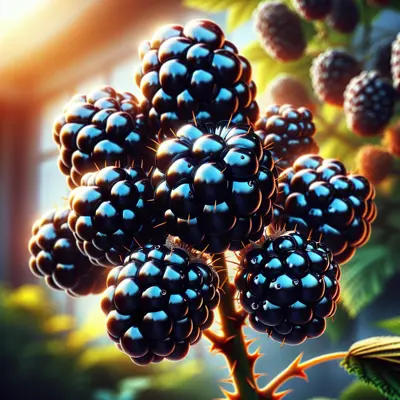
The largest-fruited blackberry variety available, with berries often exceeding 1 inch in length and delivering exceptional sweet flavor with low acidity. Developed by the University of Arkansas, this erect, thornless variety produces massive yields on strong, self-supporting canes. Despite its size, Kiowa maintains excellent fruit quality and is considered one of the best-tasting blackberries for fresh eating.
Harvest
60-70d
Days to harvest
Sun
Full sun
Zones
6–9
USDA hardiness
Difficulty
Moderate
Planting Timeline
Showing dates for Kiowa Thornless Blackberry in USDA Zone 7
All Zone 7 berry →Zone Map
Click a state to update dates
Kiowa Thornless Blackberry · Zones 6–9
Growing Details
Complete Growing Guide
Kiowa Thornless Blackberry requires full sun (minimum eight hours daily) and well-draining soil to support its vigorous cane growth and exceptional fruit production. Plant in early spring or fall, spacing canes 3–4 feet apart, as this cultivar's strong, self-supporting architecture needs room to develop without crowding. Monitor for spider mites and raspberry beetles, which can diminish the quality of these large, thin-skinned berries. Kiowa is prone to cane splitting if exposed to dramatic temperature fluctuations or inconsistent watering, particularly during fruit development in the 60–70-day window, so maintain steady soil moisture without waterlogging. Prune spent canes immediately after harvest to prevent disease buildup and encourage next season's yield. A practical tip: thin lateral shoots to four or five per cane during spring to direct energy into fewer, larger berries rather than maximizing quantity, ensuring the exceptional size and sweetness this variety is known for.
Light: Full sun (6 or more hours of direct sunlight a day). Soil: Clay, High Organic Matter, Loam (Silt), Sand. Soil pH: Acid (<6.0). Drainage: Good Drainage, Moist, Occasionally Dry. Growth rate: Rapid. Maintenance: Medium. Regions: Coastal, Mountains, Piedmont.
Harvesting
Kiowa blackberries reach peak harvest readiness when they achieve a deep, glossy black color and swell to their characteristic large size—often exceeding one inch in length—while feeling slightly soft yet still firm to the touch. Unlike single-harvest varieties, Kiowa produces fruit continuously throughout the season, typically from early summer through late summer, requiring multiple picking passes every two to three days during peak production. For optimal flavor development, wait until berries have fully darkened and release easily from the cane with gentle pressure, as premature picking results in tart fruit that lacks the variety's signature sweetness and rich complexity.
Fruits vary in size and color with many maturing to black or red. Usually edible but vary in taste and sugar content. They also vary as to when they are available.
Type: Aggregate, Drupe.
Garden value: Edible
Storage & Preservation
Fresh Kiowa blackberries keep best in the refrigerator for 3-5 days when stored unwashed in a single layer. Their large size and firm texture make them excellent for fresh storage compared to more delicate varieties. Keep them in a breathable container lined with paper towels to absorb excess moisture.
For freezing, spread clean berries on a baking sheet in a single layer and freeze until solid, then transfer to freezer bags. Kiowa's size and low water content make them ideal for freezing—they maintain shape and flavor better than smaller varieties.
Kiowa's exceptional sweetness and large size make them perfect for jams and preserves, requiring less added sugar than tart varieties. Their firm texture also works well for dehydrating into fruit leather or dried berries. The natural pectin content is moderate, so add pectin when making jams for proper gel consistency.
History & Origin
Kiowa was developed by the University of Arkansas breeding program in the 1990s, released to the public in 1996 as part of their systematic effort to create superior thornless blackberry varieties. The variety was created by crossing 'Ark. 1058' with 'Ark. 1119', combining the large fruit size genetics with thornless canes and improved flavor profiles.
Dr. John Clark led the breeding program that produced Kiowa, focusing specifically on creating blackberries with exceptional fresh-eating quality and commercial viability. The variety was named after the Kiowa Native American tribe, following Arkansas's tradition of naming their berry releases after indigenous tribes.
Kiowa represented a breakthrough in blackberry breeding—achieving the largest fruit size available while maintaining the convenience of thornless canes and excellent flavor. It quickly gained popularity among both commercial growers and home gardeners, particularly in the South and Midwest where it performs exceptionally well. The variety has become a parent plant for newer Arkansas releases, contributing its large fruit genes to the next generation of blackberry varieties.
Advantages
- +Produces the largest blackberry fruits available, often exceeding one inch long
- +Exceptional sweet flavor with low acidity makes it outstanding for fresh eating
- +Thornless canes eliminate injuries and reduce harvesting time significantly
- +Strong, self-supporting erect canes require minimal trellising infrastructure
- +Massive yields on mature plants provide excellent commercial or home production
Considerations
- -Highly susceptible to spotted wing drosophila and requires intensive pest management
- -Vulnerable to multiple serious diseases including anthracnose and orange rust
- -Moderate difficulty level demands consistent care and proper cultural practices
- -Multiple insect pests including aphids, cane borers, and spider mites attack regularly
Companion Plants
Chives and garlic planted along the row do real work here — their sulfur compounds genuinely confuse aphids looking for a landing spot, and aphids hit blackberry canes reliably every season. Comfrey is worth a spot nearby too; its deep taproot pulls calcium and potassium up from subsoil and drops it at the surface when you chop and drop the leaves as mulch, which suits the 5.5–7.0 pH range Kiowa wants. In our zone 7 Georgia summers, clover as a living mulch between rows fixes nitrogen and keeps the soil from crusting hard by mid-July. Keep potatoes and tomatoes well away from the row — both share soilborne pathogens, including Verticillium dahliae, that can linger in the bed for years and slowly wear down perennial canes.
Plant Together
Chives
Repels aphids and Japanese beetles while improving soil with sulfur compounds
Marigolds
Deters nematodes and aphids with natural compounds, attracts beneficial insects
Nasturtiums
Acts as trap crop for aphids and cucumber beetles, repels ants
Tansy
Repels ants, mice, and flying insects that damage berry crops
Garlic
Deters aphids, spider mites, and fungal diseases with sulfur compounds
Comfrey
Deep roots bring nutrients to surface, leaves make excellent mulch
Clover
Fixes nitrogen in soil and provides living mulch to suppress weeds
Yarrow
Attracts beneficial predatory insects and improves soil mineral content
Keep Apart
Black Walnut
Produces juglone toxin that inhibits growth and can kill blackberry plants
Potato
Shares susceptibility to verticillium wilt and other soil-borne diseases
Tomato
Competes for nutrients and both susceptible to similar fungal diseases
Nutrition Facts
Per 100g serving. % Daily Value based on 2,000 calorie diet. Source: USDA FoodData Central (FDC #173946)
Pests & Disease Resistance
Resistance
Moderate resistance to common cane diseases
Common Pests
Spotted wing drosophila, aphids, cane borers, spider mites
Diseases
Anthracnose, orange rust, crown gall, double blossom
Troubleshooting Kiowa Thornless Blackberry
What you'll see, why it happens, and what to do about it.
Small, soft, watery berries full of tiny larvae at harvest — fruit looks fine from the outside but collapses when picked
Likely Causes
- Spotted wing drosophila (Drosophila suzukii) — unlike standard fruit flies, this one lays eggs in ripening fruit before it's overripe
- Delayed or infrequent picking that lets ripe fruit hang on the cane too long
What to Do
- 1.Pick every 2-3 days once fruit starts coloring up — don't let ripe berries hang
- 2.Set SWD monitoring traps (apple cider vinegar plus a drop of dish soap) at cane height starting in late June to gauge pressure
- 3.Drape fine netting (1mm or smaller mesh) over the planting during ripening if pressure is high; standard bird netting won't exclude SWD
Bright orange powdery pustules on the undersides of leaves, with yellow patches showing on top, appearing in spring or early summer
Likely Causes
- Orange rust (Gymnoconia nitens or Phragmidium violaceum) — a systemic fungal disease that colonizes the entire plant, not just individual leaves
What to Do
- 1.Dig out and destroy infected plants entirely — orange rust is systemic, so pruning affected canes won't save the plant
- 2.Bag and trash all removed material; don't compost it
- 3.Replace with certified disease-free stock and keep new plantings at least 6 feet from wild brambles, which carry the spores year to year
Rough, warty growths at or just below the soil line on canes, ranging from marble- to golf ball-sized
Likely Causes
- Crown gall (Agrobacterium tumefaciens) — a soil-borne bacterium that enters through wounds made during planting or cultivation
- Infected nursery stock introduced at planting
What to Do
- 1.Buy only from nurseries that can confirm stock is gall-free; inspect roots before they go in the ground
- 2.Remove and destroy heavily galled plants — there's no cure once a plant is infected
- 3.Keep the hoe well away from the crown during cultivation; the bacterium needs a wound to get in
Frequently Asked Questions
How long does Kiowa blackberry take to produce fruit?▼
Can you grow Kiowa blackberries in containers?▼
What does Kiowa blackberry taste like compared to other varieties?▼
When should I plant Kiowa blackberry canes?▼
Do Kiowa blackberries need full sun to produce well?▼
How do you prune Kiowa thornless blackberries?▼
Zone-by-Zone Planting Calendar
Growing Guides from Wind River Greens
Sources & References
External authority sources used in compiling this guide.
- ExtensionNC State Extension
- USDAUSDA FoodData Central
See the Methodology page for how this data is sourced, what's AI-assisted, and known limitations.