Honeyberry (Haskap)
Lonicera caerulea
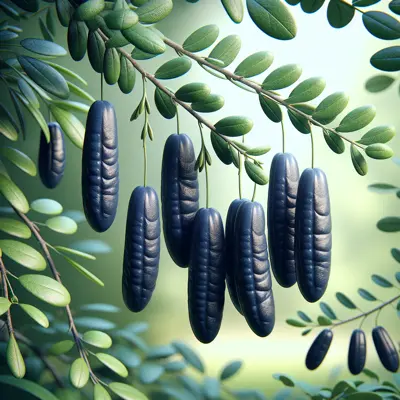
An exciting superfruit that's gaining popularity among adventurous gardeners, producing unique elongated blue berries with a complex flavor reminiscent of blueberry-raspberry-cherry. These extremely cold-hardy bushes are among the first fruits to ripen in early summer, often ready weeks before strawberries. Honeyberries thrive in northern climates where other berries struggle and offer exceptional antioxidant content.
Harvest
730-1095d
Days to harvest
Sun
Full sun to partial shade
Zones
4–9
USDA hardiness
Height
5-15 feet
Planting Timeline
Showing dates for Honeyberry (Haskap) in USDA Zone 7
All Zone 7 berry →Zone Map
Click a state to update dates
Honeyberry (Haskap) · Zones 4–9
Growing Details
Complete Growing Guide
Light: Dappled Sunlight (Shade through upper canopy all day), Full sun (6 or more hours of direct sunlight a day), Partial Shade (Direct sunlight only part of the day, 2-6 hours). Soil: Clay, High Organic Matter, Loam (Silt), Sand. Soil pH: Acid (<6.0), Neutral (6.0-8.0). Drainage: Good Drainage, Moist, Occasionally Dry. Height: 5 ft. 0 in. - 15 ft. 0 in.. Spread: 2 ft. 0 in. - 10 ft. 0 in.. Growth rate: Rapid. Maintenance: Medium. Regions: Coastal, Mountains, Piedmont.
Harvesting
Most species are inedible. One species is cultivated for its edible berries.
Color: Black, Blue, Pink, Red/Burgundy. Type: Berry. Length: < 1 inch. Width: < 1 inch.
Garden value: Edible, Showy
Edibility: One species produced edible berries.
Storage & Preservation
Fresh honeyberries keep 3-5 days at room temperature or up to 10 days refrigerated at 32-35°F with high humidity. Store unwashed in shallow containers to prevent crushing, and rinse just before eating as moisture accelerates spoilage.
Freezing is ideal for honeyberries – they freeze beautifully without blanching and maintain their texture better than most berries. Spread clean berries on baking sheets, freeze until solid, then transfer to freezer bags. Frozen berries keep 12-18 months and work perfectly in smoothies and baking.
For jams and jellies, honeyberries' natural pectin content creates excellent set with minimal added pectin. Their complex flavor also makes exceptional fruit leather and wine. Dehydrating works well at 135°F for 12-18 hours, creating intensely flavored dried berries perfect for trail mix and baking applications.
History & Origin
Origin: North & Central America, North Africa, Europe, Asia
Advantages
- +Attracts: Bees, Butterflies, Hummingbirds, Moths, Pollinators
- +Edible: One species produced edible berries.
- +Fast-growing
Companion Plants
Blueberries are the most practical companion for honeyberry — they share the same preference for acidic soil (pH 5.0–6.5), have similar water needs, and planting them together means you're already in the garden for one harvest when the other kicks off. Rhododendrons and pine trees serve a structural role: both thrive in and reinforce acidic soil conditions, and pine needles dropping year after year slowly push pH in the right direction without any intervention on your part. Chives at the drip line can deter soft-bodied insects, and comfrey's deep taproot pulls up calcium and potassium that shallower-rooted neighbors can't reach on their own.
Black walnut is the one to keep at a distance — it releases juglone from its roots, a compound that damages or kills many woody shrubs, and honeyberry is susceptible. Fennel suppresses nearby plants through allelopathy and has no business being within a few feet of anything you actually care about. Brassicas are less a chemistry problem and more a logistics one: in our zone 7 Georgia garden, where July and August are already grinding, their shallow spreading roots compete hard for the same moisture honeyberry needs to set next season's buds.
Plant Together
Blueberry
Similar soil pH requirements (acidic) and compatible root systems
Raspberry
Attracts beneficial pollinators and shares similar growing conditions
Strawberry
Acts as living mulch, suppresses weeds, and shares acidic soil preference
Rhododendron
Thrives in same acidic soil conditions and provides wind protection
Pine trees
Creates natural windbreak and acidifies soil through needle drop
Chives
Repels aphids and other pests while attracting beneficial insects
Comfrey
Deep roots bring nutrients to surface and leaves make excellent mulch
Marigold
Deters nematodes and other soil pests while attracting pollinators
Keep Apart
Black walnut
Produces juglone which is toxic to honeyberries and inhibits growth
Brassicas (cabbage family)
Heavy nitrogen feeders that compete for nutrients and prefer alkaline soil
Fennel
Allelopathic properties inhibit growth of nearby plants including berry bushes
Nutrition Facts
Per 100g serving. % Daily Value based on 2,000 calorie diet. Source: USDA FoodData Central (FDC #167762)
Pests & Disease Resistance
Resistance
Excellent natural disease resistance, very few pest problems
Common Pests
Birds (main concern), aphids occasionally
Diseases
Very disease resistant, occasional powdery mildew in humid conditions
Troubleshooting Honeyberry (Haskap)
What you'll see, why it happens, and what to do about it.
Fruit disappearing or partially eaten right as it ripens — sometimes the entire crop stripped in 2-3 days
Likely Causes
- Birds, particularly American robins and cedar waxwings, which key in on honeyberries earlier than almost any other fruiting shrub
- Honeyberries ripen in late May to early June, before most other berries — birds are hungry and there's nothing else competing for their attention
What to Do
- 1.Net the shrubs before the fruit shows any color — once birds find the crop, netting after the fact rarely saves much
- 2.Use 3/4-inch mesh bird netting draped over a simple PVC hoop frame; drape netting directly on the plant and birds will feed right through it
- 3.Plant multiple shrubs close together so you can tent a single net over the whole group rather than fighting individual plants
White powdery coating on leaves in mid to late summer, usually after the fruiting season is already over
Likely Causes
- Powdery mildew (Erysiphe lonicerae or related species) — common in humid summers with poor airflow
- Overcrowded planting at less than 4 feet spacing that traps moisture against the foliage
What to Do
- 1.Prune out crossing interior branches after harvest to open up the canopy — honeyberries fruit on older wood, so light thinning won't cost you next year's crop
- 2.A baking soda spray (1 tablespoon per gallon of water with a few drops of dish soap) can slow spread if caught early
- 3.Post-harvest mildew rarely affects next year's fruit production on an established shrub, so don't let it send you into a panic
New growth curling or sticky, with small clusters of soft-bodied insects on shoot tips in spring
Likely Causes
- Aphids (likely Hyadaphis tataricae or generalist species) — sporadic on honeyberry, usually appearing on the softest new growth in April and May
- Ant activity nearby, which farms aphid colonies and protects them from predators
What to Do
- 1.Knock aphids off with a firm spray of water from the hose — repeat every 2-3 days for a week and natural predator populations (lacewings, ladybeetles) usually take over
- 2.If ants are actively tending the colony, wrap the base of the trunk with a sticky barrier like Tanglefoot to cut off their access
- 3.Back off high-nitrogen fertilizers in spring — the soft, sappy new growth they push is exactly what aphids target first
Frequently Asked Questions
How long does it take for honeyberry plants to produce fruit?▼
Can you grow honeyberries in containers?▼
What do honeyberries taste like?▼
Do honeyberries need full sun or can they take shade?▼
What's the difference between honeyberry and haskap?▼
When should I plant honeyberry bushes?▼
Zone-by-Zone Planting Calendar
Growing Guides from Wind River Greens
Sources & References
External authority sources used in compiling this guide.
- ExtensionNC State Extension
- USDAUSDA FoodData Central
See the Methodology page for how this data is sourced, what's AI-assisted, and known limitations.