Fall Gold Everbearing Raspberry
Rubus idaeus 'Fall Gold'
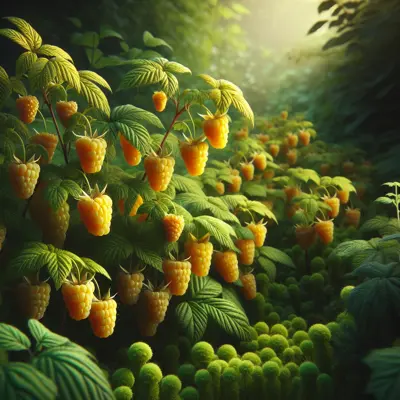
A unique yellow-fruited everbearing raspberry that produces sweet, mild berries on current-year canes. This thornless variety offers two harvests per year and exceptional cold hardiness. The golden berries are less acidic than red varieties, making them perfect for fresh eating and creating stunning dessert presentations.
Harvest
75-85d
Days to harvest
Sun
Full sun to partial shade
Zones
4–8
USDA hardiness
Height
6 feet
Planting Timeline
Showing dates for Fall Gold Everbearing Raspberry in USDA Zone 7
All Zone 7 berry →Zone Map
Click a state to update dates
Fall Gold Everbearing Raspberry · Zones 4–8
Growing Details
Complete Growing Guide
Fall Gold's everbearing nature demands different pruning strategy than single-harvest red raspberries—leave canes unpruned in their first year to capture summer fruit, then cut them to ground level after fall harvest for regeneration rather than maintaining a permanent framework. This cultivar thrives in full sun with excellent drainage, as the golden berries' lower acidity makes them more susceptible to fungal issues in humid conditions; ensure 3 feet between plants for air circulation. Unlike red varieties, Fall Gold shows less winter dieback in zones 3-8 despite producing two crops annually, though extreme cold below -20°F may reduce spring vigor. Watch for raspberry cane borer on new growth—remove affected canes promptly at the base. A practical tip: harvest frequently during peak season to encourage continued flowering and prevent overripening, which diminishes the delicate flavor that distinguishes this cultivar from sturdier red types.
Light: Full sun (6 or more hours of direct sunlight a day), Partial Shade (Direct sunlight only part of the day, 2-6 hours). Soil: Clay, High Organic Matter, Loam (Silt), Sand. Soil pH: Acid (<6.0). Drainage: Good Drainage. Spacing: 3 feet-6 feet, 6-feet-12 feet. Growth rate: Medium. Maintenance: Medium. Propagation: Division, Stem Cutting. Regions: Coastal, Mountains, Piedmont.
Harvesting
Fall Gold raspberries reach peak harvest readiness when the berries transition from pale yellow to a deep golden hue, becoming plump and yielding gently to finger pressure without mushing. Unlike single-harvest varieties, Fall Gold produces fruit continuously throughout two distinct seasons—early summer on the previous year's canes and again in fall on new growth—allowing you to extend your harvest window significantly. Pick berries in the morning after dew dries but before afternoon heat intensifies, as the delicate golden fruits are more prone to bruising than red varieties and will maintain better flavor and texture when harvested during cooler hours. For optimal sweetness, allow berries to mature fully on the cane for several days after turning gold, as they continue developing their signature mild, low-acid flavor profile even after reaching full color.
Botanically the fruits are not berries (though they are usually called berries)– they are instead made of many small drupes. The fruits hold together in a hollow cone. Cultivars exist in various colors and tend to be more productive than the straight species.
Color: Gold/Yellow, Orange, Purple/Lavender, Red/Burgundy, White. Type: Aggregate, Drupe. Length: < 1 inch. Width: < 1 inch.
Garden value: Edible, Showy
Harvest time: Summer
Edibility: Fruit can be eaten raw or cooked and delicious when eaten out of hand. The fruit is also used in pies, preserves, and in wines. An herb tea is made from the dried leaves and some say that a type of tea made from raspberry and blackberry leaves is an excellent coffee substitute.
Storage & Preservation
Fresh Fall Gold raspberries are highly perishable and should be refrigerated immediately after harvest. Store unwashed in shallow containers lined with paper towels at 32-35°F and 90-95% humidity for 3-5 days maximum. Don't wash until ready to use, as moisture accelerates spoilage.
For freezing, spread clean berries in a single layer on baking sheets and freeze until solid, then transfer to freezer bags – this prevents clumping. Frozen berries maintain quality for 10-12 months. Fall Gold makes exceptional jam due to its mild flavor and low acidity; add lemon juice to ensure proper gel formation. The delicate golden color is preserved beautifully in freezer jam. These berries also dehydrate well – use a dehydrator at 135°F for 12-18 hours until leathery but still pliable for a concentrated sweet treat.
History & Origin
Fall Gold was developed at the University of Minnesota's Horticultural Research Center and released in 1981 by breeders James Luby and David Bedford. This variety emerged from their breeding program focused on creating hardy, everbearing raspberries suitable for northern climates while offering unique fruit characteristics.
The cultivar represents a breakthrough in yellow raspberry breeding, combining the everbearing trait with exceptional cold hardiness down to zone 3. Minnesota's program specifically selected for the thornless characteristic and the variety's distinctive mild, sweet flavor profile that differs significantly from traditional red raspberries.
Fall Gold quickly gained popularity among home gardeners and small-scale commercial growers seeking diversity in their berry offerings. Its development was part of the University of Minnesota's broader mission to create fruit varieties adapted to harsh northern conditions, following their success with other cold-hardy fruits. The variety's name reflects both its autumn harvest capability and distinctive golden fruit color, making it a standout in the raspberry world.
Advantages
- +Thornless canes make harvesting and maintenance significantly easier and safer.
- +Everbearing habit provides two distinct harvests per growing season for extended productivity.
- +Exceptional cold hardiness allows successful cultivation in northern climates and zones.
- +Golden berries have lower acidity than red varieties, offering superior fresh eating experience.
- +Sweet, mild flavor and stunning appearance create impressive dessert presentations and visual appeal.
Considerations
- -Susceptible to cane blight and anthracnose, requiring vigilant disease management and pruning.
- -Spider mites and aphids frequently infest Fall Gold, potentially reducing berry quality and yield.
- -Lower acidity makes berries less suitable for jam-making compared to traditional red raspberries.
- -Current-year cane production requires annual pruning to maintain plant vigor and berry quality.
Companion Plants
Garlic and chives planted at the base of the canes are the most practical companions here. Both contain allicin compounds that appear to deter aphids, which are a real nuisance on raspberry new growth — aphids also vector mosaic viruses, so keeping their numbers down matters beyond the cosmetic. Comfrey is worth growing nearby too, though give it 18-24 inches of clearance; its deep taproot pulls calcium and potassium up from subsoil layers that raspberry roots never reach, and a few cut-and-drop mulchings per season feed the bed for free.
Keep Fall Gold well away from black walnut (Juglans nigra). The roots and decomposing leaf litter release juglone, and Rubus species are notably sensitive to it — you'll see canes yellow, collapse, and die back without any obvious above-ground cause. The drip line isn't the safe boundary either; juglone can persist in soil 10-15 feet beyond it. Tomatoes and potatoes are the other plants to separate out: they share Verticillium dahliae with raspberries, and a bed with a history of either crop can carry that pathogen in the soil for years.
Plant Together
Garlic
Repels aphids, spider mites, and fungal diseases while improving soil health
Chives
Deters aphids and Japanese beetles, attracts beneficial pollinators
Marigolds
Repels nematodes and aphids, attracts beneficial insects
Comfrey
Deep roots bring nutrients to surface, leaves make excellent mulch
Yarrow
Improves soil and attracts predatory insects that control pests
Tansy
Repels ants, mice, and flying insects while deterring Japanese beetles
Rue
Deters Japanese beetles and acts as natural fungicide
Nasturtiums
Acts as trap crop for aphids and cucumber beetles
Keep Apart
Black Walnut
Produces juglone toxin that inhibits raspberry growth and can kill plants
Tomatoes
Share similar diseases like verticillium wilt and compete for nutrients
Potatoes
Both susceptible to similar fungal diseases and viral infections
Nutrition Facts
Per 100g serving. % Daily Value based on 2,000 calorie diet. Source: USDA FoodData Central (FDC #2346410)
Pests & Disease Resistance
Resistance
Good resistance to common raspberry diseases
Common Pests
Raspberry cane borer, aphids, spider mites
Diseases
Cane blight, anthracnose, powdery mildew
Troubleshooting Fall Gold Everbearing Raspberry
What you'll see, why it happens, and what to do about it.
Canes wilting and snapping at a point 6-10 inches below the tip, sometimes with a small hole or sawdust-like frass visible
Likely Causes
- Raspberry cane borer (Oberea bimaculata) — adult beetles girdle the cane in two rings and lay eggs between them; larvae tunnel downward
- Cane blight (Leptosphaeria coniothyrium) entering through wounds or pruning cuts
What to Do
- 1.Cut the affected cane 2-3 inches below the lower girdle ring and dispose of it in the trash — not the compost pile
- 2.Disinfect your pruners between cuts with a 10% bleach solution or 70% isopropyl alcohol to avoid spreading cane blight
- 3.Mark those canes in late spring when adults are active (May–June) so you can spot new wilting fast
White powdery coating on young leaves and shoot tips, usually showing up mid-summer during warm, dry stretches
Likely Causes
- Powdery mildew (Podosphaera aphanis) — thrives in low humidity around the leaf surface even when ambient air is dry
- Overcrowded canes blocking airflow through the row
What to Do
- 1.Thin canes to 4-5 per foot of row at the start of the season so air can move through — this does more than any spray
- 2.Apply a potassium bicarbonate spray (follow label rates) at first sign; it raises surface pH enough to knock back the spores
- 3.Pull any infected shoot tips and bag them; powdery mildew spores spread easily on the wind
Frequently Asked Questions
How long does Fall Gold everbearing raspberry take to produce fruit?▼
Can you grow Fall Gold raspberries in containers?▼
What does Fall Gold raspberry taste like compared to red raspberries?▼
When should I plant Fall Gold raspberry canes?▼
Is Fall Gold raspberry good for beginners?▼
Fall Gold vs Heritage raspberry – what's the difference?▼
Zone-by-Zone Planting Calendar
Growing Guides from Wind River Greens
Sources & References
External authority sources used in compiling this guide.
See the Methodology page for how this data is sourced, what's AI-assisted, and known limitations.