Everbearing Red Raspberry
Rubus idaeus 'Autumn Bliss'
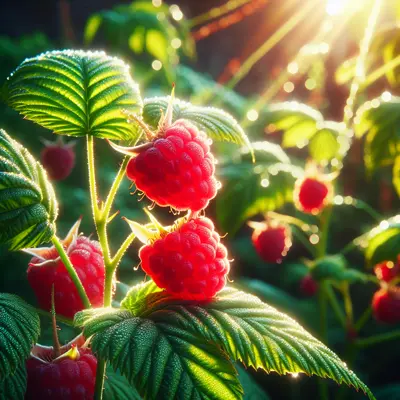
A prolific everbearing raspberry that delivers two harvests per year - a summer crop on second-year canes and a fall crop on first-year canes. Known for producing large, firm berries with excellent flavor and superior keeping quality, making it a favorite among home gardeners seeking extended harvests.
Sun
Full sun to partial shade
Zones
4–8
USDA hardiness
Height
6 feet
Planting Timeline
Showing dates for Everbearing Red Raspberry in USDA Zone 7
All Zone 7 berry →Zone Map
Click a state to update dates
Everbearing Red Raspberry · Zones 4–8
Growing Details
Complete Growing Guide
This everbearing cultivar's dual-harvest system requires strategic pruning to maximize both crops: leave canes unpruned in fall to produce berries on first-year growth, then selectively remove only the fruited portions after winter, allowing second-year canes to fruit in summer. 'Autumn Bliss' performs best in well-draining soil with full sun exposure (at least six hours daily) and consistent moisture during the growing season, as irregular watering compromises the firm berry texture this variety is prized for. The cultivar shows moderate susceptibility to raspberry cane botrytis in humid conditions, so ensure adequate air circulation between plants and avoid overhead irrigation. Unlike summer-only varieties, everbearers can produce weak, spindly canes if overfertilized with nitrogen; apply balanced fertilizer sparingly in early spring only. A practical tip: mulch heavily with straw to insulate roots and regulate soil temperature, which stabilizes fall production when evening frosts threaten premature ripening.
Light: Full sun (6 or more hours of direct sunlight a day), Partial Shade (Direct sunlight only part of the day, 2-6 hours). Soil: Clay, High Organic Matter, Loam (Silt), Sand. Soil pH: Acid (<6.0). Drainage: Good Drainage. Spacing: 3 feet-6 feet, 6-feet-12 feet. Growth rate: Medium. Maintenance: Medium. Propagation: Division, Stem Cutting. Regions: Coastal, Mountains, Piedmont.
Harvesting
Peak readiness for Autumn Bliss raspberries occurs when berries develop a deep crimson color and yield slightly to gentle finger pressure without mushing. Unlike single-harvest varieties, this everbearing cultivar produces fruit continuously across two distinct seasons: summer berries form on second-year canes while fall berries develop on new first-year growth. The berries should feel firm yet plump, indicating optimal juice content and flavor intensity. For maximum yields, harvest every two to three days during peak season, as frequent picking encourages continued production. A crucial timing tip: prune all canes to ground level in late winter to focus the plant's energy entirely on the fall crop, which typically delivers superior berry size and quality compared to the summer harvest.
Botanically the fruits are not berries (though they are usually called berries)– they are instead made of many small drupes. The fruits hold together in a hollow cone. Cultivars exist in various colors and tend to be more productive than the straight species.
Color: Gold/Yellow, Orange, Purple/Lavender, Red/Burgundy, White. Type: Aggregate, Drupe. Length: < 1 inch. Width: < 1 inch.
Garden value: Edible, Showy
Harvest time: Summer
Edibility: Fruit can be eaten raw or cooked and delicious when eaten out of hand. The fruit is also used in pies, preserves, and in wines. An herb tea is made from the dried leaves and some say that a type of tea made from raspberry and blackberry leaves is an excellent coffee substitute.
Storage & Preservation
Fresh raspberries are highly perishable and should be refrigerated immediately after harvest. Store unwashed berries in shallow containers lined with paper towels at 32-35°F with high humidity. They'll maintain quality for 3-5 days maximum. Never wash berries until just before eating—moisture accelerates spoilage.
For freezing, spread clean berries on parchment-lined baking sheets and freeze individually before transferring to freezer bags. This prevents clumping and maintains berry shape. Frozen raspberries keep excellently for 10-12 months and work perfectly in smoothies, baking, and jam-making. For jam, use the 1:1 berry-to-sugar ratio within 24 hours of harvest for peak pectin content. Raspberries also dehydrate well at 135°F for 12-18 hours, creating intensely flavored dried berries perfect for trail mixes and cereals.
History & Origin
Everbearing raspberries emerged from selective breeding programs in the early 1900s, building on natural mutations that produced fall-bearing characteristics. The concept originated when American and European breeders noticed occasional raspberry plants producing fruit on first-year canes in addition to the typical second-year fruiting pattern.
The modern everbearing red raspberry represents decades of hybridization work, primarily combining Rubus idaeus (European red raspberry) with American species for hardiness and disease resistance. Key breeding programs at agricultural universities in Minnesota, New York, and Washington state developed many of today's popular everbearing cultivars during the mid-20th century.
These varieties revolutionized home raspberry growing by extending the harvest season and providing more flexibility in garden management. The dual-cropping nature made raspberries more economically viable for small-scale growers and gave home gardeners the option of managing plants for either one large fall crop or two smaller seasonal harvests, depending on their preferences and climate constraints.
Advantages
- +Two harvests annually provide extended berry production throughout summer and fall
- +Large, firm berries with excellent flavor and superior keeping quality for storage
- +Easy to grow with minimal expertise required for successful home cultivation
- +Sweet-tart aromatic flavor delivers intense traditional raspberry taste in every bite
- +Prolific producer delivers abundant yields for fresh eating and preservation
Considerations
- -Susceptible to multiple diseases including anthracnose, gray mold, and powdery mildew
- -Vulnerable to several pests like cane borers, aphids, and Japanese beetles
- -Requires annual cane pruning strategy to manage two separate fruiting cycles
- -Dense growth habit can trap moisture and increase fungal disease pressure
Companion Plants
Garlic and chives planted at the row ends pull their weight — the sulfur compounds in alliums interfere with aphid host-finding and also deter Japanese beetles, which can shred raspberry foliage fast in midsummer. French marigolds (Tagetes patula) are worth tucking in nearby too: their root secretions suppress soil nematode populations, and the flowers draw in hoverflies whose larvae are efficient aphid predators. Comfrey is a different kind of useful — its roots go down 6 feet or more, pulling up calcium and potassium that shallow-rooted canes can't reach on their own; cut the leaves and lay them flat around the cane bases as a mulch.
Anything in the Solanaceae family — tomatoes, potatoes — should stay out of the raspberry patch entirely. They're common hosts for Verticillium dahliae, a soil-borne fungus that colonizes Rubus roots and causes progressive wilting and cane death, often mistaken for drought stress at first. Black walnut is a hard no for a different reason: juglone, a compound the roots and decomposing hulls release, is directly toxic to raspberries. NC State Extension puts the danger zone at roughly 50-60 feet from the tree's drip line.
Plant Together
Garlic
Repels aphids, spider mites, and Japanese beetles while improving soil health
Chives
Deters aphids and enhances raspberry flavor while attracting beneficial insects
Marigolds
Repel nematodes and aphids while attracting pollinators and beneficial predators
Comfrey
Deep roots bring nutrients to surface, provides potassium-rich mulch when cut
Tansy
Repels ants, mice, and flying insects that can damage raspberry plants
Yarrow
Attracts beneficial insects and may enhance disease resistance in nearby plants
Nasturtiums
Trap crop for aphids and cucumber beetles, adds nitrogen to soil
Strawberries
Similar growing requirements and help suppress weeds as ground cover
Keep Apart
Black Walnut
Releases juglone toxin that inhibits raspberry growth and can kill plants
Tomatoes
Both susceptible to similar diseases like verticillium wilt, increasing infection risk
Potatoes
Share common pests and diseases, particularly verticillium wilt and Colorado potato beetle
Nutrition Facts
Per 100g serving. % Daily Value based on 2,000 calorie diet. Source: USDA FoodData Central (FDC #2346410)
Pests & Disease Resistance
Resistance
Good resistance to raspberry bushy dwarf virus and root rot
Common Pests
Raspberry cane borer, aphids, spider mites, Japanese beetles
Diseases
Anthracnose, gray mold, powdery mildew, cane blight
Troubleshooting Everbearing Red Raspberry
What you'll see, why it happens, and what to do about it.
Canes wilting and snapping off cleanly at ground level or just above, often in late spring
Likely Causes
- Raspberry cane borer (Oberea bimaculata) — adult beetles girdle the cane in two rings, larvae tunnel downward
- Cane blight (Leptosphaeria coniothyrium) — enters through wounds or pruning cuts, causes sudden dieback
What to Do
- 1.Cut wilted canes at least 6 inches below the lowest girdle ring or lesion and dispose of them in the trash, not the compost pile
- 2.Sanitize your pruners with 70% isopropyl alcohol between cuts to avoid spreading cane blight
- 3.Next dormant season, remove all spent floricanes completely at the soil line — don't leave stubs for borers to overwinter in
Small, dark purple-to-black sunken spots on canes and leaves, sometimes with a gray center, appearing in wet spring weather
Likely Causes
- Anthracnose (Elsinoe veneta) — fungal disease that spreads rapidly in cool, wet conditions and overwinters on infected canes
- Crowded planting with poor airflow between canes
What to Do
- 1.Prune out and destroy all visibly infected canes — burning or bagging is better than composting
- 2.Thin canes to no more than 4-6 per linear foot to open up airflow
- 3.Avoid overhead irrigation; a drip line at the base keeps foliage dry and cuts disease pressure significantly
Soft, fuzzy gray coating on ripe or nearly-ripe fruit, especially after a stretch of humid or rainy days
Likely Causes
- Gray mold (Botrytis cinerea) — extremely common on raspberries, thrives in humidity above 90% and temps between 65–75°F
- Fruit left on canes past peak ripeness
What to Do
- 1.Pick fruit every 1-2 days during humid stretches — don't let ripe berries sit
- 2.Remove and bag any moldy fruit immediately; Botrytis spores spread fast to neighboring berries
- 3.After harvest, clear out all plant debris from the bed — Botrytis overwinters in dead tissue
Leaves stippled with tiny yellow or bronze dots, fine webbing visible on leaf undersides in hot, dry weather
Likely Causes
- Two-spotted spider mite (Tetranychus urticae) — populations explode when temperatures exceed 85°F and humidity is low
- Dusty conditions or overhead-irrigation avoidance taken too far, leaving foliage dry and mite-friendly
What to Do
- 1.Knock mites off with a strong spray of water to the undersides of leaves — do this in the morning so foliage dries by evening
- 2.Introduce or encourage predatory mites (Phytoseiulus persimilis) if the population is severe; they're commercially available
- 3.Avoid broad-spectrum insecticides, which kill the beneficial insects that naturally keep mite populations in check
Frequently Asked Questions
How long does it take for everbearing red raspberries to produce fruit?▼
Can you grow everbearing red raspberries in containers?▼
What's the difference between everbearing and summer-bearing raspberries?▼
When should I plant everbearing red raspberry canes?▼
Do everbearing red raspberries need full sun?▼
Are everbearing red raspberries good for beginners?▼
Zone-by-Zone Planting Calendar
Growing Guides from Wind River Greens
Sources & References
External authority sources used in compiling this guide.
See the Methodology page for how this data is sourced, what's AI-assisted, and known limitations.