Anne Golden Raspberry
Rubus idaeus 'Anne'
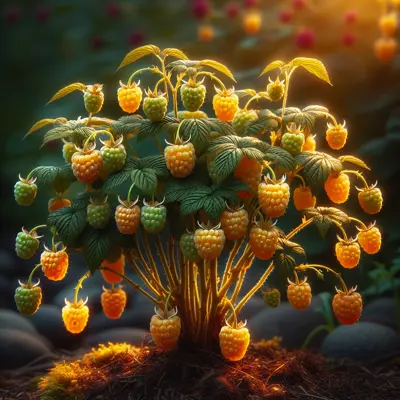
A stunning everbearing yellow raspberry that produces sweet, honey-flavored berries from summer through fall. This primocane variety offers the unique appeal of golden-yellow fruit that's less attractive to birds while delivering exceptional sweetness and a delicate, almost tropical flavor. Anne's thornless canes and compact growth habit make it ideal for small gardens and containers.
Sun
Full sun to partial shade
Zones
4–8
USDA hardiness
Height
6 feet
Planting Timeline
Showing dates for Anne Golden Raspberry in USDA Zone 7
All Zone 7 berry →Zone Map
Click a state to update dates
Anne Golden Raspberry · Zones 4–8
Growing Details
Complete Growing Guide
Anne Golden Raspberry thrives in full sun with consistent moisture, requiring well-draining soil enriched with organic matter to prevent root rot, a concern more acute than in red varieties. As a primocane type, prune all canes to ground level in late winter to encourage vigorous summer fruiting rather than following traditional red raspberry protocols. This cultivar's compact habit means it won't stretch excessively if given adequate light, though insufficient sunlight can reduce the distinctive golden color and honey sweetness. Watch for spider mites during dry spells, as the thornless canes and delicate foliage provide less natural defense than thorned varieties. Container growers should use at least 5-gallon pots with excellent drainage and frequent feeding during the extended fruiting season. A practical advantage: the golden berries' low bird appeal means you'll harvest more fruit without netting, though consistent watering during dry periods ensures peak flavor development.
Light: Full sun (6 or more hours of direct sunlight a day), Partial Shade (Direct sunlight only part of the day, 2-6 hours). Soil: Clay, High Organic Matter, Loam (Silt), Sand. Soil pH: Acid (<6.0). Drainage: Good Drainage. Spacing: 3 feet-6 feet, 6-feet-12 feet. Growth rate: Medium. Maintenance: Medium. Propagation: Division, Stem Cutting. Regions: Coastal, Mountains, Piedmont.
Harvesting
Anne raspberries reach peak harvest readiness when the berries transition from pale yellow to a deeper golden-amber hue, developing a slight give when gently squeezed without becoming mushy. Unlike single-harvest summer varieties, Anne's everbearing nature produces continuous crops from mid-summer through the first frost, requiring regular picking every two to three days during peak season to encourage further fruit development. For optimal sweetness, harvest in the morning after dew dries but before afternoon heat concentrates sugars in the canes, and pick only fully colored berries as they won't ripen further once removed from the plant.
Botanically the fruits are not berries (though they are usually called berries)– they are instead made of many small drupes. The fruits hold together in a hollow cone. Cultivars exist in various colors and tend to be more productive than the straight species.
Color: Gold/Yellow, Orange, Purple/Lavender, Red/Burgundy, White. Type: Aggregate, Drupe. Length: < 1 inch. Width: < 1 inch.
Garden value: Edible, Showy
Harvest time: Summer
Edibility: Fruit can be eaten raw or cooked and delicious when eaten out of hand. The fruit is also used in pies, preserves, and in wines. An herb tea is made from the dried leaves and some say that a type of tea made from raspberry and blackberry leaves is an excellent coffee substitute.
Storage & Preservation
Fresh Anne Golden Raspberries keep best stored unwashed in the refrigerator for 3-5 days. Place them in a single layer on paper towels inside a ventilated container—avoid airtight storage which traps moisture and causes mold. Don't wash until ready to use, as moisture accelerates spoilage.
For freezing, spread unwashed berries on parchment-lined baking sheets, freeze until solid, then transfer to freezer bags. They'll maintain quality for 10-12 months. Anne's lower water content compared to red varieties makes it excellent for dehydrating—use a food dehydrator at 135°F for 12-18 hours until leathery but still slightly pliable.
The honey-sweet flavor makes Anne exceptional for jam-making, though you may want to add a splash of lemon juice to balance the sweetness and improve gel formation. The delicate flavor also shines in fruit leather and makes beautiful golden-colored preserves that don't require artificial coloring.
History & Origin
Anne Golden Raspberry was developed by the University of Saskatchewan's fruit breeding program under Dr. Bob Bors in the early 2000s, released commercially around 2005. This cultivar emerged from the university's ambitious project to create cold-hardy, primocane-fruiting raspberries suitable for Prairie conditions, crossing traditional red varieties with yellow-fruited genetics.
The breeding program specifically aimed to develop varieties that could withstand Saskatchewan's harsh winters while producing high-quality fruit on first-year canes, eliminating the need for complex pruning systems. Anne was named following the university's tradition of giving their raspberry releases human names—other varieties from this program include 'Kimberly' and 'Brittany.'
What makes Anne historically significant is its combination of true everbearing characteristics with thornless canes, a trait that was difficult to achieve in yellow raspberries. The variety represents a breakthrough in northern fruit breeding, proving that gardeners in zones 3-4 could successfully grow premium raspberries with minimal winter protection. Its success helped establish the University of Saskatchewan as a leading raspberry breeding institution in North America.
Advantages
- +Everbearing golden raspberries produce sweet honey-flavored fruit summer through fall
- +Thornless canes make harvesting and maintenance significantly easier and safer
- +Golden color naturally deters birds better than traditional red raspberry varieties
- +Compact growth habit thrives in containers and small garden spaces
- +Primocane variety simplifies pruning with annual dormant season cane removal
Considerations
- -Vulnerable to cane blight and powdery mildew in humid growing conditions
- -Susceptible to root rot without well-draining soil and proper moisture management
- -Lower yields compared to traditional red everbearing raspberry varieties like Heritage
Companion Plants
Garlic and chives are the most practical companions here — their sulfur compounds confuse aphids and help mask the planting from pests that locate hosts by smell. Marigolds (specifically Tagetes patula) pull double duty: they suppress certain root-level nematodes and draw in predatory wasps that knock back aphid populations before they get established. Comfrey is worth planting at the row ends; its deep taproot pulls calcium and potassium up from lower soil layers, and chopping the leaves down as mulch puts those minerals right where the raspberry roots can use them.
Keep Anne well away from black walnut. Juglone — the allelopathic compound in walnut roots and leaf litter — is genuinely damaging to Rubus species, and the affected zone can extend well past the tree's drip line. Tomatoes and potatoes are the other ones to avoid: Verticillium wilt cycles through solanums without killing them outright, but it builds up in the soil and hits raspberries hard when they follow. Fennel causes problems for almost everything planted near it and is best kept isolated entirely.
Plant Together
Garlic
Repels aphids, spider mites, and other pests that commonly attack raspberries
Chives
Deters aphids and Japanese beetles while improving soil health
Marigolds
Repel nematodes and aphids, attract beneficial predatory insects
Comfrey
Deep roots bring up nutrients, leaves make excellent mulch and fertilizer
Tansy
Repels ants, mice, and flying insects that damage raspberry plants
Nasturtiums
Trap crop for aphids and cucumber beetles, attract beneficial insects
Yarrow
Attracts predatory insects and improves soil health through deep roots
Strawberries
Share similar growing requirements and help suppress weeds
Keep Apart
Black Walnut
Produces juglone which is toxic to raspberries and inhibits growth
Tomatoes
Share similar diseases like verticillium wilt and attract same pests
Potatoes
Both susceptible to similar fungal diseases and soil-borne pathogens
Fennel
Inhibits growth of most garden plants including raspberries through allelopathy
Nutrition Facts
Per 100g serving. % Daily Value based on 2,000 calorie diet. Source: USDA FoodData Central (FDC #2346410)
Pests & Disease Resistance
Resistance
Good general disease resistance
Common Pests
Raspberry fruitworm, aphids, spider mites (less bird damage than red varieties)
Diseases
Cane blight, powdery mildew, root rot in wet conditions
Troubleshooting Anne Golden Raspberry
What you'll see, why it happens, and what to do about it.
Canes developing dark brown or black lesions near the base, often with a sunken or cracked appearance
Likely Causes
- Cane blight (Leptosphaeria coniothyrium) — enters through pruning wounds or mechanical damage
- Leaving dead or wounded canes in the planting instead of removing them
What to Do
- 1.Cut affected canes back to healthy wood (look for white pith inside), then disinfect your pruners with 70% isopropyl between cuts
- 2.Remove and bag the cut material — don't compost it
- 3.Prune in dry weather so cut ends can callous before the next rain
White powdery coating on young leaves and shoot tips, especially on new growth in late spring or early summer
Likely Causes
- Powdery mildew (Podosphaera aphanis) — thrives in warm days and cool nights with low air circulation
- Overcrowded canes blocking airflow through the row
What to Do
- 1.Thin canes to no more than 4-6 per plant so air moves through freely
- 2.Apply a dilute potassium bicarbonate spray (follow label rates) at first sign — it shifts leaf surface pH and slows the fungus
- 3.Avoid overhead irrigation in the evening; drip irrigation is worth the setup cost on raspberries
Small, cream-colored grubs found inside ripe or nearly-ripe fruit; fruit collapses or tastes off
Likely Causes
- Raspberry fruitworm (Byturus unicolor) — adults lay eggs in flowers, larvae burrow into developing fruit
- Missing the adult feeding window at early bloom when control is still possible
What to Do
- 1.Scout flowers daily once they open — adult fruitworms are small brown beetles, about 1/5 inch long, feeding on pollen
- 2.Apply spinosad (an OMRI-listed option) at early bloom if adults are present, timing the spray for evening to protect pollinators
- 3.Cultivate shallowly around the base of plants in fall to expose overwintering pupae to cold and birds
Whole plant wilting despite adequate water; roots look brown or mushy when you pull one up
Likely Causes
- Phytophthora root rot — triggered by soil that stays saturated for more than a day or two
- Heavy clay soil with poor drainage, or a low spot in the bed
What to Do
- 1.Raise beds at least 8-10 inches above grade if your native soil drains slowly — Anne won't tolerate wet feet, full stop
- 2.Before replanting, work in coarse compost and confirm the site sheds water rather than collecting it
- 3.Don't put raspberries back in the same ground for at least 3 years after confirmed root rot; Phytophthora persists in soil
Frequently Asked Questions
How long does Anne golden raspberry take to produce fruit?▼
Can you grow Anne golden raspberry in containers?▼
What does Anne golden raspberry taste like compared to red raspberries?▼
When should I plant Anne golden raspberry for best results?▼
Is Anne golden raspberry good for beginners?▼
Do Anne golden raspberries need full sun or can they take shade?▼
Zone-by-Zone Planting Calendar
Growing Guides from Wind River Greens
Sources & References
External authority sources used in compiling this guide.
See the Methodology page for how this data is sourced, what's AI-assisted, and known limitations.