Black Pearl Ornamental Pepper
Capsicum annuum 'Black Pearl'
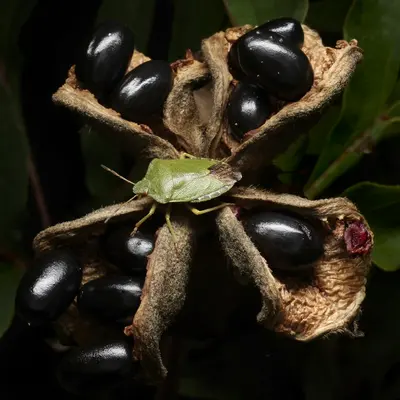
A stunning ornamental pepper that doubles as an edible variety, featuring jet-black foliage, purple flowers, and small round peppers that ripen from black to red. This compact plant creates a dramatic focal point in containers or garden beds while producing fiery hot peppers perfect for hot sauce making. Winner of the All-America Selections award for its exceptional ornamental value and garden performance.
Harvest
70-80d
Days to harvest
Sun
Blossom-End Rot of Tomato
Zones
4–11
USDA hardiness
Height
1-3 feet
Planting Timeline
Showing dates for Black Pearl Ornamental Pepper in USDA Zone 7
All Zone 7 tropical →Zone Map
Click a state to update dates
Black Pearl Ornamental Pepper · Zones 4–11
Growing Details
Zone-by-Zone Planting Calendar
Complete Growing Guide
Light: Blossom-End Rot of Tomato, Pepper, and Watermelon. Soil: Clay, High Organic Matter, Loam (Silt), Sand. Soil pH: Acid (<6.0), Alkaline (>8.0), Neutral (6.0-8.0). Drainage: Good Drainage. Water: KAP-sih-kum AN-yoo-um. Height: 1 ft. 0 in. - 3 ft. 8 in.. Spread: 0 ft. 6 in. - 1 ft. 0 in.. Spacing: 12 inches-3 feet. Growth rate: Medium. Maintenance: 'Aurora', 'Basket of Fire', 'Black Pearl', 'Buena Mulata', 'Calico', 'California Wonder', 'Candelabra', Cerasiforme Group, 'Chilly Chili', Conioides Group, 'Early Jalapeno', Fasciculatum Group, Grossum Group, 'Hot Returns', Longum Group, 'Mad Hatter', 'Purple Flash', 'Sweet orange', 'Sweet Sunset'. Propagation: Seed. Regions: Coastal, Mountains, Piedmont.
Harvesting
Fruits are a non-pulpy berry and vary considerably across cultivars. Some are long, thin, bright red, and spicy; others are thick, large, and sweet-tasting; others still are small and in ornamental shapes and colors, grown as decoration.
Color: 'Aurora', 'Basket of Fire', 'Black Pearl', 'Buena Mulata', 'Calico', 'California Wonder', 'Candelabra', Cerasiforme Group, 'Chilly Chili', Conioides Group, 'Early Jalapeno', Fasciculatum Group, Grossum Group, 'Hot Returns', Longum Group, 'Mad Hatter', 'Purple Flash', 'Sweet orange', 'Sweet Sunset'. Type: Berry. Length: 1-3 inches. Width: < 1 inch.
Garden value: Edible, Good Dried, Showy
Harvest time: Summer
Bloom time: Summer
Edibility: Fruits edible, but spiciness is unpredictable in intensity.
History & Origin
Origin: Tropical North and South America
Advantages
- +Disease resistance: Deer, Drought, Heat
- +Attracts: Songbirds
- +Wildlife value: Birds are immune to the capsaicin in peppers and can safely eat the fruits with no ill effects. Therefore, these plants may attract birds. Host plant for Potato Tuber Moth.
- +Edible: Fruits edible, but spiciness is unpredictable in intensity.
Nutrition Facts
Per 100g serving. % Daily Value based on 2,000 calorie diet. Source: USDA FoodData Central (FDC #169118)
Pests & Disease Resistance
Resistance
Good resistance to common pepper diseases. Hardy and heat tolerant.
Common Pests
Aphids, spider mites, pepper weevil, thrips
Diseases
Bacterial spot, verticillium wilt, phytophthora blight