Zucchini Eight Ball
Cucurbita pepo 'Eight Ball'
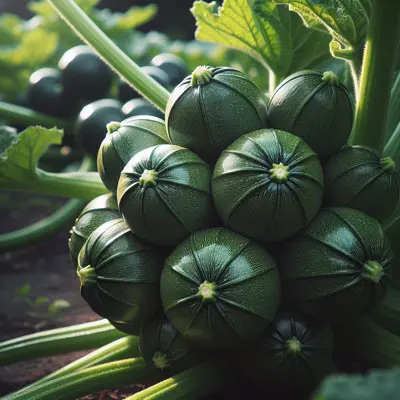
This unique round zucchini variety produces perfectly spherical, dark green fruits that are ideal for stuffing and create stunning presentation dishes. The compact, productive plants are perfect for container growing and small spaces while still delivering abundant harvests of tennis ball-sized fruits. Their dense, flavorful flesh and hollow centers make them the ultimate stuffing squash for elegant summer meals.
Harvest
50-55d
Days to harvest
Sun
Full sun
Zones
3–11
USDA hardiness
Height
1-3 feet
Planting Timeline
Showing dates for Zucchini Eight Ball in USDA Zone 7
All Zone 7 squash →Zone Map
Click a state to update dates
Zucchini Eight Ball · Zones 3–11
Growing Details
Succession Planting
Direct sow every 14–18 days from your last frost date through early June in zone 7. Eight Ball is a bush type that produces in a concentrated flush rather than a long slow trickle, so staggering two or three plantings gives you a steadier harvest instead of a 10-day glut followed by nothing. NC State Extension's IPM guidance is clear on timing: get your first sowing in as early as the soil is workable, because plants already sizing up fruit by July will largely escape peak vine borer egg-laying. Stop new sowings by late June — seeds started after that run into August heat and borer pressure without enough season left to justify the bed space.
Complete Growing Guide
Eight Ball zucchini reaches peak harvest maturity at 50-55 days, so timing succession plantings every two weeks ensures a continuous supply of those prized tennis ball-sized fruits rather than allowing them to overgrow into larger, less tender specimens. This cultivar thrives in warm soil (70°F+) and full sun with consistent moisture, though its compact growth habit makes it exceptionally well-suited to containers filled with rich, well-draining potting mix—an advantage over sprawling standard zucchini varieties. Eight Ball shows typical squash susceptibility to powdery mildew and spider mites in humid conditions, so ensure adequate air circulation around plants. A practical harvesting tip: pick fruits when they reach approximately 2-3 inches in diameter to maintain their hollow center ideal for stuffing and to encourage continued production, as leaving mature fruits on the plant signals the plant to slow flowering. The round shape is less prone to the neck rot that sometimes affects traditional elongated zucchini, making it more forgiving for container gardeners.
Light: Full sun (6 or more hours of direct sunlight a day). Soil: High Organic Matter, Loam (Silt). Soil pH: Neutral (6.0-8.0). Drainage: Good Drainage, Moist. Height: 1 ft. 0 in. - 3 ft. 0 in.. Spread: 2 ft. 0 in. - 25 ft. 0 in.. Spacing: 12 inches-3 feet. Growth rate: Rapid. Maintenance: High. Propagation: Seed. Regions: Coastal, Mountains, Piedmont.
Harvesting
Harvest Eight Ball zucchini when fruits reach tennis ball size, typically 2-3 inches in diameter, while the skin remains deep green and glossy with a firm, unblemished surface. The flesh should yield slightly to gentle pressure but not feel soft or mushy. Pick fruits continuously every 2-3 days once they reach peak size, as regular harvesting encourages the plant to produce more blooms and extends your overall yield throughout the season. Unlike larger zucchini varieties that can become watery and seedy if left too long, these compact rounds maintain their dense, tender quality only during this narrow window, so monitor plants frequently during peak production to catch them at their ideal stuffing stage before they begin to dull in color or enlarge beyond the perfect sphere.
A type of berry called a pepo that has a hard rind. Fruits may be long or round, large or small, smooth or warty– some have edible flesh and some are too hard or insipid to eat, though the seeds of all are edible. Has a harder, thicker stem compared to other species.
Color: Black, Cream/Tan, Gold/Yellow, Green, Orange, Pink, Red/Burgundy, Variegated, White. Type: Berry. Length: > 3 inches. Width: > 3 inches.
Garden value: Edible, Showy
Harvest time: Fall
Storage & Preservation
Fresh Eight Ball zucchini store best at room temperature for 3-5 days, maintaining optimal texture for stuffing applications. For longer storage, refrigerate in the crisper drawer wrapped in perforated plastic bags for up to 10 days. Avoid washing until ready to use, as excess moisture accelerates deterioration.
For preservation, blanching and freezing works excellently – cut into cubes, blanch for 2 minutes, shock in ice water, then freeze in portions. Eight Balls also excel at dehydrating when sliced thin, creating crispy chips perfect for snacking. Their dense flesh makes them ideal candidates for fermenting into zucchini pickles or incorporating into relishes and chutneys. The spherical shape also makes them perfect for stuffing and freezing whole after blanching, providing ready-to-bake meals throughout winter months.
History & Origin
The precise origins of Zucchini Eight Ball remain undocumented in published breeding records, though the variety exemplifies modern vegetable breeding's focus on ornamental and functional traits. Round zucchini types emerged from broader Cucurbita pepo domestication but Eight Ball's specific development lacks attributed breeder or institution documentation. The variety likely represents either a deliberate cross within commercial seed company breeding programs or a selection from existing round squash lines refined for consistent ball shape and container suitability. Its introduction aligns with late twentieth-century trends emphasizing compact cultivars for home gardeners and specialty produce markets, though the exact year and company responsible remain unclear in accessible horticultural literature.
Origin: North America
Advantages
- +Perfect spherical shape makes Eight Ball ideal for elegant stuffing presentations.
- +Compact plants thrive in containers and small garden spaces with high productivity.
- +Fast maturation in 50-55 days provides quick harvests throughout the summer season.
- +Hollow centers and tender flesh are perfectly designed for creative stuffed dishes.
- +Tennis ball-sized fruits are easy to harvest and handle without waste.
Considerations
- -Highly susceptible to powdery mildew requiring frequent preventative spraying in humid climates.
- -Vulnerable to multiple pest species including squash bugs and destructive vine borers.
- -Prone to bacterial wilt transmitted by cucumber beetles, potentially killing entire plants.
- -Hollow centers may rot if soil stays consistently wet or overwatered.
Companion Plants
Marigolds and nasturtiums pull real weight here — marigolds deter cucumber beetles and squash bugs through scent, while nasturtiums act as a trap crop that draws aphids off the zucchini and onto themselves. Radishes planted at the base confuse squash bugs and get harvested long before Eight Ball needs the room. Beans fix nitrogen at a shallow depth that suits the squash's heavy feeding, and corn can throw enough afternoon shade to slow powdery mildew pressure in hot spells. Potatoes belong nowhere near this bed — they share several of the same soil-borne pathogens and compete for the same root zone. Fennel is allelopathic to cucurbits and most of their companions; give it its own isolated spot or skip it entirely.
Plant Together
Basil
Repels aphids and whiteflies, may improve flavor
Marigolds
Repel cucumber beetles and squash bugs, natural pest deterrent
Nasturtiums
Act as trap crop for squash bugs and cucumber beetles
Radishes
Deter squash vine borers and cucumber beetles
Beans
Fix nitrogen in soil, benefiting heavy-feeding zucchini
Corn
Provides vertical structure and shade, part of three sisters planting
Catnip
Repels ants, aphids, and cucumber beetles
Dill
Attracts beneficial insects like parasitic wasps that control pests
Keep Apart
Potatoes
Compete for space and nutrients, both are heavy feeders
Fennel
Inhibits growth of most garden plants through allelopathy
Pumpkins
Cross-pollination can affect fruit quality and compete for space
Nutrition Facts
Per 100g serving. % Daily Value based on 2,000 calorie diet. Source: USDA FoodData Central (FDC #168565)
Pests & Disease Resistance
Resistance
Good resistance to powdery mildew
Common Pests
Squash bugs, cucumber beetles, vine borers, aphids
Diseases
Powdery mildew, bacterial wilt, downy mildew
Troubleshooting Zucchini Eight Ball
What you'll see, why it happens, and what to do about it.
Fruit setting almost no female flowers, or flowers dropping before fruit forms
Likely Causes
- Insufficient bee pollination — cucurbit pollen is sticky and not wind-transferred
- Spraying insecticides during bloom, killing native and honey bees
What to Do
- 1.Hand-pollinate early in the morning using an artist's brush or a stripped male flower — transfer pollen directly to the stigma of the female flower (the one with the tiny fruit at its base); flowers are only receptive for one day, per NC State Extension
- 2.Stop spraying insecticides during the flowering period and plant nectar-producing companions like marigolds or nasturtiums nearby to draw pollinators in
Plant wilts suddenly and completely during the day, even with adequate water; vine base shows frass or a sawdust-like entry hole
Likely Causes
- Squash vine borer (Melittia cucurbitae) — larvae tunnel into the stem at the base and eat outward
- Late planting that puts young plants in the ground after July, when adult borers are actively laying eggs
What to Do
- 1.Plant seeds as early as the season allows — NC State Extension's IPM guidance notes that squash planted early can reach maturity before borer egg-laying peaks in July
- 2.Wrap the lower 6 inches of each stem in nylon stocking or foil as a physical barrier before adults are flying
- 3.If you find an entry hole, slit the stem carefully, remove the larva, and mound damp soil over the wound — the plant sometimes recovers
White powdery coating on upper leaf surfaces, usually appearing mid-season after plants are well-established
Likely Causes
- Powdery mildew (Podosphaera xanthii or Erysiphe cichoracearum) — thrives in warm days and cool nights, spreads without wet foliage
- Dense canopy from Eight Ball's compact bush habit trapping humid air around leaves
What to Do
- 1.Remove and bag the worst-affected leaves — don't compost them
- 2.Keep plants at their full 36–48 inch spacing and clear any weeds crowding the base to open up airflow
- 3.Apply potassium bicarbonate or dilute neem oil at first sign; waiting until coverage exceeds 30% of the canopy makes control much harder
Frequently Asked Questions
How long does Eight Ball zucchini take to grow from seed?▼
Can you grow Eight Ball zucchini in containers?▼
Is Eight Ball zucchini good for beginners?▼
What does Eight Ball zucchini taste like compared to regular zucchini?▼
When should I plant Eight Ball zucchini seeds?▼
How big should Eight Ball zucchini be when harvested?▼
Zone-by-Zone Planting Calendar
| Zone | Indoor Start | Transplant | Direct Sow | Harvest |
|---|---|---|---|---|
| Zone 1 | — | — | July – August | September – August |
| Zone 2 | — | — | June – August | September – September |
| Zone 11 | — | — | January – March | April – May |
| Zone 12 | — | — | January – March | April – May |
| Zone 13 | — | — | January – March | April – May |
| Zone 3 | — | — | June – July | August – October |
| Zone 4 | — | — | June – July | August – October |
| Zone 5 | — | — | May – June | August – September |
| Zone 6 | — | — | May – June | July – September |
| Zone 7 | — | — | April – June | July – August |
| Zone 8 | — | — | April – May | June – August |
| Zone 9 | — | — | March – April | May – July |
| Zone 10 | — | — | February – April | May – June |
Growing Guides from Wind River Greens
Sources & References
External authority sources used in compiling this guide.
See the Methodology page for how this data is sourced, what's AI-assisted, and known limitations.