Yellow Straightneck Zucchini
Cucurbita pepo 'Yellow Straightneck'
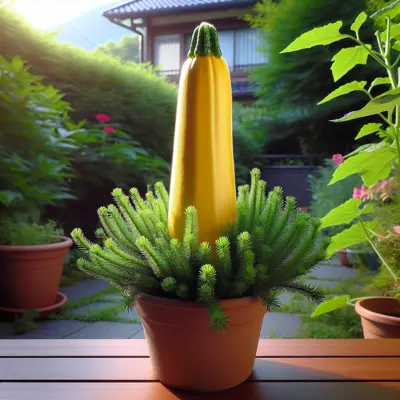
A prolific summer squash that produces straight, bright yellow fruits perfect for beginners and experienced gardeners alike. Unlike crookneck varieties, these stay straight making them easier to slice and store. The tender skin and mild flesh make them incredibly versatile in the kitchen.
Harvest
48-55d
Days to harvest
Sun
Full sun
Zones
3–11
USDA hardiness
Height
1-3 feet
Planting Timeline
Showing dates for Yellow Straightneck Zucchini in USDA Zone 7
All Zone 7 squash →Zone Map
Click a state to update dates
Yellow Straightneck Zucchini · Zones 3–11
Growing Details
Succession Planting
Direct sow every 14–18 days from around April 1 through early June in zone 7. That gets you 3–4 staggered plantings before the heat makes fruit set unreliable. NC State Extension's IPM guidance is worth taking seriously here: squash planted early reaches maturity before peak pickleworm pressure, and anything going in after mid-June risks getting hit hard by squash vine borers laying eggs in July.
Stop succession planting once daytime highs are consistently above 90°F — powdery mildew moves in fast on heat-stressed plants and production drops off sharply. A final sowing around August 15 can catch the tail end of the season if your first frost holds off past mid-October, but that's a calculated risk, not a reliable fourth planting.
Complete Growing Guide
Yellow Straightneck requires consistent warmth, needing soil temperatures above 70°F and air temperatures ideally between 75–85°F for vigorous growth and the fastest 48–55 day maturity. Plant after all frost danger passes and the soil has truly warmed, as premature seeding in cool conditions causes weak germination and stunted plants. This cultivar's straight architecture makes it less prone to the crookneck's typical twisting habit, but heavy fruit load can still cause sprawling if vines aren't supported with mulch or trellising. Watch closely for powdery mildew on the large leaves, especially in humid regions—ensure adequate spacing and air circulation to minimize fungal pressure. Unlike some squash varieties, Straightneck bolts quickly in heat stress combined with inconsistent watering, so maintain even soil moisture throughout the season rather than allowing feast-or-famine cycles. Harvest fruits at 6–8 inches when the skin still yields slightly to thumbnail pressure; this tender-stage picking dramatically increases prolific flowering and extends your harvest window significantly longer than waiting for full maturity.
Light: Full sun (6 or more hours of direct sunlight a day). Soil: High Organic Matter, Loam (Silt). Soil pH: Neutral (6.0-8.0). Drainage: Good Drainage, Moist. Height: 1 ft. 0 in. - 3 ft. 0 in.. Spread: 2 ft. 0 in. - 25 ft. 0 in.. Spacing: 12 inches-3 feet. Growth rate: Rapid. Maintenance: High. Propagation: Seed. Regions: Coastal, Mountains, Piedmont.
Harvesting
Harvest Yellow Straightneck zucchini when the skin reaches a vibrant, deep yellow color and fruits measure 6-8 inches long, as smaller specimens offer the most tender flesh and mild flavor. The skin should yield slightly to gentle thumb pressure but still feel firm—overmature squash become tough and bitter. These prolific plants benefit from continuous harvesting every 2-3 days rather than waiting for single large fruits, which encourages more flowering and extends your season substantially. Pick in early morning when fruits are cool and turgid, as this preserves quality and makes handling easier. Leaving mature squash on the vine signals the plant to stop producing, so regular removal keeps production abundant throughout summer.
A type of berry called a pepo that has a hard rind. Fruits may be long or round, large or small, smooth or warty– some have edible flesh and some are too hard or insipid to eat, though the seeds of all are edible. Has a harder, thicker stem compared to other species.
Color: Black, Cream/Tan, Gold/Yellow, Green, Orange, Pink, Red/Burgundy, Variegated, White. Type: Berry. Length: > 3 inches. Width: > 3 inches.
Garden value: Edible, Showy
Harvest time: Fall
Storage & Preservation
Store freshly harvested yellow straightneck zucchini unwashed in the refrigerator's crisper drawer for 4-7 days. Wrap individual fruits in paper towels to absorb excess moisture and prevent the soft rot that develops quickly in plastic bags. At room temperature, they'll maintain quality for 2-3 days maximum.
For longer preservation, slice into ¼-inch rounds, blanch for 2 minutes, then freeze in single layers on baking sheets before transferring to freezer bags – they'll keep for 8-10 months. Shred fresh zucchini for baking and freeze in measured portions perfect for bread recipes.
Yellow straightneck's high water content makes it excellent for relishes and pickles. Pressure canning works well for chunks in tomato-based sauces, though the texture becomes soft. Dehydrating thin slices creates chips, though results vary with humidity levels during the drying process.
History & Origin
Yellow Straightneck squash emerged as a deliberate improvement upon the older Crookneck variety, addressing a practical kitchen complaint about curved fruits being difficult to slice and store. While specific breeding records are sparse, this variety developed through American seed companies and university agricultural programs during the mid-twentieth century, likely through selection and hybridization within Cucurbita pepo germplasm. The straightneck trait represents a significant morphological shift that made the variety commercially appealing and home-garden friendly. Multiple seed companies have since offered their own Yellow Straightneck selections, though precise breeding lineages remain largely undocumented in accessible horticultural literature. What is clear is that this variety represents intentional human selection responding to consumer and gardener preferences.
Origin: North America
Advantages
- +Straight shape makes slicing and storage significantly easier than crookneck varieties.
- +Ready to harvest in just 48-55 days from planting for quick production.
- +Prolific yields provide abundant bright yellow squash throughout the growing season.
- +Mild, tender flesh works well in virtually any summer squash recipe.
- +Perfect beginner-friendly variety requiring minimal experience or specialized growing knowledge.
Considerations
- -Highly susceptible to squash bugs, cucumber beetles, and multiple viral diseases.
- -Powdery mildew and bacterial wilt frequently plague plants in humid climates.
- -Requires consistent pest monitoring and management to prevent crop losses.
Companion Plants
Nasturtiums and marigolds are the two I'd actually bother planting alongside Yellow Straightneck. Nasturtiums act as a trap crop for aphids — the aphids pile onto them and mostly leave the squash alone, which makes the pests easy to spot and knock off. French marigolds pull double duty: their root secretions suppress soil nematodes, and NC State Extension's IPM case studies specifically recommend a solid planting of them in nematode-affected beds before returning to cucurbits. Beans earn their spot too — they fix nitrogen that heavy-feeding squash draws down fast, and the root zones stay out of each other's way.
The harmful companions — potatoes, melons, and pumpkins — fail for different reasons. Melons and pumpkins share nearly every pest and disease with squash: plant them close and you've just given cucumber beetles and powdery mildew spores a single concentrated target. In our zone 7 Georgia garden, that combination turns ugly by late July when pest pressure peaks. Potatoes are a different problem — they compete for the same soil depth and moisture, and any late blight (Phytophthora infestans) moving through a potato planting doesn't stay put.
Plant Together
Nasturtiums
Acts as trap crop for squash bugs and cucumber beetles, repels aphids
Marigolds
Deters squash bugs, cucumber beetles, and nematodes with natural compounds
Radishes
Repels squash vine borers and cucumber beetles, planted early as companion
Beans
Fix nitrogen in soil to benefit heavy-feeding squash plants
Corn
Provides natural trellis and shade, part of Three Sisters planting method
Catnip
Strongly repels squash bugs, cucumber beetles, and flea beetles
Oregano
Repels cucumber beetles and provides general pest deterrent properties
Dill
Attracts beneficial insects like parasitic wasps that control squash pests
Keep Apart
Potatoes
Compete for space and nutrients, both are heavy feeders requiring similar soil resources
Melons
Attract same pests like cucumber beetles and squash bugs, increasing pest pressure
Pumpkins
Cross-pollination risk and competition for space, nutrients, and water
Nutrition Facts
Per 100g serving. % Daily Value based on 2,000 calorie diet. Source: USDA FoodData Central (FDC #168565)
Pests & Disease Resistance
Resistance
Moderate resistance to common viruses
Common Pests
Squash bugs, cucumber beetles, aphids
Diseases
Powdery mildew, bacterial wilt, mosaic virus
Troubleshooting Yellow Straightneck Zucchini
What you'll see, why it happens, and what to do about it.
Plants wilting suddenly and collapsing mid-season despite adequate water, with no recovery overnight
Likely Causes
- Bacterial wilt (Erwinia tracheiphila), transmitted by cucumber beetles (Acalymma vittatum or Diabrotica undecimpunctata) — do the 'string test': snap a wilted stem, hold the two ends close together, pull slowly apart; if thin threads of bacterial ooze bridge the gap, that's your diagnosis
- Squash vine borer (Melittia cucurbitae) tunneling inside the main stem — look for sawdust-like frass at the base of the plant
What to Do
- 1.For bacterial wilt: there is no cure once a plant is infected — pull and trash it immediately so cucumber beetles don't carry the pathogen to healthy plants nearby
- 2.For vine borers: plant seeds as early as possible (NC State Extension notes that squash planted early can mature before borers begin laying eggs in July); next year, cover transplants with row cover until flowering begins
- 3.Manage cucumber beetles proactively by removing all plant debris at season's end and turning the bed — NC State Extension's IPM guidance notes that beetle eggs often overwinter in discarded plant material
White powdery coating spreading across the upper leaf surface, usually appearing in August as nights cool down
Likely Causes
- Powdery mildew (Podosphaera xanthii or Erysiphe cichoracearum) — both are common on cucurbits and spread via airborne spores, not water splash
- Dense canopy with poor airflow, often made worse by 36-inch spacing that has fully filled in by midsummer
What to Do
- 1.Strip the worst-affected leaves and bin them — don't compost cucurbit foliage carrying mildew
- 2.Apply a potassium bicarbonate spray or diluted neem oil (follow label rates) at first sign; once the coating covers more than a third of the canopy you're doing cosmetic damage control, not prevention
- 3.Rotate out of cucurbits for at least 3 years in that bed — NC State Extension recommends this interval to break cucurbit disease and pest cycles
Frequently Asked Questions
How long does yellow straightneck zucchini take to grow from seed?▼
Can you grow yellow straightneck zucchini in containers?▼
What's the difference between yellow straightneck and yellow crookneck squash?▼
Why are my yellow straightneck zucchini rotting on the vine?▼
Is yellow straightneck zucchini good for beginners?▼
When should I plant yellow straightneck zucchini seeds?▼
Zone-by-Zone Planting Calendar
| Zone | Indoor Start | Transplant | Direct Sow | Harvest |
|---|---|---|---|---|
| Zone 3 | — | — | June – July | August – October |
| Zone 4 | — | — | June – July | August – October |
| Zone 5 | — | — | May – June | August – September |
| Zone 6 | — | — | May – June | July – September |
| Zone 7 | — | — | April – June | July – August |
| Zone 8 | — | — | April – May | June – August |
| Zone 9 | — | — | March – April | May – July |
| Zone 10 | — | — | February – April | May – June |
| Zone 1 | — | — | July – August | September – August |
| Zone 2 | — | — | June – August | September – September |
| Zone 11 | — | — | January – March | April – May |
| Zone 12 | — | — | January – March | April – May |
| Zone 13 | — | — | January – March | April – May |
Growing Guides from Wind River Greens
Sources & References
External authority sources used in compiling this guide.
See the Methodology page for how this data is sourced, what's AI-assisted, and known limitations.