Sweet Dumpling Winter Squash
Cucurbita pepo 'Sweet Dumpling'
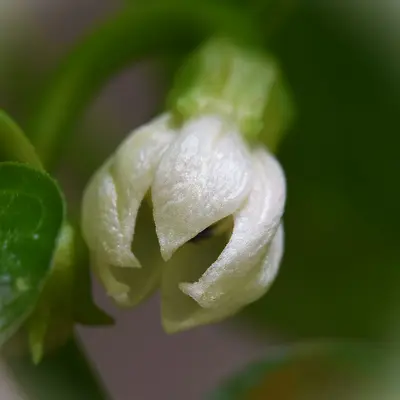
An adorable miniature winter squash that looks like a tiny pumpkin with cream-colored skin decorated with dark green stripes and ribs. Each compact vine produces 6-10 individual-serving sized fruits with sweet, tender flesh that's perfect for stuffing or roasting whole. The attractive appearance and convenient single-serving size make it ideal for fall decorations that transition beautifully to the dinner table.
Harvest
95-105d
Days to harvest
Sun
Full sun
Zones
3–11
USDA hardiness
Height
1-3 feet
Planting Timeline
Showing dates for Sweet Dumpling Winter Squash in USDA Zone 7
All Zone 7 squash →Zone Map
Click a state to update dates
Sweet Dumpling Winter Squash · Zones 3–11
Growing Details
Succession Planting
Sweet Dumpling runs 95–105 days and stores well after curing, so most growers manage one main planting rather than a rolling succession. Direct sow from late April through early June. The more consequential timing decision is your cutoff: count back 110 days from your expected first fall frost and don't sow after that date. Push past early June and you're also running headlong into peak squash vine borer (Melittia cucurbitae) egg-laying in July — NC State Extension IPM guidance is explicit that earlier plantings avoid the worst of that pressure.
A second sowing 3 weeks behind the first is reasonable if you want to spread your harvest across September and October. Beyond that, the math stops working in most climates. One well-timed sowing with good vine borer management will outperform a late planting every time.
Complete Growing Guide
Plant Sweet Dumpling in late spring once soil reaches 70°F, timing your sowing to mature before first frost in 95-105 days—critical in northern zones where the window is tight. This cultivar thrives in full sun with consistently warm soil and moderate watering; unlike larger winter squash varieties, its compact 1-3 foot vines are prone to powdery mildew in humid conditions, so prioritize air circulation and avoid overhead watering. Watch for squash vine borers, which aggressively target Cucurbita pepo, by wrapping vine bases with aluminum foil or using row covers early in the season. Sweet Dumpling's tendency to produce multiple small fruits means it requires less space than traditional winter squash, but thin to 6-10 fruits per plant to ensure adequate sugar development and that characteristic creamy texture. Plant densely only if your garden has excellent drainage and air movement, otherwise space plants farther apart to prevent fungal issues.
Light: Full sun (6 or more hours of direct sunlight a day). Soil: High Organic Matter, Loam (Silt). Soil pH: Neutral (6.0-8.0). Drainage: Good Drainage, Moist. Height: 1 ft. 0 in. - 3 ft. 0 in.. Spread: 2 ft. 0 in. - 25 ft. 0 in.. Spacing: 12 inches-3 feet. Growth rate: Rapid. Maintenance: High. Propagation: Seed. Regions: Coastal, Mountains, Piedmont.
Harvesting
Sweet Dumpling squash reach peak harvest readiness when the skin deepens to a rich dark green with prominent cream-colored stripes and the entire fruit feels hard and waxy to the touch, typically weighing 1–2 pounds each. Harvest individually as fruits mature rather than waiting for the entire plant to finish, since vines produce fruits sequentially throughout the season; this continuous picking encourages further production and extends your harvest window. Cut fruits from the vine with pruning shears, leaving a 2-inch stem attached, and aim to harvest before the first hard frost when soil temperatures begin dropping significantly, as this ensures optimal sugar development and storage quality.
A type of berry called a pepo that has a hard rind. Fruits may be long or round, large or small, smooth or warty– some have edible flesh and some are too hard or insipid to eat, though the seeds of all are edible. Has a harder, thicker stem compared to other species.
Color: Black, Cream/Tan, Gold/Yellow, Green, Orange, Pink, Red/Burgundy, Variegated, White. Type: Berry. Length: > 3 inches. Width: > 3 inches.
Garden value: Edible, Showy
Harvest time: Fall
Storage & Preservation
Cure freshly harvested Sweet Dumpling squash in a warm (80-85°F), dry location for 10 days to harden the skin and heal minor cuts. After curing, store in a cool (50-55°F), dry place with good air circulation—a basement, garage, or pantry shelf works well. Properly cured fruits keep 3-4 months when stored individually, not touching each other.
Check stored squash monthly, removing any showing soft spots immediately. Unlike larger winter squash, Sweet Dumplings can be refrigerated whole for 2-3 weeks if you lack proper storage conditions.
For preservation, these single-serving squashes excel when roasted whole and frozen in portions. Simply halve, scoop out seeds, roast cut-side down until tender, then freeze the flesh in ice cube trays for easy soup additions. The cooked flesh also dehydrates well into chips or can be pureed and frozen for pies and baked goods. Avoid water-bath canning due to the low acidity, but pressure canning cubed flesh is safe and convenient.
History & Origin
The Sweet Dumpling winter squash emerged from the broader domestication of Cucurbita pepo squashes, which were first cultivated in Mesoamerica thousands of years ago. While specific breeder documentation for this particular cultivar remains limited, Sweet Dumpling represents the modern refinement of miniature winter squash varieties developed through selective breeding in the latter twentieth century. Seed companies, particularly those specializing in heirloom and specialty vegetables, expanded the market for individual-serving squash varieties beginning in the 1980s and 1990s. The variety's distinctive cream-and-green striped appearance and compact vine habit suggest careful selection for both ornamental appeal and culinary utility, though formal breeding records are not widely publicized in horticultural literature.
Origin: North America
Advantages
- +Individual-serving size eliminates waste and portion planning difficulties.
- +Attractive striped appearance doubles as both decoration and food.
- +Sweet, nutty flavor with creamy texture rivals larger winter squash varieties.
- +Easy to moderate difficulty makes it suitable for beginner gardeners.
- +Prolific vines produce 6-10 fruits per plant reliably.
Considerations
- -Susceptible to powdery mildew, bacterial wilt, and downy mildew infections.
- -Squash bugs, cucumber beetles, and vine borers commonly damage plants.
- -Requires 95-105 days of growing season, limiting in short climates.
Companion Plants
Nasturtiums and marigolds are worth planting near Sweet Dumpling, and they do different jobs. Nasturtiums pull aphids and whiteflies away from your squash — once the nasturtium stems are loaded with insects, cut them and trash them rather than composting. French marigolds (Tagetes patula) release thiophenes from their roots, which suppress root-knot nematodes in the surrounding soil. That won't completely neutralize a heavy nematode problem, but over a 95–105 day growing window in a bed with any nematode history, it's a measurable advantage.
Beans and corn belong in the same planting for practical reasons. Bush or pole beans fix atmospheric nitrogen at their root nodules, feeding the heavy-feeding squash vines without requiring a mid-season fertilizer push. Corn breaks up the visual and chemical cues cucumber beetles use to zero in on cucurbit hosts — a real concern given that those beetles vector bacterial wilt (Erwinia tracheiphila) and there's no treatment once a plant is infected.
Keep potatoes out of this bed entirely. Both are heavy feeders drawing from the same root zone, and potatoes carry soilborne pathogens — including certain Phytophthora species — that you don't want cycling through ground you're also running cucurbits in. Fennel is allelopathic and stunts most vegetable neighbors; it belongs in its own dedicated spot, away from the squash patch.
Plant Together
Nasturtiums
Act as trap crops for squash bugs and cucumber beetles, while repelling aphids
Marigolds
Repel cucumber beetles, squash bugs, and nematodes with their strong scent
Radishes
Deter squash vine borers and cucumber beetles, quick harvest before squash spreads
Beans
Fix nitrogen in soil to benefit heavy-feeding squash plants
Corn
Provides natural trellis support and shade, part of traditional Three Sisters planting
Catnip
Repels squash bugs, cucumber beetles, and ants more effectively than DEET
Oregano
Deters cucumber beetles and provides ground cover to retain soil moisture
Sunflowers
Attract beneficial insects and provide shade, while their deep roots don't compete
Keep Apart
Potatoes
Compete for space and nutrients, both are heavy feeders requiring similar soil resources
Fennel
Inhibits growth through allelopathic compounds that stunt squash development
Brassicas
Heavy nitrogen feeders that compete directly with squash for nutrients
Nutrition Facts
Per 100g serving. % Daily Value based on 2,000 calorie diet. Source: USDA FoodData Central (FDC #168040)
Pests & Disease Resistance
Resistance
Good general disease resistance, stores well
Common Pests
Squash bugs, cucumber beetles, squash vine borers
Diseases
Powdery mildew, bacterial wilt, downy mildew
Troubleshooting Sweet Dumpling Winter Squash
What you'll see, why it happens, and what to do about it.
Wilting vines that don't recover overnight, with no obvious soil dryness — sometimes a sawdust-like frass at the base of the stem
Likely Causes
- Squash vine borer (Melittia cucurbitae) — larvae tunnel into the main stem and eat the interior, cutting off water transport
- Late planting that exposes young plants to peak egg-laying in July
What to Do
- 1.Slit the stem lengthwise near the frass with a sharp knife, extract the larva, and bury that section of stem under moist soil — it may re-root
- 2.Next season, direct sow as early as your last frost allows so vines are maturing before July egg-laying peaks, per NC State Extension IPM guidance
- 3.Cover young plants with row cover until flowering begins, then remove for pollination
Sudden whole-plant wilt on a warm day, with stems that look healthy on the outside and no vine borer frass present
Likely Causes
- Bacterial wilt (Erwinia tracheiphila), spread by cucumber beetles (Acalymma vittatum and Diabrotica undecimpunctata) — the bacteria block vascular tissue
- Cucumber beetle feeding that went unnoticed at the seedling stage
What to Do
- 1.Cut a wilted stem near the base, touch the two cut ends together and pull apart slowly — if you see sticky threads stretching between them, bacterial wilt is confirmed; pull and trash the plant
- 2.Manage cucumber beetles proactively with yellow sticky traps and early row cover, since there is no cure once infection sets in
- 3.NC State Extension notes that removing plant debris after the season and rotating away from cucurbits for at least 3 years disrupts beetle overwintering and reduces pressure
White powdery coating on the upper surface of older leaves, usually showing up in late summer as fruit is sizing up
Likely Causes
- Powdery mildew — most commonly Podosphaera xanthii or Erysiphe cichoracearum on cucurbits — thrives in warm days and cool nights, not wet leaves
- Poor airflow from crowded spacing or aggressive vine overlap
What to Do
- 1.Strip the worst-affected leaves and dispose of them in the trash, not the compost pile
- 2.Apply a potassium bicarbonate spray (follow label rates) or dilute neem oil every 7 days — start at first sign, not after half the canopy is gone
- 3.At 36–48 inch spacing, Sweet Dumpling vines still sprawl considerably; keep pathways open and don't let neighboring plants grow into the bed
Bronze or silvery stippling across leaves, with tiny moving specks on the undersides and distorted new growth
Likely Causes
- Two-spotted spider mite (Tetranychus urticae) — populations explode in hot, dry spells above 85°F
- Squash bug (Anasa tristis) nymphs, which also cause stippling and are easy to confuse with mite damage at a glance
What to Do
- 1.Flip a leaf and look with a hand lens — mites are tiny and round; squash bug nymphs are gray-green and move in clusters. They need different responses
- 2.For mites: blast the undersides of leaves with a hard stream of water for 3–4 consecutive days, then follow with insecticidal soap if pressure continues
- 3.For squash bugs: check stem bases and leaf undersides daily for bronze egg masses and crush them; hand-pick nymphs into soapy water in the early morning when they're slow
Frequently Asked Questions
How long does Sweet Dumpling winter squash take to grow?▼
Can you grow Sweet Dumpling squash in containers?▼
What does Sweet Dumpling squash taste like?▼
Is Sweet Dumpling squash good for beginners?▼
When should I plant Sweet Dumpling winter squash?▼
Sweet Dumpling vs Acorn squash - what's the difference?▼
Zone-by-Zone Planting Calendar
| Zone | Indoor Start | Transplant | Direct Sow | Harvest |
|---|---|---|---|---|
| Zone 1 | — | — | July – August | November – August |
| Zone 2 | — | — | June – August | October – September |
| Zone 11 | — | — | January – March | May – July |
| Zone 12 | — | — | January – March | May – July |
| Zone 13 | — | — | January – March | May – July |
| Zone 3 | — | — | June – July | October – October |
| Zone 4 | — | — | June – July | October – October |
| Zone 5 | — | — | May – June | September – October |
| Zone 6 | — | — | May – June | September – October |
| Zone 7 | — | — | April – June | August – October |
| Zone 8 | — | — | April – May | August – September |
| Zone 9 | — | — | March – April | July – August |
| Zone 10 | — | — | February – April | June – August |
Growing Guides from Wind River Greens
Sources & References
External authority sources used in compiling this guide.
See the Methodology page for how this data is sourced, what's AI-assisted, and known limitations.