Pattypan Squash (Sunburst)
Cucurbita pepo var. clypeata 'Sunburst'
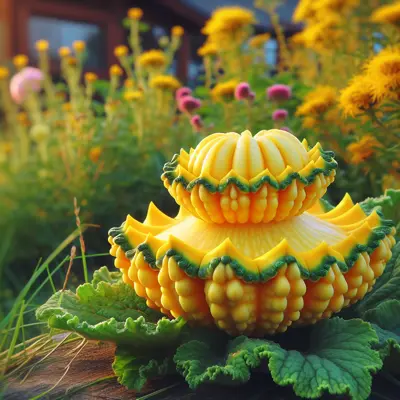
A cheerful hybrid summer squash that looks like little flying saucers in bright yellow with distinctive scalloped edges that make every harvest feel festive. This compact, productive variety is perfect for small gardens and containers, producing tender, buttery-flavored fruits that are as beautiful as they are delicious. The unique UFO shape and vibrant color make it a favorite for farmers markets and gourmet cooking.
Harvest
50-60d
Days to harvest
Sun
Full sun
Zones
3–11
USDA hardiness
Height
1-3 feet
Planting Timeline
Showing dates for Pattypan Squash (Sunburst) in USDA Zone 7
All Zone 7 squash →Zone Map
Click a state to update dates
Pattypan Squash (Sunburst) · Zones 3–11
Growing Details
Succession Planting
Direct sow Sunburst every 14 to 21 days from April through early June in zone 7. A single planting produces heavily for 4 to 6 weeks before declining or succumbing to vine borers, so two or three staggered sowings keeps fruit coming through August. Per NC State Extension's IPM timing guidance, avoid starting a new sowing that would put young seedlings in the ground in late June or July — that's peak egg-laying time for Melittia cucurbitae, and seedlings under 3 weeks old are far more vulnerable than established plants. Stop sowing once daytime highs are consistently above 90°F; germination gets spotty and plants stress quickly without recovering.
Complete Growing Guide
For optimal results with Sunburst pattypan, sow seeds directly into warm soil (65°F minimum) after the last frost date, as this hybrid germinates poorly in cool conditions and benefits from consistent warmth throughout its compact 50-60 day cycle. Plant in full sun with rich, well-draining soil amended with compost to support continuous fruit production in containers or small spaces. This cultivar's dense vine growth makes it more prone to powdery mildew in humid climates, so ensure excellent air circulation and avoid overhead watering. Unlike sprawling summer squash varieties, Sunburst's determinate growth habit means it won't overwhelm small gardens, but harvest fruits when 2-4 inches across to encourage prolific flowering and prevent plant energy waste on oversized specimens. Monitor regularly for squash vine borers, which target this variety's thick stems; wrapping the base with protective mesh provides effective early-season defense.
Light: Full sun (6 or more hours of direct sunlight a day). Soil: High Organic Matter, Loam (Silt). Soil pH: Neutral (6.0-8.0). Drainage: Good Drainage, Moist. Height: 1 ft. 0 in. - 3 ft. 0 in.. Spread: 2 ft. 0 in. - 25 ft. 0 in.. Spacing: 12 inches-3 feet. Growth rate: Rapid. Maintenance: High. Propagation: Seed. Regions: Coastal, Mountains, Piedmont.
Harvesting
Harvest Sunburst pattypan squash when the fruits reach 3-4 inches across and display a deep, uniform golden-yellow color with a firm, waxy skin that resists light fingernail pressure. Pick them at this immature stage for optimal tenderness and flavor; waiting for full maturity produces tougher, blander specimens. These productive plants benefit from continuous harvesting every 2-3 days rather than single bulk picking, as removing ripe fruits encourages the plant to produce more blooms and extend the harvest season into fall. A critical timing tip: harvest in early morning when temperatures are cool, which preserves the squash's delicate texture and prevents stress on the plant's vascular system.
A type of berry called a pepo that has a hard rind. Fruits may be long or round, large or small, smooth or warty– some have edible flesh and some are too hard or insipid to eat, though the seeds of all are edible. Has a harder, thicker stem compared to other species.
Color: Black, Cream/Tan, Gold/Yellow, Green, Orange, Pink, Red/Burgundy, Variegated, White. Type: Berry. Length: > 3 inches. Width: > 3 inches.
Garden value: Edible, Showy
Harvest time: Fall
Storage & Preservation
Fresh Sunburst pattypan squash keeps best at room temperature for 3-5 days, maintaining optimal flavor and texture. For longer storage, refrigerate in a perforated plastic bag in the crisper drawer for up to one week, though the skin may become slightly tough.
For freezing, slice fruits into ½-inch rounds, blanch in boiling water for 3 minutes, then plunge into ice water before packaging. Frozen pattypan maintains quality for 10-12 months and works well in soups and casseroles.
Pickle small, tender fruits (1-2 inches) whole using standard cucumber pickle recipes—their unique shape makes stunning refrigerator pickles. You can also grate larger fruits and freeze the pulp for winter baking projects like zucchini bread, though the texture will be softer than traditional zucchini. Dehydrate thin slices at 125°F for crispy chips that make excellent snacks or soup garnishes.
History & Origin
Pattypan squash itself descends from pre-Columbian Mesoamerican domestication of Cucurbita pepo, where indigenous peoples cultivated the distinctive scalloped, disc-shaped fruits for centuries. The 'Sunburst' cultivar specifically is a modern hybrid introduction, though detailed documentation of its exact breeder, year of release, and originating seed company remains sparse in publicly available horticultural records. Like many colorful summer squash hybrids developed during the late twentieth-century expansion of vegetable breeding, 'Sunburst' likely emerged from commercial breeding programs focused on creating productive, container-friendly varieties with enhanced visual appeal for specialty and farmers market sales. Its bright yellow coloring and compact growth habit reflect deliberate selection traits valued by contemporary gardeners and marketers, building upon the foundational pattypan genetics that stretch back centuries.
Origin: North America
Advantages
- +Compact plant ideal for small gardens and container growing spaces
- +Distinctive scalloped shape and bright yellow color enhance farmers market appeal
- +Early maturity at 50-60 days provides quick harvests in short seasons
- +Mild, buttery flavor and tender texture excel in gourmet cooking applications
- +Highly productive hybrid variety yields abundant festive-looking fruits consistently
Considerations
- -Vulnerable to squash bugs and cucumber beetles requiring active pest management
- -Susceptible to bacterial wilt and squash mosaic virus in wet conditions
- -Requires consistent moisture and well-draining soil to prevent rot issues
Companion Plants
Nasturtiums and marigolds earn the most space near Sunburst — nasturtiums act as a genuine trap crop for aphids, pulling colonies away from the squash, and marigolds emit a scent that disrupts cucumber beetle foraging. A Three Sisters layout with corn and beans fits Sunburst well: corn provides a wind-break canopy, beans fix nitrogen right at the 36-inch root zone where pattypan feeds most actively, and the squash's broad leaves shade out weeds underneath. Skip potatoes — they compete for the same soil chemistry and create a dense canopy that traps moisture and invites Pseudoperonospora cubensis. Fennel is the other one to keep well away, because its allelopathic root exudates actively suppress germination and early root development in most vegetables, cucurbits included.
Plant Together
Nasturtiums
Repels squash bugs, cucumber beetles, and aphids while attracting beneficial predatory insects
Marigolds
Deters squash bugs, cucumber beetles, and nematodes with their strong scent
Radishes
Repels squash vine borers and cucumber beetles, quick harvest before squash spreads
Corn
Provides vertical structure and shade, part of traditional Three Sisters planting
Beans
Fixes nitrogen in soil to benefit heavy-feeding squash, completes Three Sisters guild
Catnip
Strongly repels squash bugs, cucumber beetles, and other common squash pests
Dill
Attracts beneficial insects like parasitic wasps that prey on squash pest larvae
Sunflowers
Provides shade and wind protection, attracts pollinators essential for squash fruit production
Keep Apart
Potatoes
Compete for similar soil nutrients and space, both are heavy feeders that deplete soil
Fennel
Releases allelopathic compounds that inhibit squash growth and development
Aromatic herbs (Sage)
Strong oils can inhibit squash growth and may interfere with pollinator attraction
Nutrition Facts
Per 100g serving. % Daily Value based on 2,000 calorie diet. Source: USDA FoodData Central (FDC #168040)
Pests & Disease Resistance
Resistance
Good resistance to powdery mildew and some viruses
Common Pests
Squash bugs, cucumber beetles, aphids
Diseases
Bacterial wilt, squash mosaic virus, downy mildew
Troubleshooting Pattypan Squash (Sunburst)
What you'll see, why it happens, and what to do about it.
Plants wilting suddenly and completely — even in the morning before heat builds — around 3-4 weeks after transplant
Likely Causes
- Bacterial wilt (Erwinia tracheiphila), transmitted by cucumber beetles (Acalymma vittatum or Diabrotica undecimpunctata)
- Squash vine borer (Melittia cucurbitae) tunneling inside the main stem
What to Do
- 1.Cut a wilted stem near the base and touch the cut ends together — if you pull them apart slowly and see thin, thread-like strands of bacterial ooze, that's bacterial wilt; infected plants won't recover, pull and trash them
- 2.Check the base of the stem for frass (sawdust-looking excrement) and entry holes from squash vine borer — if you find them early enough, slit the stem lengthwise, remove the larva, and mound soil over the wound
- 3.Per NC State Extension IPM guidance, plant as early in the season as possible — squash vine borers lay eggs in July, so a late-May planting of Sunburst that's already producing by mid-July is much better than a June planting that's still young when the moths are active
Leaves developing angular yellow patches on top, with grayish-purple fuzzy growth on the undersides, spreading fast in humid weather
Likely Causes
- Downy mildew (Pseudoperonospora cubensis) — a water mold that thrives when nights are cool and wet, not a true fungus
- Crowded plants that prevent foliage from drying between rain events
What to Do
- 1.NC State Extension notes that downy mildew shows up at different times and places each year — check the CDM ipmPIPE forecasting map in season to know if it's been reported nearby before you see it in your beds
- 2.Strip heavily infected leaves and dispose of them away from the garden — don't compost them
- 3.Space plants the full 36 inches apart and switch to drip tape or a soaker hose; cutting leaf wetness is the single most effective thing you can do once the disease is in your area
Fruit or leaves showing mosaic-like mottling, puckering, or distorted new growth — often with some plants stunted while neighbors look fine
Likely Causes
- Squash mosaic virus (SqMV), spread by aphids (Myzus persicae and others) in a non-persistent manner — a single aphid feeding for seconds can transmit it
- Cucumber mosaic virus (CMV), also aphid-vectored, with a wide host range that lets it move in from nearby weeds or ornamentals
What to Do
- 1.Pull and bag symptomatic plants immediately — there's no cure, and leaving them in the ground gives aphids more virus to pick up and carry to healthy plants
- 2.Knock aphid colonies back with a strong water spray or insecticidal soap, but note that NC State Extension's IPM guidance makes clear that non-persistent viruses can move before you even notice the aphids — so clearing weeds within 10 feet of the bed at planting time does more good than reactive spraying in August
- 3.Rotate cucurbits out of the same bed for at least 3 years, per NC State Extension's crop rotation recommendation for cucurbit pest and disease management
Frequently Asked Questions
How long does Sunburst pattypan squash take to grow?▼
Can you grow Sunburst pattypan squash in containers?▼
What does Sunburst pattypan squash taste like?▼
When should I plant Sunburst pattypan squash?▼
Is Sunburst pattypan squash good for beginners?▼
How big should Sunburst pattypan squash be when harvested?▼
Zone-by-Zone Planting Calendar
| Zone | Indoor Start | Transplant | Direct Sow | Harvest |
|---|---|---|---|---|
| Zone 3 | — | — | June – July | August – October |
| Zone 4 | — | — | June – July | August – October |
| Zone 5 | — | — | May – June | August – September |
| Zone 6 | — | — | May – June | July – September |
| Zone 7 | — | — | April – June | July – August |
| Zone 8 | — | — | April – May | June – August |
| Zone 9 | — | — | March – April | May – July |
| Zone 10 | — | — | February – April | May – June |
| Zone 1 | — | — | July – August | September – August |
| Zone 2 | — | — | June – August | September – September |
| Zone 11 | — | — | January – March | April – May |
| Zone 12 | — | — | January – March | April – May |
| Zone 13 | — | — | January – March | April – May |
Growing Guides from Wind River Greens
Sources & References
External authority sources used in compiling this guide.
- ExtensionNC State Extension
- USDAUSDA FoodData Central
See the Methodology page for how this data is sourced, what's AI-assisted, and known limitations.