Jambalaya 2.0
Abelmoschus esculentus
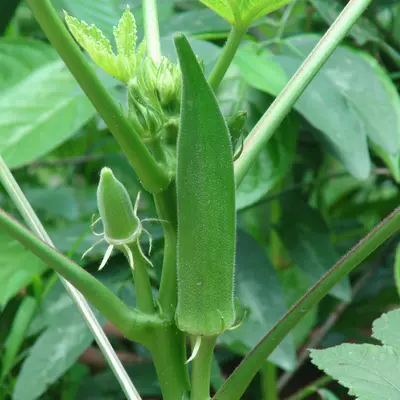
Very uniform pods with 5 points. Large, robust flowers are also edible. Makes a great ornamental in containers.Edible Flowers: Deep fry flowers or eat them stuffed, or use fresh as a striking, exotic-looking garnish. Sweet and mild flavor.
Harvest
50d
Days to harvest
Sun
Full sun
Zones
3–11
USDA hardiness
Height
3-5 feet
Planting Timeline
Showing dates for Jambalaya 2.0 in USDA Zone 7
All Zone 7 squash →Zone Map
Click a state to update dates
Jambalaya 2.0 · Zones 3–11
Growing Details
Succession Planting
Start your first direct sowing in April once soil has warmed, then make a second sowing 2–3 weeks later — the UGA Vegetable Garden Calendar specifically calls this out for squash. A third planting in May is reasonable. With Jambalaya 2.0 reaching harvest at 50 days, staggered sowings give you picking windows spread across July and into August before pest pressure makes later plantings more trouble than they're worth.
Don't push a late-June sowing unless you're ready to manage pickleworm and squash vine borers at full intensity. NC State Extension's IPM guidance is direct: early squash should reach maturity before the pickleworm arrives. If you want a fall run, wait until late July or early August and let the worst of that mid-summer pest window pass before plants are putting on fruit.
Complete Growing Guide
Very uniform pods with 5 points. Large, robust flowers are also edible. Makes a great ornamental in containers.Edible Flowers: Deep fry flowers or eat them stuffed, or use fresh as a striking, exotic-looking garnish. Sweet and mild flavor. According to Johnny's Selected Seeds, Jambalaya 2.0 is 50 days to maturity, hybrid (f1). Notable features: Grows Well in Containers, Edible Flowers.
Light: Full sun (6 or more hours of direct sunlight a day). Soil: Clay, High Organic Matter, Loam (Silt). Soil pH: Neutral (6.0-8.0). Drainage: Good Drainage, Moist. Height: 3 ft. 0 in. - 5 ft. 0 in.. Spread: 3 ft. 0 in. - 5 ft. 0 in.. Spacing: 12 inches-3 feet. Growth rate: Medium. Maintenance: Medium. Propagation: Seed. Regions: Coastal, Mountains, Piedmont.
Harvesting
Jambalaya 2.0 reaches harvest at 50 days from sowing per Johnny's Selected Seeds.
The five-sided fruit is chambered and contains many seeds. They have a musky aroma.
Color: Green, Red/Burgundy. Type: Capsule. Length: > 3 inches.
Garden value: Edible
Harvest time: Summer
Edibility: Pods may be cooked, pickled or eaten raw. Leaves may be cooked or eaten raw. Flowers are edible with a mild, slightly sweet flavor but add more color than flavor. Roasted seeds are a coffee substitute
Storage & Preservation
Store freshly harvested okra pods at 45–50°F with 85–90% humidity in perforated plastic bags or ventilated containers; use within 3–7 days for best quality. At room temperature, pods deteriorate rapidly and become fibrous within 2–3 days. For longer preservation, blanch small pods for 3 minutes, then freeze in airtight containers for up to 10 months—this retains texture better than refrigeration alone. Pickling is popular: pack hot pods into jars with vinegar, spices, and garlic, then process 10 minutes in boiling water. Drying is also effective; slice lengthwise, sun-dry or use a dehydrator at 140°F until brittle, then store in airtight jars. Jambalaya 2.0 pods are notably tender when young at 50 days; harvest promptly at this stage, as delayed picking produces tougher, more mucilaginous fruit unsuitable for freezing.
History & Origin
Jambalaya 2.0 is an F1 hybrid developed through controlled cross-pollination. Listed in the Johnny's Selected Seeds catalog.
Origin: Tropical Africa and Asia
Advantages
- +Uniform 5-pointed pods make harvesting and presentation visually appealing
- +Large edible flowers offer dual-purpose culinary and ornamental value
- +Moderate difficulty suits both beginner and experienced gardeners
- +Fast 50-day maturity enables multiple successive plantings per season
- +Container-friendly growth habit works well for small space gardens
Considerations
- -Ornamental focus may compromise pod yield compared to production varieties
- -Moderate difficulty rating suggests potential challenges for complete beginners
- -Okra susceptibility to root-knot nematodes requires careful soil management
Companion Plants
Nasturtiums and marigolds carry the most weight here. Nasturtiums draw aphids off squash and onto themselves — a genuine trap-crop effect you can see in a single season. French marigolds (Tagetes patula) produce thiophenes from their roots that suppress root-knot nematode populations in the soil; not an instant fix, but after 2–3 seasons of consistent planting, the difference in root health is measurable. Catnip and oregano are worth tucking in at the bed edges too — their volatile oils interfere with host-finding by scent-oriented pest insects. Corn is a practical neighbor in zone 7 Georgia gardens specifically because both crops go in the same April–May window, and corn's vertical growth doesn't shade low-sprawling squash the way taller cucurbits might.
Keep potatoes well away — they share soilborne pathogens with squash and compete aggressively for the same nutrients at the same root depth. Brassicas draw harlequin bugs and cabbage worms, pests the UGA Vegetable Garden Calendar already flags as high-priority in May; you don't want that pressure next to your squash bed. Fennel is allelopathic to most vegetables and should have its own isolated corner regardless of what you're growing nearby.
Plant Together
Nasturtiums
Act as trap crops for squash bugs and cucumber beetles while repelling aphids
Marigolds
Repel cucumber beetles, squash bugs, and nematodes with their strong scent
Radishes
Deter squash vine borers and cucumber beetles, quick harvest before squash spreads
Corn
Provides vertical structure for squash to climb and shade for roots
Beans
Fix nitrogen in soil to feed heavy-feeding squash plants
Catnip
Strongly repels squash bugs, cucumber beetles, and other squash pests
Oregano
Repels cucumber beetles and provides ground cover to retain soil moisture
Sunflowers
Attract beneficial insects and provide windbreak protection for squash vines
Keep Apart
Potatoes
Compete for similar soil nutrients and both are susceptible to similar fungal diseases
Brassicas
Heavy feeders that compete for nutrients and may stunt squash growth
Fennel
Releases allelopathic compounds that inhibit growth of squash and most vegetables
Nutrition Facts
Per 100g serving. % Daily Value based on 2,000 calorie diet. Source: USDA FoodData Central (FDC #168040)
Troubleshooting Jambalaya 2.0
What you'll see, why it happens, and what to do about it.
Stems near the soil line show sawdust-like frass or collapse suddenly in mid-summer
Likely Causes
- Squash vine borer (Melittia cucurbitae) — adult moths lay eggs at the stem base in July, larvae tunnel inside
- Planting too late, putting plants at peak borer pressure
What to Do
- 1.Sow Jambalaya 2.0 seeds as early as possible — NC State Extension's IPM guidance specifically says to plant squash seeds or seedlings as early as possible to avoid borers, which lay eggs in July
- 2.Wrap the lower 6 inches of the stem with foil or nylon stocking as a physical barrier once plants are established
- 3.If you find entry holes, slit the stem lengthwise, remove the larvae by hand, mound soil over the cut section, and water it in — the stem will often re-root
Leaves show light stippling or silvering; small tan or striped beetles visible on foliage and flowers
Likely Causes
- Cucumber beetle (striped, Acalymma vittatum, or spotted, Diabrotica undecimpunctata) — common on cucurbits and squash throughout the Southeast
- Overwintered eggs in nearby plant debris from the previous season
What to Do
- 1.Clear out all plant debris at season's end and turn the bed — NC State Extension notes that removing plant material and plowing disrupts the cucumber beetle's overwintering life cycle
- 2.Rotate the bed away from cucurbits for at least 3 years before returning
- 3.Row cover the plants until flowering begins; remove it for pollination
Fruit production drops sharply after a few weeks; squash are small, misshapen, or have obvious entry holes
Likely Causes
- Pickleworm (Diaphania nitidalis) — a migratory pest that moves up from the south mid-summer and bores directly into developing fruit
- Planting too late, so fruiting coincides with peak pickleworm pressure after July
What to Do
- 1.Time plantings to finish most of the harvest before pickleworm arrives — the UGA Vegetable Garden Calendar recommends successive plantings starting in April and continuing into May, which puts Jambalaya 2.0's 50-day maturity well ahead of the worst pressure
- 2.Follow the pickleworm spray schedule in the Georgia Pest Management Handbook if infestation is heavy
- 3.Cut open and destroy damaged fruit immediately; leaving infested squash on the vine or ground just cycles the pest forward
Frequently Asked Questions
How long does it take Jambalaya 2.0 squash to mature?▼
Can you grow Jambalaya 2.0 squash in containers?▼
Is Jambalaya 2.0 squash good for beginners?▼
What can you do with Jambalaya 2.0 squash flowers?▼
When should I plant Jambalaya 2.0 squash?▼
What is the flavor of Jambalaya 2.0 squash?▼
Zone-by-Zone Planting Calendar
| Zone | Indoor Start | Transplant | Direct Sow | Harvest |
|---|---|---|---|---|
| Zone 3 | — | — | June – July | August – October |
| Zone 4 | — | — | June – July | August – September |
| Zone 5 | — | — | May – June | August – September |
| Zone 6 | — | — | May – June | July – September |
| Zone 7 | — | — | April – June | July – August |
| Zone 8 | — | — | April – May | June – August |
| Zone 9 | — | — | March – April | May – July |
| Zone 10 | — | — | February – April | May – June |
| Zone 1 | — | — | July – August | September – August |
| Zone 2 | — | — | June – August | September – September |
| Zone 11 | — | — | January – March | April – May |
| Zone 12 | — | — | January – March | April – May |
| Zone 13 | — | — | January – March | April – May |
Growing Guides from Wind River Greens
Sources & References
External authority sources used in compiling this guide.
- ExtensionNC State Extension
- BreederJohnny's Selected Seeds
- USDAUSDA FoodData Central
See the Methodology page for how this data is sourced, what's AI-assisted, and known limitations.