Green Zucchini (Black Beauty type)
Cucurbita pepo 'Eight Ball'
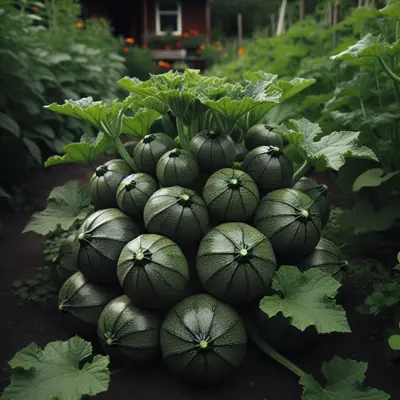
A compact, round zucchini variety that's perfect for stuffing and produces adorable baseball-sized fruits. Eight Ball zucchini offers all the tender flavor of traditional zucchini in a space-saving bush plant that's ideal for small gardens. The uniform, dark green spheres are incredibly versatile and harvest easily without the oversized surprises of regular zucchini.
Harvest
50-55d
Days to harvest
Sun
Full sun
Zones
3–11
USDA hardiness
Height
1-3 feet
Planting Timeline
Showing dates for Green Zucchini (Black Beauty type) in USDA Zone 7
All Zone 7 squash →Zone Map
Click a state to update dates
Green Zucchini (Black Beauty type) · Zones 3–11
Growing Details
Succession Planting
Direct sow every 14–18 days from April through mid-June in zone 7, stopping once daytime highs are consistently above 90°F. Zucchini will still produce in the heat, but bee activity drops off and pollination gets unreliable — NC State Extension notes that cucurbit flowers are receptive for only a single day, so a two-day gap in bee visits can mean a week of misshapen or absent fruit. Two or three staggered sowings are usually enough; your first planting hits peak production around day 50–55, right as your second is sizing up. If bee traffic in your spot is low, hand-pollinate early-morning flowers with a small brush rather than waiting on natural pollination to catch up.
Complete Growing Guide
Eight Ball zucchini's compact bush habit and rapid 50–55 day maturity demand consistent warmth and moisture to prevent the premature bolting that can stunt these naturally determinate plants. Plant seeds or transplants only after soil reaches 70°F, as cooler conditions invite powdery mildew—a common issue for this variety's dense foliage. Space plants 24–30 inches apart rather than the typical 36 inches, since Eight Ball's smaller stature allows tighter planting without sacrificing airflow, which is crucial for preventing fungal disease. Monitor daily for spider mites, which exploit the glossy leaf surface, and watch for the round fruits to mature quickly; harvesting at 3–4 inches diameter maintains peak tenderness and encourages continuous production. One essential tip: pick fruits every two to three days at their baseball size, as leaving them longer causes the skin to toughen and signals the plant to slow flowering—this cultivar's productivity depends on frequent, early harvest rather than waiting for larger specimens like traditional zucchini.
Light: Full sun (6 or more hours of direct sunlight a day). Soil: High Organic Matter, Loam (Silt). Soil pH: Neutral (6.0-8.0). Drainage: Good Drainage, Moist. Height: 1 ft. 0 in. - 3 ft. 0 in.. Spread: 2 ft. 0 in. - 25 ft. 0 in.. Spacing: 12 inches-3 feet. Growth rate: Rapid. Maintenance: High. Propagation: Seed. Regions: Coastal, Mountains, Piedmont.
Harvesting
Harvest Eight Ball zucchini when fruits reach baseball size, typically 3-4 inches in diameter, with skin that's uniformly dark green and yields slightly to gentle pressure. At this stage, the flesh remains tender and seeds are still soft, delivering optimal flavor. Pick fruits regularly every two to three days once production begins, as continuous harvesting encourages the plant to produce more blooms rather than allowing fruits to mature into oversized specimens. Use a sharp knife or pruners to cut the stem cleanly rather than twisting, which can damage the plant. For best results, harvest in early morning when temperatures are cooler and fruits are most crisp.
A type of berry called a pepo that has a hard rind. Fruits may be long or round, large or small, smooth or warty– some have edible flesh and some are too hard or insipid to eat, though the seeds of all are edible. Has a harder, thicker stem compared to other species.
Color: Black, Cream/Tan, Gold/Yellow, Green, Orange, Pink, Red/Burgundy, Variegated, White. Type: Berry. Length: > 3 inches. Width: > 3 inches.
Garden value: Edible, Showy
Harvest time: Fall
Storage & Preservation
Fresh Black Beauty zucchini stores best in the refrigerator crisper drawer for 5-7 days, wrapped loosely in perforated plastic bags to maintain humidity while preventing moisture buildup. Avoid washing until ready to use, as excess moisture accelerates decay. For counter storage, keep in a cool, dry location for 2-3 days maximum.
For longer preservation, slice zucchini into rounds or shred for freezing—blanch rounds for 1 minute before freezing to maintain texture. Shredded zucchini freezes well raw in measured portions for baking. The firm flesh of Black Beauty varieties makes excellent pickles when cut into spears and processed in a vinegar brine.
Dehydrating works exceptionally well with this variety's dense flesh—slice thinly and dry until leathery for homemade vegetable chips. Consider fermenting as zucchini kimchi or curtido for probiotic preservation that maintains nutritional value while adding complex flavors.
History & Origin
The Eight Ball zucchini represents a modern compact breeding line within the broad Black Beauty type, a dark green zucchini category established in mid-twentieth-century vegetable breeding programs. While the Eight Ball cultivar's specific breeder and introduction year remain undocumented in widely accessible sources, it belongs to the lineage of deliberate selections favoring bush-habit plants and round fruit morphology—traits developed to address space constraints in home gardens. This variety emerged from conventional breeding efforts within the Cucurbita pepo species, building upon decades of zucchini improvement work by seed companies and university horticultural programs. The round, baseball-sized fruit represents an intentional departure from the elongated zucchini standard, designed to appeal to contemporary gardeners with limited space.
Origin: North America
Advantages
- +Compact bush plant saves valuable space in small gardens
- +Baseball-sized fruits are perfect for stuffing whole vegetables
- +Fast 50-55 day harvest provides zucchini within two months
- +Uniform dark green spheres are aesthetically pleasing and marketable
- +Eliminates oversized watery zucchini surprises from traditional varieties
Considerations
- -Susceptible to squash bugs, beetles, and vine borers requiring management
- -Powdery mildew and mosaic virus pose significant disease risks
- -Smaller fruit size means lower overall yield per plant
- -Requires consistent moisture and warm conditions for best production
Companion Plants
Nasturtiums draw aphids and squash bugs away from your zucchini before those pests get established — plant them 12–18 inches out from the hill, not mixed in. Marigolds work through scent; cucumber beetles tend to avoid beds where French marigolds (Tagetes patula) are dense. Radishes are gone in 30 days and pull double duty as a beetle deterrent without competing for root space. Skip potatoes and broccoli entirely — both are heavy feeders that will fight the zucchini at the root zone, and potatoes share soilborne problems that can persist in any bed you've had cucurbit disease trouble in.
Plant Together
Nasturtiums
Trap crop for squash bugs and cucumber beetles, also repels aphids
Marigolds
Repel cucumber beetles, squash bugs, and nematodes with their strong scent
Radishes
Deter squash vine borers and cucumber beetles, mature quickly before squash spreads
Corn
Provides vertical structure and partial shade, part of traditional Three Sisters planting
Beans
Fix nitrogen in soil for heavy-feeding squash, complete the Three Sisters guild
Catnip
Strongly repels squash bugs, cucumber beetles, and other squash pests
Oregano
Repels cucumber beetles and provides ground cover to retain soil moisture
Dill
Attracts beneficial predatory insects that control squash pests
Keep Apart
Potatoes
Compete for nutrients and space, both are heavy feeders requiring similar soil resources
Aromatic herbs (Sage)
Strong essential oils can inhibit squash growth and development
Brassicas (Broccoli)
Compete heavily for nutrients and may stunt squash growth due to different soil pH preferences
Nutrition Facts
Per 100g serving. % Daily Value based on 2,000 calorie diet. Source: USDA FoodData Central (FDC #168565)
Pests & Disease Resistance
Resistance
Good resistance to powdery mildew
Common Pests
Squash bugs, cucumber beetles, squash vine borers
Diseases
Powdery mildew, bacterial wilt, mosaic virus
Troubleshooting Green Zucchini (Black Beauty type)
What you'll see, why it happens, and what to do about it.
Wilting vines that don't recover overnight, with no obvious drought stress — sometimes a sawdust-like frass at the base of the stem
Likely Causes
- Squash vine borer (Melittia cucurbitae) — larvae tunnel into the main stem just above the soil line
- Bacterial wilt (Erwinia tracheiphila) — spread by cucumber beetles feeding on leaves
What to Do
- 1.Check the stem base for entry holes and frass; if you find a borer tunnel, slit the stem lengthwise with a razor, extract the larva, and mound soil over the wound to encourage re-rooting
- 2.To confirm bacterial wilt, cut a wilted stem and touch the two cut ends together — if you pull them apart slowly and see thin, thread-like strands bridging the gap, it's wilt; pull and bag infected plants, don't compost them
- 3.Rotate out of cucurbits for at least 3 years in that bed, per NC State Extension's IPM guidance — cucumber beetles vector bacterial wilt, and reducing beetle pressure starts with breaking their overwintering cycle in the soil
White powdery coating on the upper surface of leaves, typically showing up mid-season after the canopy fills in
Likely Causes
- Powdery mildew — a fungal condition common to cucurbits in humid conditions with poor airflow
- Spacing tighter than 3 feet that traps moisture around the foliage
What to Do
- 1.Strip heavily coated leaves and throw them in the trash, not the compost bin
- 2.Lay black plastic mulch or a thick straw layer under the plants to stop spores from splashing up off bare soil — NC State Extension specifically calls out black plastic for keeping squash leaves off the ground and reducing disease pressure
- 3.Plant at 3–4 feet apart from the start; there's no practical fix for crowding once the vines are running
Frequently Asked Questions
How long does Black Beauty zucchini take to grow from seed?▼
Is Black Beauty zucchini good for beginners?▼
Can you grow Black Beauty zucchini in containers?▼
What does Black Beauty zucchini taste like compared to other varieties?▼
When should I plant Black Beauty zucchini in my area?▼
Black Beauty vs Eight Ball zucchini - what's the difference?▼
Zone-by-Zone Planting Calendar
| Zone | Indoor Start | Transplant | Direct Sow | Harvest |
|---|---|---|---|---|
| Zone 1 | — | — | July – August | September – August |
| Zone 2 | — | — | June – August | September – September |
| Zone 11 | — | — | January – March | April – May |
| Zone 12 | — | — | January – March | April – May |
| Zone 13 | — | — | January – March | April – May |
| Zone 3 | — | — | June – July | August – October |
| Zone 4 | — | — | June – July | August – October |
| Zone 5 | — | — | May – June | August – September |
| Zone 6 | — | — | May – June | July – September |
| Zone 7 | — | — | April – June | July – August |
| Zone 8 | — | — | April – May | June – August |
| Zone 9 | — | — | March – April | May – July |
| Zone 10 | — | — | February – April | May – June |
Growing Guides from Wind River Greens
Sources & References
External authority sources used in compiling this guide.
See the Methodology page for how this data is sourced, what's AI-assisted, and known limitations.