Carnival Acorn Squash
Cucurbita pepo 'Carnival'
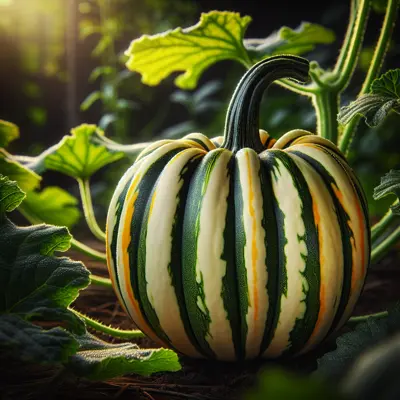
A stunning hybrid that looks like a painter's masterpiece with cream-colored base decorated with green and orange stripes and splashes. Beyond its incredible beauty, it offers sweet, nutty flesh that's perfect for stuffing and the compact size is ideal for small families. This variety turns heads at farmers markets and dinner tables alike.
Harvest
100-110d
Days to harvest
Sun
Full sun
Zones
3–11
USDA hardiness
Height
1-3 feet
Planting Timeline
Showing dates for Carnival Acorn Squash in USDA Zone 7
All Zone 7 squash →Zone Map
Click a state to update dates
Carnival Acorn Squash · Zones 3–11
Growing Details
Succession Planting
Carnival runs 100–110 days to harvest, so in zone 7 you're counting backward from your first frost date — typically mid-October in north Georgia — to find your last safe direct-sow window, which lands around June 1 to June 10 at the outside edge. One planting per season is the norm; this isn't a cut-and-come-again crop. If you want to hedge against a bad germination week, put in a second small sowing 10–14 days after your first, but don't push past June 10 or you'll be racing the frost with immature fruit. NC State Extension's IPM guidance also makes a clear case for planting closer to April once soil hits 60°F — earlier vines are further along when squash vine borer moths peak in July, and a mature vine handles borer pressure better than a young one does.
Complete Growing Guide
With a 100-110 day maturity, Carnival Acorn Squash demands warm soil (at least 70°F) and consistently warm air temperatures throughout its growing season, making late spring planting essential in most zones. This compact hybrid is less vigorous than standard acorn squash, so space plants 24-30 inches apart rather than the typical 36 inches, allowing better air circulation to prevent powdery mildew—a particular concern for this variety in humid climates. The striped skin develops its vibrant orange and green coloring primarily through adequate sunlight exposure, so avoid overshadowing with excessive foliage. Unlike larger squash varieties, Carnival's smaller size means fruits mature faster once flowering begins, but they won't develop proper sugar content or color if picked prematurely; wait for the stem to harden and become woody before harvesting. Watch for spider mites in hot, dry conditions, and maintain consistent soil moisture to prevent bitter-flavored fruits from water stress.
Light: Full sun (6 or more hours of direct sunlight a day). Soil: High Organic Matter, Loam (Silt). Soil pH: Neutral (6.0-8.0). Drainage: Good Drainage, Moist. Height: 1 ft. 0 in. - 3 ft. 0 in.. Spread: 2 ft. 0 in. - 25 ft. 0 in.. Spacing: 12 inches-3 feet. Growth rate: Rapid. Maintenance: High. Propagation: Seed. Regions: Coastal, Mountains, Piedmont.
Harvesting
Carnival acorn squash reaches peak harvest when the distinctive striping pattern deepens to rich, contrasting green and orange tones against the cream base, and the skin hardens to resist thumbnail puncture. Fruits typically mature at 4-6 inches in diameter, though size alone isn't reliable—skin hardness is the true indicator of readiness. Harvest continuously as individual squashes ripen rather than waiting for all fruits to mature simultaneously, since this extends your productive window. A crucial timing tip: cut squashes from the vine with 1-2 inches of stem attached at least two weeks before the first frost, as the stem attachment point hardens and seals during this curing period, dramatically extending storage life to several months.
A type of berry called a pepo that has a hard rind. Fruits may be long or round, large or small, smooth or warty– some have edible flesh and some are too hard or insipid to eat, though the seeds of all are edible. Has a harder, thicker stem compared to other species.
Color: Black, Cream/Tan, Gold/Yellow, Green, Orange, Pink, Red/Burgundy, Variegated, White. Type: Berry. Length: > 3 inches. Width: > 3 inches.
Garden value: Edible, Showy
Harvest time: Fall
Storage & Preservation
Store freshly harvested carnival acorn squash in a cool, dry location (50-55°F) with good air circulation—a basement, garage, or pantry works perfectly. Properly cured squash keeps 2-3 months when stored on wooden shelves or cardboard, never touching each other. Check weekly and use any showing soft spots immediately.
For longer preservation, cut squash in half, remove seeds, and roast flesh until tender. Puree the cooked flesh and freeze in portion-sized containers for up to 12 months—perfect for soups and baked goods. You can also dice raw flesh and freeze for 6-8 months, though texture becomes softer after thawing.
Dehydrate thin slices at 125°F for 8-12 hours to create sweet squash chips, or pickle cubed raw flesh in apple cider vinegar with warming spices like cinnamon and cloves for a unique condiment that highlights the variety's natural sweetness.
History & Origin
Carnival Acorn Squash is a hybrid cultivar developed by the seed company Asgrow in the 1970s as part of their ornamental squash breeding program. It was created by crossing traditional acorn squash genetics with decorative squash varieties to achieve both visual appeal and culinary quality. The variety emerged during a period when seed companies increasingly focused on aesthetically striking vegetables that could serve dual purposes: attractive enough for farmers markets while maintaining solid eating quality. While specific breeding documentation is limited in public archives, Carnival represents the broader trend of that era toward creating colorful hybrid squashes that expanded beyond utilitarian appearance into the realm of garden artistry and table presentation.
Origin: North America
Advantages
- +Striking striped appearance makes Carnival Acorn Squash highly attractive at farmers markets
- +Sweet, nutty flavor with buttery texture is excellent for stuffing recipes
- +Compact size perfectly portions for small families and individual servings
- +100-110 day maturity provides reliable harvest within standard growing seasons
- +Easy to moderate difficulty makes this hybrid accessible for most gardeners
Considerations
- -Susceptible to squash vine borers requiring vigilant pest management and prevention
- -Bacterial wilt and black rot diseases can quickly devastate entire plantings
- -Downy mildew pressure increases in humid climates and wet growing conditions
Companion Plants
The Three Sisters setup — corn, beans, and squash together — works here for practical reasons: corn provides vertical structure without shading out the low squash canopy, beans fix nitrogen that a heavy feeder like Carnival will pull hard from the soil by August, and the squash leaves shade the ground enough to slow weeds and cut moisture loss. Around here in the southeast, nasturtiums at the bed edges do real work as a trap crop, pulling cucumber beetles (Diabrotica undecimpunctata) off the squash and onto themselves. Keep potatoes out of this bed entirely — both crops share susceptibility to overlapping soil pathogens, and putting them within a few feet of each other under the same irrigation just moves problems along faster.
Plant Together
Corn
Provides natural trellis for squash vines and creates beneficial microclimate
Beans
Fixes nitrogen in soil that squash can utilize, part of Three Sisters planting
Nasturtiums
Acts as trap crop for squash bugs and cucumber beetles
Marigolds
Repels aphids, whiteflies, and nematodes with strong scent
Radishes
Deters squash vine borers and cucumber beetles when planted around squash
Catnip
Repels squash bugs, aphids, and cucumber beetles more effectively than DEET
Oregano
Repels cucumber beetles and provides general pest deterrent
Sunflowers
Attracts beneficial predatory insects and provides partial shade
Keep Apart
Potatoes
Both are heavy feeders competing for nutrients, potatoes can harbor similar diseases
Aromatic Herbs
Strong herbs like rosemary and sage can inhibit squash growth through allelopathy
Melons
Compete for space and nutrients, share common pests and diseases like powdery mildew
Nutrition Facts
Per 100g serving. % Daily Value based on 2,000 calorie diet. Source: USDA FoodData Central (FDC #168472)
Pests & Disease Resistance
Resistance
Good powdery mildew resistance
Common Pests
Squash vine borer, cucumber beetles, squash bugs
Diseases
Bacterial wilt, black rot, downy mildew
Troubleshooting Carnival Acorn Squash
What you'll see, why it happens, and what to do about it.
Vine collapses suddenly mid-season — stem near the base shows a sawdust-like frass and a soft, mushy entry hole
Likely Causes
- Squash vine borer (Melittia cucurbitae) — the moth lays eggs at the stem base in July; larvae tunnel inside and cut off water transport
- Late planting that leaves the vine still young when borer moths peak
What to Do
- 1.Direct sow Carnival no later than mid-May in zone 7 so vines are maturing — not establishing — when borers arrive in July, per NC State Extension IPM guidance on timing plantings ahead of pest peaks
- 2.If you catch it early, slit the stem lengthwise at the entry hole, extract the larva, and bury that section of stem under a few inches of soil and compost so it can re-root
- 3.Row cover plants from germination until first female flowers open, then pull it to allow pollination
Leaves show angular yellow patches that turn brown on top, with a grayish-purple fuzzy growth on the undersides
Likely Causes
- Downy mildew — NC State Extension notes this cucurbit disease appears at different times and locations each year and requires active monitoring
- Dense canopy with poor airflow trapping humidity overnight
What to Do
- 1.Space plants at least 48 inches apart and train sprawling vines outward so air moves through the planting
- 2.Strip and bag heavily infected leaves — don't compost them
- 3.Rotate this bed out of all cucurbit-family crops (squash, cucumber, melon) for at least 3 years; NC State Extension recommends that interval to break the disease cycle
Frequently Asked Questions
How long does carnival acorn squash take to grow?▼
Can you grow carnival acorn squash in containers?▼
What does carnival acorn squash taste like?▼
Is carnival acorn squash good for beginners?▼
When should I plant carnival acorn squash seeds?▼
Carnival vs regular acorn squash - what's the difference?▼
Zone-by-Zone Planting Calendar
| Zone | Indoor Start | Transplant | Direct Sow | Harvest |
|---|---|---|---|---|
| Zone 1 | — | — | July – August | November – August |
| Zone 2 | — | — | June – August | November – September |
| Zone 11 | — | — | January – March | June – July |
| Zone 12 | — | — | January – March | June – July |
| Zone 13 | — | — | January – March | June – July |
| Zone 3 | — | — | June – July | October – October |
| Zone 4 | — | — | June – July | October – October |
| Zone 5 | — | — | May – June | September – October |
| Zone 6 | — | — | May – June | September – November |
| Zone 7 | — | — | April – June | September – October |
| Zone 8 | — | — | April – May | August – October |
| Zone 9 | — | — | March – April | July – September |
| Zone 10 | — | — | February – April | July – August |
Growing Guides from Wind River Greens
Sources & References
External authority sources used in compiling this guide.
See the Methodology page for how this data is sourced, what's AI-assisted, and known limitations.