Buttercup Maxima
Cucurbita maxima 'Buttercup'
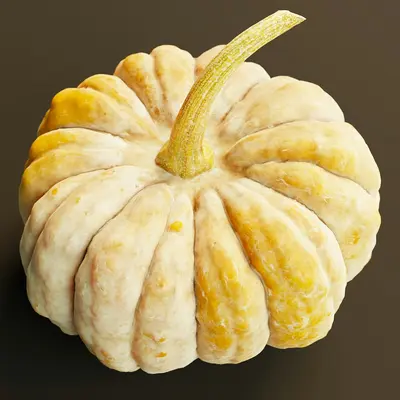
A premium winter squash with dark green skin and distinctive light green stripes, prized for its incredibly sweet, smooth orange flesh that rivals sweet potatoes in flavor. This compact storage squash has excellent keeping qualities and a creamy, dense texture that makes it perfect for soups, pies, and roasting. The turban-shaped fruits are not only delicious but also decorative.
Harvest
95-105d
Days to harvest
Sun
Full sun
Zones
3–11
USDA hardiness
Difficulty
Moderate
Planting Timeline
Showing dates for Buttercup Maxima in USDA Zone 7
All Zone 7 squash →Zone Map
Click a state to update dates
Buttercup Maxima · Zones 3–11
Growing Details
Succession Planting
Buttercup maxima doesn't need the same succession approach as salad greens or radishes. Each vine sets 3 to 5 fruits that hold on the vine until you cut them, so one or two well-timed direct sowings — April through early June — cover most gardens. A second sowing around June 1 gives you a backup if your first planting takes heavy losses from squash vine borers early in the season; at 95–105 days to maturity, a June planting still finishes ahead of hard frost in zone 7.
Don't push past mid-June. Fruit set in October with nights dropping below 50°F means the dense, dry flesh Buttercup is known for never fully develops. One main sowing and one insurance sowing 3 weeks behind it is about all the succession this variety warrants.
Complete Growing Guide
This cultivar demands consistent warmth and won't tolerate cold soil, so delay planting until soil reaches 70°F and nighttime temperatures stay above 55°F—typically 2-3 weeks after standard squash recommendations. Buttercup Maxima thrives in rich, well-draining soil with steady moisture; inconsistent watering causes the flesh to become stringy rather than creamy. Unlike larger winter squash varieties, this compact type is prone to powdery mildew in humid conditions, so ensure excellent air circulation and avoid overhead watering. The fruits mature reliably within the 95-105 day window but won't develop their signature sweetness if harvested too early—wait until the stem browns and the skin resists fingernail punctures. One essential practice: harvest before the first frost and cure fruits at 75-80°F for two weeks to fully concentrate sugars and ensure maximum storage potential through winter.
Light: Full sun (6 or more hours of direct sunlight a day). Soil: High Organic Matter, Loam (Silt). Soil pH: Neutral (6.0-8.0). Drainage: Good Drainage, Moist. Spacing: 12 inches-3 feet. Growth rate: Rapid. Maintenance: Medium. Propagation: Seed. Regions: Coastal, Mountains, Piedmont.
Harvesting
Harvest Buttercup Maxima when the skin deepens to a dark forest green with muted light green stripes and the characteristic turban crown turns tan or brown, indicating full maturity. The fruit should feel heavy for its size with a hard rind that resists fingernail puncture. Wait until the stem begins to cork and dry rather than harvesting while green, as this signals peak sugar development and storage readiness. Unlike continuous-harvest varieties, treat Buttercup as a single-harvest crop, gathering all mature fruits before the first frost since cold temperatures damage the rind and reduce storage life. A crucial timing tip: harvest in the morning after dew dries but before afternoon heat, which helps preserve the waxy bloom protecting the skin and extends storage longevity to several months.
Soft or hard-shelled berries called pepos come in a variety of colors, shapes, and sizes and are harvested in the fall. The stems of the fruits generally have a soft corky texture compared to other species.
Color: Blue, Cream/Tan, Gold/Yellow, Gray/Silver, Orange, Pink, Red/Burgundy, Variegated, White. Type: Berry. Length: > 3 inches. Width: > 3 inches.
Garden value: Edible, Long-lasting, Showy
Harvest time: Fall
Storage & Preservation
Buttercup Maxima squash stores exceptionally well in cool, dry conditions between 50–60°F with moderate humidity. A basement corner, root cellar, or unheated garage works ideal; avoid direct sunlight and keep them on shelves rather than stacked to prevent bruising. Properly cured fruits last 2–3 months, sometimes longer if undamaged at harvest. For freezing, roast or steam the flesh until tender, cool completely, then pack into freezer containers or bags; frozen puree keeps eight months. Canning works well for soups and pureed preparations using pressure canner methods for safety. Drying the flesh into chips requires an oven or dehydrator set to 130–150°F until brittle. One advantage specific to this variety: its dense, creamy flesh freezes beautifully without the watery texture that affects other winter squashes, making it superior for future pie and soup applications.
History & Origin
Buttercup squash emerged from the Cucurbita maxima species, which originated in South America and was subsequently developed through selective breeding programs in North America during the mid-twentieth century. While specific breeder attribution remains obscure in readily available documentation, the variety developed prominence through major seed companies' commercial breeding efforts, particularly those focused on winter squash improvement. The distinctive turban shape and dark green coloring with lighter striping were deliberately selected traits that appealed to both home gardeners and commercial growers. The "Buttercup" name reflects its rich, buttery flesh quality that became the defining characteristic sought by breeders working to create superior winter storage varieties for North American markets.
Origin: Central and South America
Advantages
- +Exceptional sweetness and creamy texture surpass many other winter squash varieties
- +Excellent storage life keeps fruits fresh for months after harvest
- +Compact plant size suits small gardens and container growing
- +Beautiful turban shape and green striping add ornamental value to gardens
- +Dense flesh ideal for soups, pies, and smooth purees
Considerations
- -Highly susceptible to powdery mildew in humid or wet conditions
- -Vulnerable to squash vine borers which can kill entire plants
- -Requires consistent moisture and well-draining soil for best results
- -Susceptible to bacterial wilt transmitted by cucumber beetles during season
Companion Plants
Nasturtiums and French marigolds (Tagetes patula specifically — not the tall African types) are worth the space near Buttercup maxima. Nasturtiums work as a trap crop: aphids and whiteflies pile onto them and largely leave the squash alone, which matters most when plants are young and the vines haven't yet outgrown minor pest pressure. French marigolds have a different mechanism entirely — NC State Extension singles them out for suppressing root-knot nematodes when planted as a solid cover crop for a full season. Cucurbita maxima shares that nematode vulnerability with cucumbers and tomatoes, so a dedicated marigold year in a bed before rotating squash back in is a reasonable investment if you've had nematode problems before.
Corn and beans pull their weight if you have the room. Corn provides a physical windbreak that reduces the dry, stagnant air conditions that accelerate powdery mildew spread in late summer. Beans fix nitrogen at the root level, and a heavy-feeding Cucurbita maxima at 95–105 days to maturity will deplete a bed fast — the nitrogen doesn't replace a compost side-dress around day 30, but it doesn't hurt either. Radishes planted at the bed's edge are sometimes cited for confusing cucumber beetles; the evidence is thin, but at 30 days to harvest you lose nothing trying.
Potatoes and squash compete hard at the same root depth and are both heavy feeders — put them together and one of them underperforms, usually the squash. Fennel is a different problem: it releases allelopathic compounds from its roots that suppress germination and stunt growth in most vegetables planted nearby. It doesn't play well with anything in the cucurbit family. Keep it in its own container or at least 24 inches from the bed edge.
Plant Together
Nasturtiums
Acts as trap crop for squash bugs and cucumber beetles, repels aphids
Marigolds
Repels squash bugs, cucumber beetles, and nematodes with natural compounds
Radishes
Deters squash vine borers and cucumber beetles, breaks up soil
Corn
Provides natural trellis support and partial shade, part of Three Sisters planting
Beans
Fixes nitrogen in soil for heavy-feeding squash, completes Three Sisters guild
Catnip
Strongly repels squash bugs, cucumber beetles, and other squash pests
Oregano
Repels cucumber beetles and provides ground cover to retain soil moisture
Sunflowers
Attracts beneficial insects and pollinators, provides wind protection
Keep Apart
Potatoes
Compete for space and nutrients, both are heavy feeders with similar root zones
Fennel
Inhibits growth through allelopathic compounds that stunt squash development
Aromatic herbs (Sage)
Strong oils can inhibit squash growth and may affect fruit development
Nutrition Facts
Per 100g serving. % Daily Value based on 2,000 calorie diet. Source: USDA FoodData Central (FDC #168040)
Pests & Disease Resistance
Resistance
Good resistance to common cucurbit diseases
Common Pests
Squash bugs, cucumber beetles, squash vine borers
Diseases
Powdery mildew, bacterial wilt, black rot
Troubleshooting Buttercup Maxima
What you'll see, why it happens, and what to do about it.
Wilting vines that don't recover overnight, with sawdust-like frass at the base of the stem
Likely Causes
- Squash vine borer (Melittia cucurbitae) — larvae tunnel into the main stem and eat from the inside out
- Buttercup maxima is significantly more susceptible to squash vine borer than butternut squash, which NC State Extension notes has natural resistance
What to Do
- 1.Slit the stem lengthwise where you see the frass, dig out the larva, and bury that section of vine under a few inches of moist soil — it can re-root
- 2.Cover transplants with row cover until flowers appear to block the adult moth from laying eggs
- 3.Next season, time your direct sow to get plants in the ground after the first borer flight peaks (usually mid-June in zone 7), or rotate the bed and stay out of cucurbits in that spot for at least 3 years
White powdery coating on upper leaf surfaces, starting on older leaves around mid-summer
Likely Causes
- Powdery mildew — most likely Podosphaera xanthii or Erysiphe cichoracearum, both common on cucurbits in warm, dry-day/cool-night conditions
- Planting closer than 48 inches that restricts airflow between vines
What to Do
- 1.Strip and bag the worst-affected leaves — don't compost them
- 2.Apply a potassium bicarbonate or neem oil spray to remaining foliage every 7 days; it won't erase existing infection but slows spread
- 3.At 95–105 days to maturity, if the fruit is sizing up and the vines are just starting to decline, let it go — late-season powdery mildew rarely ruins a harvest that's already close
Sudden, total vine collapse with no visible boring damage — plants look fine one day and dead the next
Likely Causes
- Bacterial wilt (Erwinia tracheiphila), transmitted by cucumber beetles (Acalymma vittatum or Diabrotica undecimpunctata) feeding on leaves
- No cure once a plant is infected — the bacteria block vascular tissue completely
What to Do
- 1.Pull and discard the plant immediately so beetles don't carry the bacteria to adjacent vines
- 2.Confirm bacterial wilt by cutting a stem near the base, pressing the two cut ends together, then slowly pulling apart — a thread of sticky sap means wilt, not drought stress
- 3.Get ahead of cucumber beetles next season with row cover or kaolin clay early on; NC State Extension also recommends removing all plant debris after harvest and turning the bed to disrupt overwintering beetle eggs
Frequently Asked Questions
How long does Buttercup Maxima take to grow from seed to harvest?▼
Can you grow Buttercup Maxima in containers?▼
What does Buttercup Maxima taste like compared to other winter squash?▼
Is Buttercup Maxima good for beginner gardeners?▼
When should I plant Buttercup Maxima seeds?▼
How do I know when Buttercup Maxima is ripe and ready to harvest?▼
Zone-by-Zone Planting Calendar
| Zone | Indoor Start | Transplant | Direct Sow | Harvest |
|---|---|---|---|---|
| Zone 3 | — | — | June – July | October – October |
| Zone 4 | — | — | June – July | October – October |
| Zone 5 | — | — | May – June | September – October |
| Zone 6 | — | — | May – June | September – October |
| Zone 7 | — | — | April – June | August – October |
| Zone 8 | — | — | April – May | August – September |
| Zone 9 | — | — | March – April | July – August |
| Zone 10 | — | — | February – April | June – August |
| Zone 1 | — | — | July – August | November – August |
| Zone 2 | — | — | June – August | October – September |
| Zone 11 | — | — | January – March | May – July |
| Zone 12 | — | — | January – March | May – July |
| Zone 13 | — | — | January – March | May – July |
Growing Guides from Wind River Greens
Sources & References
External authority sources used in compiling this guide.
- ExtensionNC State Extension
- USDAUSDA FoodData Central
See the Methodology page for how this data is sourced, what's AI-assisted, and known limitations.