Thornless Honeylocust
Gleditsia triacanthos var. inermis
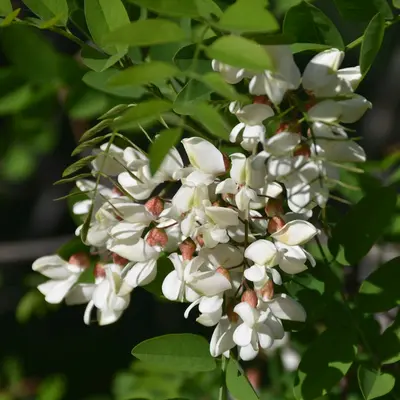
A refined version of the native honeylocust that eliminates the troublesome thorns while keeping all the best qualities of this adaptable shade tree. Its delicate, compound leaves create dappled shade perfect for growing grass underneath, while the small leaflets practically disappear into the lawn come fall. Extremely tough and drought-tolerant once established, making it ideal for challenging urban environments.
Sun
Full sun to partial shade
Zones
3–8
USDA hardiness
Height
60-80 feet
Planting Timeline
Showing dates for Thornless Honeylocust in USDA Zone 7
All Zone 7 shade-tree →Zone Map
Click a state to update dates
Thornless Honeylocust · Zones 3–8
Growing Details
Complete Growing Guide
Plant Thornless Honeylocust in early spring or fall to establish roots before stress periods, as this cultivar is notably sensitive to transplant shock compared to other shade trees. It thrives in full sun with well-draining soil and tolerates poor, compacted urban conditions once mature, though consistent watering during the first two years dramatically improves survival rates. Watch for spider mites during hot, dry summers—this variety attracts them more readily than standard honeylocusts—and monitor for mimosa webworms, which can defoliate branches rapidly. The thornless trait occasionally reverts on individual branches, producing sharp spines; prune these shoots immediately to prevent injury and maintain the cultivar's advantages. A practical tip: avoid planting near sidewalks or play areas until the canopy is well-established, as young trees occasionally produce slender seedpods that create litter, though mature specimens rarely bear viable seeds.
Light: Full sun (6 or more hours of direct sunlight a day), Partial Shade (Direct sunlight only part of the day, 2-6 hours). Soil: Clay, High Organic Matter, Loam (Silt). Soil pH: Acid (<6.0), Alkaline (>8.0), Neutral (6.0-8.0). Drainage: Good Drainage, Moist. Height: 60 ft. 0 in. - 80 ft. 0 in.. Spread: 60 ft. 0 in. - 80 ft. 0 in.. Spacing: more than 60 feet. Growth rate: Rapid. Maintenance: Medium. Propagation: Seed, Stem Cutting. Regions: Coastal, Piedmont.
Harvesting
The thornless honeylocust produces long, flat seed pods that mature from green to golden-brown in late summer through early fall, signaling peak readiness for harvest. Pods should feel papery and dry to the touch rather than still pliable, and they typically reach four to six inches in length when fully mature. This cultivar follows a continuous-harvest pattern as pods mature unevenly throughout the season, allowing you to collect ready pods over several weeks rather than waiting for a single flush. For best timing, begin checking trees in late August and harvest before the first hard frost, as pods become brittle and difficult to collect once temperatures drop significantly.
Female flowers are replaced by reddish-brown, twisted, flat bean pods 12 to 18 inches long containing oval seeds appear in the summer and can remain on the tree through the winter. Seed pods twist into corkscrew shapes and can be messy to maintain once they fall off the tree. The pods turn black when ripe and contain a sweet-tasting sticky substance that gives Honeylocust its common name.
Color: Brown/Copper, Red/Burgundy. Type: Legume. Length: > 3 inches.
Garden value: Showy
Harvest time: Fall, Winter
Edibility: The pulp inside the seed pod is edible, raw or cooked, but mostly consumed by livestock and wildlife.
Storage & Preservation
Not applicable for shade trees. Thornless Honeylocust is a living landscape plant, not a harvested commodity. Once established, it requires minimal maintenance beyond occasional pruning to shape the canopy and remove crossing branches. Store bare-root saplings in cool, humid conditions (40-50°F) until planting. For transplanted trees, mulch the root zone to retain soil moisture and regulate temperature during the growing season.
History & Origin
The thornless honeylocust emerged from deliberate breeding efforts to improve upon the native honeylocust, which despite its hardiness and drought tolerance, produced aggressive thorns that posed safety hazards in urban and residential landscapes. While specific documentation of the original breeder or exact year of introduction remains unclear in horticultural records, thornless selections were developed and propagated throughout the mid-twentieth century by American nurseries and arborists seeking to enhance the species' ornamental value. These cultivars, particularly selections like 'Moraine' and 'Skyline,' became widely distributed through commercial seed companies and established the thornless form as a refined alternative. The horticultural innovation capitalized on the species' native adaptability while eliminating its most problematic characteristic, making it suitable for contemporary landscape use.
Origin: Central and Eastern North America, NC to Mexico
Advantages
- +Thornless variety eliminates injury hazard while maintaining native honeylocust benefits
- +Dappled shade allows grass and understory plants to thrive beneath
- +Delicate compound leaves decompose quickly, requiring minimal fall cleanup effort
- +Extremely drought-tolerant once established, ideal for water-stressed urban sites
- +Adapts to poor soil and challenging conditions other trees reject
Considerations
- -Susceptible to honeylocust plant bugs and spider mites infestations
- -Occasional canker disease can weaken branches or compromise tree health
- -Webworm outbreaks may defoliate portions of canopy during peak seasons
Companion Plants
The shade-tolerant understory plants — hostas, wild ginger, coral bells, astilbe, and ferns — suit a honeylocust planting because its finely divided, pinnate leaves cast dappled light rather than the solid shade you'd get under a Norway maple, and those species evolved to work with exactly that. The leaflets are also small enough that they break down quickly and don't mat over low groundcovers the way large broadleaf litter tends to. Black walnut is the one plant to keep at a hard distance: juglone from its roots moves through soil in a zone wide enough to stress a young honeylocust for years before you'd think to connect the two. Kentucky coffee tree (Gymnocladus dioicus) occupies the same deep, wide root profile and offers no trade-off worth the competition.
Plant Together
Hostas
Thrives in dappled shade under honeylocust canopy, complementary root zones
Wild Ginger
Excellent groundcover for filtered shade, helps retain soil moisture
Coral Bells
Tolerates partial shade and benefits from protection of tree canopy
Astilbe
Prefers partial shade and moist conditions provided by tree's microclimate
Ferns
Natural woodland companions that thrive in filtered light conditions
Serviceberry
Compatible understory tree, both native species support local wildlife
Wild Columbine
Adapted to woodland edges with partial shade and well-draining soil
Virginia Bluebells
Spring ephemeral that completes cycle before full canopy development
Keep Apart
Black Walnut
Produces juglone which is toxic to honeylocust and inhibits growth
Kentucky Coffee Tree
Competes directly for same resources and growing space as fellow large legume tree
Tomatoes
Poor performance in shade and may be sensitive to root competition from large trees
Pests & Disease Resistance
Resistance
Excellent disease resistance, very few problems
Common Pests
Honeylocust plant bug, spider mites, occasionally webworms
Diseases
Generally disease-free, occasional canker issues
Troubleshooting Thornless Honeylocust
What you'll see, why it happens, and what to do about it.
Stippled, bronzed foliage with fine webbing on leaf undersides, typically in hot, dry stretches mid-summer
Likely Causes
- Spider mite (Tetranychus urticae) infestation — populations explode in dry conditions above 85°F
- Drought stress weakening the tree's natural defenses
What to Do
- 1.Blast the undersides of reachable branches with a strong jet of water — knocks mites off and they rarely climb back
- 2.Water deeply at the root zone (slow soak, 1-2 inches) to reduce drought stress that makes infestations worse
- 3.For severe cases on young trees, apply insecticidal soap to the undersides of leaves, repeating every 7 days for 3 applications
Distorted new growth and small, curled leaves in spring, sometimes accompanied by stippling on young leaflets
Likely Causes
- Honeylocust plant bug (Diaphnocoris chlorionis) — a small green mirid bug that feeds on new tissue as leaves emerge
- Feeding typically peaks in the 2-3 week window after leaf flush
What to Do
- 1.On established trees, skip treatment — NC State Extension notes healthy trees outgrow the damage without lasting harm
- 2.On young trees under 3 years old, apply a pyrethrin-based spray at bud break if populations were heavy the prior year
- 3.Note the timing: if this shows up two years running, look hard at whether the planting site is compacted or chronically dry
Silky webbed nests appearing in branch crotches in late summer, with skeletonized leaves inside the tents
Likely Causes
- Fall webworm (Hyphantria cunea) — a late-season caterpillar that builds communal silk tents over branch tips
What to Do
- 1.Prune out the tent while it's still small (before caterpillars disperse), bag it, and trash it — don't compost
- 2.On large established trees, the damage is cosmetic and the tree recovers fully; no spray is necessary
- 3.If nests appear before mid-August, a single application of Bacillus thuringiensis (Bt) targeted at the nest opening is effective and won't harm beneficial insects elsewhere in the canopy
Sunken, discolored patches on bark — sometimes with cracking or oozing — that don't close over a full growing season
Likely Causes
- Thyronectria canker (Thyronectria austro-americana) — the most common canker pathogen on honeylocust, enters through wounds or stressed tissue
- Physical damage from string trimmers, mower decks, or frost cracks giving the fungus an entry point
What to Do
- 1.Prune affected branches at least 6 inches below visible discoloration, cutting back to healthy wood — sterilize your saw between cuts with 70% isopropyl alcohol
- 2.Maintain a 3-4 foot mulched ring around the base to keep equipment away from the trunk
- 3.No effective fungicide exists for established canker — sanitation pruning and consistent deep watering in the first 3 years are your only real tools
Frequently Asked Questions
How fast does a Thornless Honeylocust grow?▼
Is the Thornless Honeylocust good for beginners?▼
Can you grow Thornless Honeylocust in containers?▼
What's the best time to plant Thornless Honeylocust?▼
Why choose Thornless Honeylocust over regular honeylocust?▼
Does Thornless Honeylocust drop leaves messily?▼
Zone-by-Zone Planting Calendar
Growing Guides from Wind River Greens
Sources & References
External authority sources used in compiling this guide.
- ExtensionNC State Extension
See the Methodology page for how this data is sourced, what's AI-assisted, and known limitations.