Japanese Maple
Acer palmatum
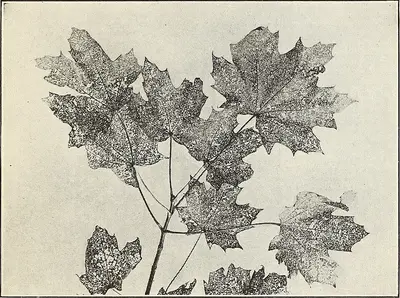
The jewel of ornamental shade trees, prized for their delicate palmate leaves and stunning seasonal color changes from spring through fall. Available in countless cultivars with varying leaf shapes, sizes, and colors, Japanese maples bring four-season interest to any landscape. Their refined branching structure and compact size make them perfect for smaller yards where every plant must earn its place.
Sun
Dappled Sunlight
Zones
5–8
USDA hardiness
Height
15-25 feet
Planting Timeline
Showing dates for Japanese Maple in USDA Zone 7
All Zone 7 shade-tree →Zone Map
Click a state to update dates
Japanese Maple · Zones 5–8
Growing Details
Complete Growing Guide
Light: Dappled Sunlight (Shade through upper canopy all day). Soil: High Organic Matter. Drainage: Good Drainage, Moist. Height: 15 ft. 0 in. - 25 ft. 0 in.. Spread: 10 ft. 0 in. - 25 ft. 0 in.. Growth rate: Slow. Maintenance: High. Propagation: Grafting.
Harvesting
A schizocarp of two samaras, wings incurved forming an arch, becoming reddish.
Color: Brown/Copper, Red/Burgundy. Type: Samara, Schizocarp.
Harvest time: Fall
Storage & Preservation
Japanese maples are ornamental shade trees and do not require storage or preservation in the traditional sense. However, for propagation or specimen care: freshly cut branches should be stored in cool, moist conditions (50-60°F) to maintain viability. Preserve cuttings using hormone rooting powder and peat-based media. For seed storage, keep in cool, dry conditions (35-40°F) with low humidity in sealed containers for up to one year. Young saplings should be kept in protected environments during their first winter, mulched heavily for insulation.
History & Origin
Origin: Asia: Japan, China, Korea, eastern Mongolia, southeastern Russia
Advantages
- +Attracts: Moths, Pollinators, Songbirds
Considerations
- -High maintenance
Companion Plants
Hostas, Astilbe, Heuchera, and Japanese Painted Fern work well under a Japanese Maple because they want the same thing the tree wants — dappled light, consistent moisture, and acidic to neutral soil in the 5.5–7.0 pH range. They're also shallow-rooted enough that they don't compete seriously with the maple's feeder roots, which sit in the top 18–24 inches of soil. Azalea and Camellia are strong companions for the same pH reason; both prefer slightly acidic conditions and won't need the kind of lime or amendment that would push the soil out of the maple's preferred range.
Black Walnut is the one to keep well away — it produces juglone, an allelopathic compound that moves through the soil and is toxic to Acer palmatum specifically. Cornell Cooperative Extension puts the damage zone at roughly 50–60 feet from the walnut's canopy edge, so distance is the only real fix. Large conifers cause trouble differently: their wide, aggressive surface roots pull moisture from the same top 24 inches the maple depends on, and their dense canopies cut off the dappled light the maple needs to hold its leaf color. Grass lawn right up to the trunk is a slower problem — turf competes for moisture during dry spells and invites mower damage to surface roots, which are easier to nick than most people expect.
Plant Together
Hosta
Thrives in similar shade conditions and complements the maple's canopy coverage
Astilbe
Enjoys filtered shade and adds colorful blooms while tolerating acidic soil conditions
Heuchera
Provides year-round foliage interest in partial shade with shallow root system
Japanese Painted Fern
Creates textural contrast with silvery foliage and thrives in similar acidic, well-draining soil
Azalea
Shares preference for acidic soil and partial shade, blooms complement maple's structure
Camellia
Both prefer acidic, well-draining soil and protection from harsh afternoon sun
Bleeding Heart
Spring blooms emerge before maple leafs out, then tolerates summer shade
Coral Bells
Shallow roots won't compete with maple, adds seasonal color in partial shade
Keep Apart
Black Walnut
Produces juglone toxin that can damage Japanese maple roots and overall health
Large Conifer Trees
Creates too much dense shade and competes for water, limiting maple's growth
Grass Lawn
Competes aggressively for surface water and nutrients that shallow maple roots need
Pests & Disease Resistance
Resistance
Generally healthy, sensitive to drought stress and wind damage
Common Pests
Aphids, scale insects, borers
Diseases
Verticillium wilt, leaf scorch, anthracnose
Troubleshooting Japanese Maple
What you'll see, why it happens, and what to do about it.
Leaves curling and covered in a sticky residue, sometimes with a black sooty coating on upper surfaces
Likely Causes
- Aphid colonies (commonly Periphyllus californiensis on maples) feeding on new growth
- Sooty mold fungus colonizing the aphid honeydew
What to Do
- 1.Blast colonies off with a firm jet of water — repeat every 2-3 days until the population drops
- 2.If the infestation persists past two weeks, apply insecticidal soap directly to affected stems and leaf undersides
- 3.The sooty mold will flake off on its own once the aphids are gone; no separate treatment needed
Leaf margins and tips turning brown and papery in mid-summer, sometimes scorching across the whole canopy
Likely Causes
- Leaf scorch — not a pathogen, but a physiological response to heat, drought stress, or reflected heat from pavement or walls
- Planting in full afternoon sun in zones 7-8, where temperatures regularly exceed 90°F
What to Do
- 1.Water deeply once or twice a week at the root zone — Japanese Maples need consistent moisture, not frequent shallow watering
- 2.Apply a 3-inch layer of organic mulch (shredded hardwood or pine bark) out to the drip line, keeping it off the trunk
- 3.If the tree is newly planted and in a bad spot, relocate it in fall before it's established enough that moving becomes risky
Sudden wilting of one or more branches while the rest of the tree looks fine; wilted branches don't recover with watering
Likely Causes
- Verticillium wilt (Verticillium dahliae or V. albo-atrum) — a soil-borne fungus that blocks the vascular system
- History of solanaceous crops (tomatoes, potatoes, eggplant) or strawberries in the same bed, which share susceptibility
What to Do
- 1.Prune affected branches back to healthy wood — cut until you see clean tissue with no brown streaking in the cross-section
- 2.Sterilize pruning tools with 70% isopropyl alcohol between cuts to avoid spreading the fungus
- 3.There's no chemical cure for Verticillium in the soil; keep the tree otherwise unstressed (consistent water, fresh mulch, no root disturbance) and it may outgrow mild infections — severe cases often don't recover
Raised, waxy or crusty bumps on branches and stems; yellowing leaves; general decline in vigor
Likely Causes
- Scale insects — most likely cottony maple scale (Pulvinaria innumerabilis) or oystershell scale (Lepidosaphes ulmi)
- Stressed or overcrowded trees are more susceptible; scale populations build fast on weakened wood
What to Do
- 1.In late winter before bud break, apply dormant horticultural oil at the label rate — this smothers overwintering eggs
- 2.For active summer infestations, apply neem oil or insecticidal soap to crawler-stage juveniles (the mobile phase, usually late spring)
- 3.Scrape visible adult scale off small branches with a soft brush; it doesn't fix the infestation but reduces the load