Honey Locust
Gleditsia triacanthos var. inermis
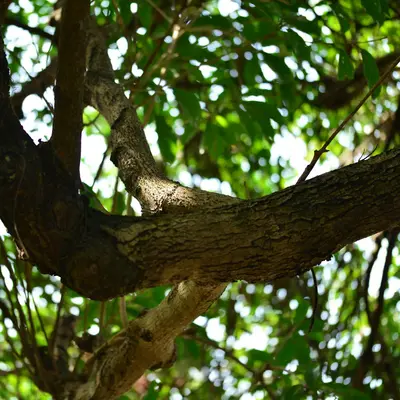
This fast-growing native shade tree is beloved by homeowners for its delicate, fern-like foliage that creates dappled shade perfect for growing grass underneath. The thornless variety produces minimal seed pods and offers brilliant golden-yellow fall color, making it one of the most practical and beautiful choices for suburban landscapes.
Sun
Full sun to partial shade
Zones
3–8
USDA hardiness
Height
60-80 feet
Planting Timeline
Showing dates for Honey Locust in USDA Zone 7
All Zone 7 shade-tree →Zone Map
Click a state to update dates
Honey Locust · Zones 3–8
Growing Details
Complete Growing Guide
Light: Full sun (6 or more hours of direct sunlight a day), Partial Shade (Direct sunlight only part of the day, 2-6 hours). Soil: Clay, High Organic Matter, Loam (Silt). Soil pH: Acid (<6.0), Alkaline (>8.0), Neutral (6.0-8.0). Drainage: Good Drainage, Moist. Height: 60 ft. 0 in. - 80 ft. 0 in.. Spread: 60 ft. 0 in. - 80 ft. 0 in.. Spacing: more than 60 feet. Growth rate: Rapid. Maintenance: Medium. Propagation: Seed, Stem Cutting. Regions: Coastal, Piedmont.
Harvesting
Female flowers are replaced by reddish-brown, twisted, flat bean pods 12 to 18 inches long containing oval seeds appear in the summer and can remain on the tree through the winter. Seed pods twist into corkscrew shapes and can be messy to maintain once they fall off the tree. The pods turn black when ripe and contain a sweet-tasting sticky substance that gives Honeylocust its common name.
Color: Brown/Copper, Red/Burgundy. Type: Legume. Length: > 3 inches.
Garden value: Showy
Harvest time: Fall, Winter
Edibility: The pulp inside the seed pod is edible, raw or cooked, but mostly consumed by livestock and wildlife.
Storage & Preservation
Honey Locust is a shade tree, not a consumable product requiring storage. However, seeds (if collected) should be stored in cool, dry conditions at 32-41°F with low humidity (below 50%) for long-term viability. Stratification (cold, moist treatment) for 30 days improves germination. Cuttings can be preserved in moist peat moss at 40°F for short-term propagation. For tree maintenance, prune in late winter when dormant to preserve structure and shape for optimal canopy development.
History & Origin
Origin: Central and Eastern North America, NC to Mexico
Advantages
- +Attracts: Bees, Butterflies, Moths, Small Mammals
- +Edible: The pulp inside the seed pod is edible, raw or cooked, but mostly consumed by livestock and wildlife.
- +Fast-growing
Companion Plants
The shade-tolerant perennials in our database — hostas, wild ginger, astilbe, ferns, and coral bells — work well under honey locust because its fine, pinnate leaves cast dappled light rather than the dense canopy a red maple or white oak throws. That filtered sun is close to ideal for those plants, and since honey locust roots run deep and the tree is drought tolerant, it isn't pulling hard at the top 12 inches of soil where Virginia bluebells and wild columbine are feeding. In our zone 7 Georgia gardens, black-eyed Susans planted at the drip line — where canopy cover thins out — can still pull 6 or more hours of direct sun and hold their own.
Black walnut is the one to avoid: Juglans nigra produces juglone, a compound that's phytotoxic to a wide range of plants at the root zone, and Gleditsia is sensitive enough that you don't want them sharing a planting bed or even a close fence line. Kentucky coffee tree is a different problem — it occupies the same tall-canopy niche, draws on the same soil column, and doesn't bring anything complementary to the pairing. Tomatoes simply don't belong in the shadow of any 60-foot tree; the light loss alone cuts yield before root competition even enters the picture.
Plant Together
Hostas
Thrives in the filtered shade provided by honey locust canopy
Wild Ginger
Tolerates shade and helps suppress weeds under the tree
Astilbe
Benefits from dappled shade and moisture retention under canopy
Ferns
Natural woodland companions that thrive in filtered light
Coral Bells
Shade-tolerant perennial that adds color to understory plantings
Black-eyed Susan
Both native plants that support local wildlife and pollinators
Wild Columbine
Native woodland plant that complements honey locust ecosystem
Virginia Bluebells
Spring ephemeral that blooms before full canopy development
Keep Apart
Black Walnut
Produces juglone which can inhibit honey locust growth and health
Kentucky Coffee Tree
Competes for similar resources and may cause overcrowding of large trees
Tomatoes
May be affected by honey locust's allelopathic compounds in root zone
Pests & Disease Resistance
Resistance
Very disease resistant
Common Pests
Honey locust plant bug, spider mites, scale
Diseases
Canker, leaf spot (rarely serious)
Troubleshooting Honey Locust
What you'll see, why it happens, and what to do about it.
Leaves stippled or bronzed, tiny webbing visible on undersides of leaflets during hot dry stretches
Likely Causes
- Spider mites (Tetranychus urticae) — populations explode in hot, dry conditions above 85°F
- Water-stressed trees are more susceptible; drought amplifies the problem
What to Do
- 1.Blast the undersides of affected branches with a strong jet of water — it knocks mite populations back fast
- 2.Water deeply at the root zone (drip or soaker hose for 45-60 minutes) if the tree has gone dry; a stressed tree can't fight this off
- 3.If the infestation is heavy on a young tree, apply insecticidal soap or neem oil, hitting leaf undersides thoroughly — repeat every 7 days for 3 applications
Sunken, discolored patches on bark or branches, sometimes with dieback above the affected area
Likely Causes
- Canker disease (Thyronectria austro-americana is the most common on Gleditsia) — typically enters through wounds, pruning cuts, or winter injury
- Mechanical damage from lawn equipment nicking the trunk
What to Do
- 1.Prune out affected branches at least 6 inches below visible discoloration, cutting back to healthy wood; sterilize your pruning saw with 70% isopropyl alcohol between cuts
- 2.Keep a 3-4 inch ring of mulch around the base, pulled 6 inches back from the actual bark — this stops mower and string trimmer contact that opens the door for Thyronectria
- 3.Skip wound sealants; NC State Extension advises against them because they trap moisture and slow the tree's natural compartmentalization response