Ginkgo
Ginkgo biloba
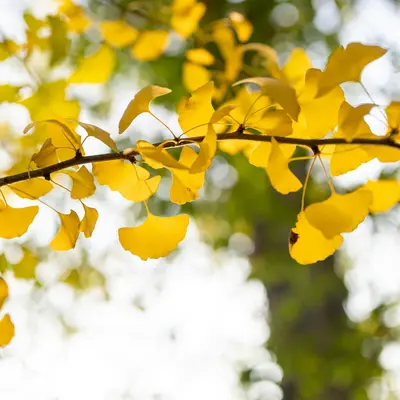
An ancient living fossil tree prized for its unique fan-shaped leaves that turn brilliant golden yellow in fall. Extremely hardy and pollution-tolerant, making it perfect for urban environments where other trees struggle. This slow-growing beauty becomes a stunning specimen tree that can live for centuries.
Sun
Full sun
Zones
3–9
USDA hardiness
Height
50-80 feet
Planting Timeline
Showing dates for Ginkgo in USDA Zone 7
All Zone 7 shade-tree →Zone Map
Click a state to update dates
Ginkgo · Zones 3–9
Growing Details
Complete Growing Guide
Light: Full sun (6 or more hours of direct sunlight a day). Soil: Clay, Loam (Silt), Sand. Soil pH: Acid (<6.0), Alkaline (>8.0), Neutral (6.0-8.0). Drainage: Good Drainage, Moist, Occasionally Dry, Occasionally Wet. Height: 50 ft. 0 in. - 80 ft. 0 in.. Spread: 30 ft. 0 in. - 40 ft. 0 in.. Spacing: 24-60 feet, more than 60 feet. Growth rate: Medium. Maintenance: Medium. Regions: Coastal, Mountains, Piedmont.
Harvesting
As a gymnosperm, Ginkgo does not produce fruit but its seeds (only on female trees) are plumlike, yellow-orange, the outer, fleshy pulp foul-smelling when ripe, the inner wall hard, smooth, and cream colored. When the seeds fall to the ground they can be quite messy. Most of the ornamental ginkgoes in the United States are male.
Color: Cream/Tan, Gold/Yellow, Orange. Length: < 1 inch. Width: < 1 inch.
Harvest time: Fall
Edibility: The seed, freed of the outer pulp and washed, is boiled or roasted and eaten.
Storage & Preservation
Ginkgo trees do not require storage or preservation in the traditional sense as they are ornamental shade trees, not harvested for edible or perishable parts. For ginkgo seeds (if collected), store in cool, dry conditions at 40-50°F with 30-40% humidity to maintain viability for up to 2 years. Dried leaves can be preserved by pressing between paper in a cool, dark location or dried in paper bags. For medicinal leaf use, hang-dry in bundles in a well-ventilated area away from direct sunlight, then store in airtight containers away from moisture.
History & Origin
Origin: China South-Central and China Southeast
Advantages
- +Edible: The seed, freed of the outer pulp and washed, is boiled or roasted and eaten.
Considerations
- -Toxic (Seeds): Low severity
- -Causes contact dermatitis
Companion Plants
The shade-tolerant plants in this list — Hosta, Astilbe, Heuchera, Japanese Painted Fern, and Caladium — work under a ginkgo for a simple structural reason: they're adapted to the dry, low-light pocket that develops beneath a mature canopy. A ginkgo's roots run deep and don't compete aggressively at the 6-12 inch depth where these perennials and annuals feed. Impatiens and Begonia fill the same niche for seasonal color. Give them all an 18-24 inch buffer from the trunk so you're not tearing up surface roots every time you replant annuals.
Walnut (Juglans nigra) produces juglone through its roots and leaf litter — a compound that actively suppresses surrounding plants and can persist in soil for years after the tree is gone. Eucalyptus drops allelopathic oils through its own leaf litter and creates a similarly hostile zone. Mint won't hurt the ginkgo itself, but it spreads by runners fast enough to smother the lower-growing companions you've planted underneath — not a fight worth starting.
Plant Together
Hosta
Thrives in dappled shade under ginkgo canopy, complements with contrasting foliage texture
Astilbe
Enjoys partial shade conditions and moist soil beneath ginkgo trees
Heuchera
Tolerates shade and benefits from protection of ginkgo's canopy
Japanese Painted Fern
Thrives in shade with well-draining soil that ginkgo provides
Caladium
Benefits from filtered light and wind protection under ginkgo canopy
Impatiens
Flourishes in partial shade conditions created by mature ginkgo trees
Lamium
Ground cover that tolerates shade and helps suppress weeds under ginkgo
Begonia
Prefers dappled sunlight and protection from harsh afternoon sun
Keep Apart
Walnut
Produces juglone which can inhibit ginkgo root development and overall growth
Eucalyptus
Releases allelopathic compounds that can suppress ginkgo seedling establishment
Mint
Aggressive spreading can compete with ginkgo's shallow feeder roots for nutrients
Pests & Disease Resistance
Resistance
Excellent - virtually disease and pest free
Common Pests
Very few - scale insects occasionally
Diseases
Extremely disease resistant
Troubleshooting Ginkgo
What you'll see, why it happens, and what to do about it.
Leaves yellowing and dropping in midsummer, well before fall — tree looks stressed rather than seasonal
Likely Causes
- Prolonged drought stress — ginkgos need consistent moisture especially in the first 3-5 years after planting
- Compacted or waterlogged soil restricting root oxygen
What to Do
- 1.Deep-water weekly during dry stretches — slow and deep, not a quick surface spray; aim for 10-15 gallons per inch of trunk diameter
- 2.Pull back any mulch piled against the trunk and reapply it in a 3-4 inch layer starting 6 inches out from the base to retain moisture without rotting the bark
- 3.If the site stays wet after rain, check whether the planting hole is acting as a bathtub — ginkgo handles a wide pH range (5.0–8.0) but not standing water
Sticky residue or sooty black coating on leaves and branches, with small bumps along the bark
Likely Causes
- Scale insects (oystershell scale or cottony maple scale are the usual suspects) — rare on ginkgo but more likely on trees already weakened by drought or poor siting
- The sooty mold is secondary, colonizing the honeydew the scale excretes rather than attacking the tree directly
What to Do
- 1.Scrub small infestations off young branches with a stiff brush and diluted insecticidal soap
- 2.Apply horticultural oil at dormant rate in late winter before buds break — coat all bark surfaces, not just the visible bumps
- 3.A ginkgo getting 6+ hours of sun and adequate water almost never develops a scale problem worth worrying about; fix the growing conditions first
Frequently Asked Questions
How long does it take for a ginkgo tree to mature?▼
Is ginkgo a good tree for beginners?▼
Can you grow ginkgo in containers?▼
When should I plant a ginkgo tree?▼
Why do ginkgo trees smell bad?▼
How bright yellow do ginkgo leaves turn in fall?▼
Zone-by-Zone Planting Calendar
Growing Guides from Wind River Greens
Sources & References
External authority sources used in compiling this guide.
- ExtensionNC State Extension
See the Methodology page for how this data is sourced, what's AI-assisted, and known limitations.