Flowering Dogwood
Cornus florida
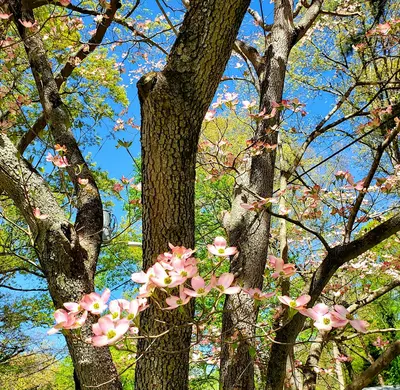
America's beloved native flowering tree that announces spring with spectacular white or pink bracts followed by brilliant red fall color. This iconic shade tree provides year-round beauty with attractive layered branching and bright red berries that wildlife adore. A must-have for creating that classic American garden aesthetic.
Sun
Full sun to partial shade
Zones
5–9
USDA hardiness
Height
15-25 feet
Planting Timeline
Showing dates for Flowering Dogwood in USDA Zone 7
All Zone 7 shade-tree →Zone Map
Click a state to update dates
Flowering Dogwood · Zones 5–9
Growing Details
Complete Growing Guide
Light: Full sun (6 or more hours of direct sunlight a day), Partial Shade (Direct sunlight only part of the day, 2-6 hours). Soil: Clay, High Organic Matter, Loam (Silt), Sand. Soil pH: Acid (<6.0), Neutral (6.0-8.0). Drainage: Good Drainage, Moist, Occasionally Dry. Height: 15 ft. 0 in. - 25 ft. 0 in.. Spread: 15 ft. 0 in. - 30 ft. 0 in.. Spacing: 12-24 feet, 24-60 feet. Growth rate: Medium. Maintenance: Low. Propagation: Seed, Stem Cutting. Regions: Coastal, Mountains, Piedmont.
Harvesting
Fruit is a glossy bright, shiny red, oval drupes (0.5 inch) in tight clusters of 3 or 4 that are bitter and inedible to humans but loved by birds. They display from August to October.
Color: Green, Red/Burgundy. Type: Berry, Drupe. Length: < 1 inch. Width: < 1 inch.
Garden value: Edible, Showy
Harvest time: Fall
Storage & Preservation
Flowering Dogwood is an ornamental shade tree, not a food crop, so traditional storage and preservation methods don't apply. However, cut branches with flowers can be displayed indoors in water for 7-10 days when placed in a cool location away from direct heat and drafts. Keep water fresh and trim stems at an angle. For longer preservation, press flowers between parchment paper in a heavy book for 2-3 weeks to create dried botanical specimens. Alternatively, air-dry small flowering branches in a dark, well-ventilated space to preserve their natural form for decorative arrangements.
History & Origin
Origin: South Eastern Canada, Eastern North America, to Eastern Mexico
Advantages
- +Attracts: Butterflies, Pollinators, Small Mammals, Songbirds, Specialized Bees
- +Low maintenance
Companion Plants
In our zone 7 Georgia gardens, Flowering Dogwood pairs well with acid-loving shrubs like Azalea and Rhododendron, which share its preferred pH of 5.5-6.5 and keep their shallow fibrous roots in the top 12-18 inches rather than competing at depth. Shade-tolerant groundcovers — Hosta, native Ferns, Wild Ginger — fill the dry-shade pockets under the canopy without pulling much moisture away from the tree. Two things to avoid: Black Walnut, which produces juglone through its root system and can suppress or kill Cornus species outright, and an existing turfgrass lawn, where root competition for water and the near-inevitable string-trimmer contact create the exact bark wounds that Dogwood borer (Synanthedon scitula) uses as entry points.
Plant Together
Azalea
Shares similar acidic soil preferences and creates layered woodland garden structure
Hosta
Thrives in the partial shade created by dogwood canopy and adds complementary foliage texture
Rhododendron
Compatible acidic soil needs and blooms provide succession of spring color
Ferns
Naturally occurs with dogwoods in woodland settings, benefits from filtered light
Astilbe
Provides summer blooms in the partial shade and appreciates consistent moisture
Coral Bells
Colorful foliage complements dogwood's seasonal changes and tolerates shade
Wild Ginger
Native groundcover that thrives under dogwood's canopy and shares habitat preferences
Caladium
Shade-loving foliage plant that adds color contrast under the tree canopy
Keep Apart
Black Walnut
Releases juglone toxin that can damage dogwood's root system and overall health
Eucalyptus
Allelopathic compounds inhibit growth of nearby plants including dogwoods
Turf Grass
Competes aggressively for water and nutrients, lawn mowers can damage shallow dogwood roots
Pests & Disease Resistance
Resistance
Susceptible to anthracnose and powdery mildew
Common Pests
Dogwood borer, scale insects, bagworms
Diseases
Dogwood anthracnose, powdery mildew, spot anthracnose
Troubleshooting Flowering Dogwood
What you'll see, why it happens, and what to do about it.
Bark tunneling with sawdust-like frass and D-shaped exit holes on trunk or main limbs, typically noticed late spring through summer
Likely Causes
- Dogwood borer (Synanthedon scitula) — larvae tunnel under bark, girdling branches or the whole trunk if population is heavy
- Prior mechanical damage (lawnmower nicks, weed-trimmer wounds) that gave the borer an entry point
What to Do
- 1.Keep a 3-4 inch mulch ring out to the drip line so mowers and string trimmers never touch the bark — that physical gap is your best prevention
- 2.Apply a permethrin-based bark spray from late April through June to intercept newly hatching larvae before they tunnel in; NC State Extension recommends timing sprays to adult flight periods
- 3.Remove and dispose of any heavily girdled branches; they won't recover and they harbor the next generation
Large tan to brown leaf blotches with purple halos, plus dieback of lower branches starting near the base of the canopy — often worse on trees planted in deep shade
Likely Causes
- Dogwood anthracnose (Discula destructiva) — a serious fungal disease, especially lethal in cool wet springs and on shade-grown specimens
- Poor air circulation combined with overhead irrigation or persistent fog
What to Do
- 1.Prune out all dead and blighted branches back to healthy wood, disinfecting your pruners with 70% isopropyl between cuts
- 2.Site future plantings where they get at least 4-6 hours of direct sun — Cornus florida planted under a dense canopy in the Southeast has a measurably shorter lifespan with this pathogen around
- 3.Apply a copper-based fungicide at bud break and repeat every 10-14 days through petal drop if your site has a history of the disease
White powdery coating on young leaves and shoot tips in mid to late summer, leaves sometimes puckering or distorting
Likely Causes
- Powdery mildew (Erysiphe pulchra) — spreads by airborne spores, thrives in warm days with cool humid nights
- Overly dense planting or a location against a fence or building that traps air
What to Do
- 1.On established trees, Erysiphe pulchra is mostly cosmetic — skip the sprays unless the tree is young and losing significant leaf area
- 2.If treatment is warranted, apply neem oil or a potassium bicarbonate spray every 7-10 days at first symptom appearance; don't wait until the whole canopy is coated
- 3.Cut back on nitrogen fertilizer after July — late-season push produces the soft new growth that mildew colonizes first