Eastern Redbud
Cercis canadensis
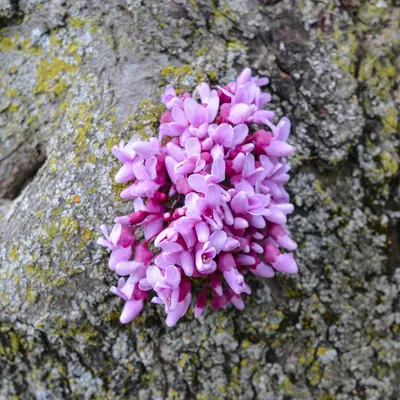
A stunning native shade tree that announces spring with masses of bright pink-purple flowers blooming directly from its branches and trunk. The distinctive heart-shaped leaves provide beautiful yellow fall color, and its moderate size makes it perfect for residential landscapes where you want maximum impact without overwhelming the space.
Sun
Full sun to partial shade
Zones
4–9
USDA hardiness
Height
20-30 feet
Planting Timeline
Showing dates for Eastern Redbud in USDA Zone 7
All Zone 7 shade-tree →Zone Map
Click a state to update dates
Eastern Redbud · Zones 4–9
Growing Details
Complete Growing Guide
Light: Full sun (6 or more hours of direct sunlight a day), Partial Shade (Direct sunlight only part of the day, 2-6 hours). Soil: Clay, High Organic Matter, Loam (Silt), Sand. Soil pH: Acid (<6.0), Alkaline (>8.0), Neutral (6.0-8.0). Drainage: Good Drainage, Moist, Occasionally Dry. Height: 20 ft. 0 in. - 30 ft. 0 in.. Spread: 25 ft. 0 in. - 35 ft. 0 in.. Spacing: 12-24 feet, 24-60 feet. Growth rate: Medium. Maintenance: Low. Propagation: Seed. Regions: Mountains, Piedmont.
Harvesting
By summer (after flowers) but possibly lasting through fall and even winter, this plant has green turning to brown, flat, oblong seedpods (with about 9 seeds per pod) which are about 2 to 4 inches long. The brown seed pods can look a little untidy hanging from the tree into the winter.
Color: Brown/Copper, Green, Red/Burgundy. Type: Legume. Length: 1-3 inches. Width: < 1 inch.
Garden value: Showy
Harvest time: Fall, Summer
Edibility: The flowers are edible and taste similar to peas. Contain high amounts of vitamin C.
Storage & Preservation
Eastern Redbud is a shade tree, not a harvested crop, so traditional storage and preservation methods don't apply. However, seeds can be collected in fall when dry pods appear. Store dry seeds in a cool (40-50°F), low-humidity environment in airtight containers for up to 2 years. For propagation purposes, stratify seeds by placing them in moist sand in the refrigerator for 30 days before spring planting. Cuttings can be taken in early summer and rooted in moist perlite under humidity domes.
History & Origin
Origin: Eastern and central North America, NC to E. Mexico
Advantages
- +Attracts: Bees, Butterflies, Pollinators, Specialized Bees
- +Edible: The flowers are edible and taste similar to peas. Contain high amounts of vitamin C.
- +Low maintenance
Companion Plants
Shade-tolerant ground covers — hostas, wild ginger, coral bells, astilbe, and ferns — are the natural fit under a redbud. They fill the dry summer shade that most plants struggle with, and their low root competition won't fight a redbud's relatively shallow root system. Azaleas and dogwood work well nearby because they share a preferred pH of 6.0–6.5 and a similar growth scale. Plant at least 60 feet from any black walnut; juglone diffuses through the soil far enough to stress a redbud over two or three seasons without any obvious single cause. Norway maple is a different problem — its aggressively shallow roots simply take all available water before a redbud can get any.
Plant Together
Hostas
Thrives in partial shade created by redbud, complementary foliage textures
Wild Ginger
Native groundcover that tolerates redbud's shade and shares similar soil preferences
Coral Bells
Shade-tolerant perennial with colorful foliage that complements redbud's spring flowers
Astilbe
Enjoys filtered light under redbud canopy, adds texture with feathery plumes
Ferns
Natural woodland companions that thrive in redbud's dappled shade
Azaleas
Both prefer acidic soil and partial shade, blooming seasons complement each other
Violets
Native groundcover that naturalizes well under redbud's canopy
Dogwood
Similar growing conditions and native woodland habitat preferences
Keep Apart
Black Walnut
Produces juglone toxin that can stunt or kill redbud trees
Norway Maple
Dense shade and shallow roots compete aggressively with redbud
Kentucky Coffee Tree
Large mature size can overwhelm and shade out smaller redbud
Pests & Disease Resistance
Resistance
Generally disease resistant, some susceptibility to canker
Common Pests
Scale insects, caterpillars, Japanese beetles
Diseases
Canker, leaf spot, verticillium wilt
Troubleshooting Eastern Redbud
What you'll see, why it happens, and what to do about it.
Sunken, discolored patches on the bark — sometimes with cracking or oozing — on branches or the main trunk
Likely Causes
- Botryosphaeria canker or Cytospora canker — both fungal, both opportunistic after drought stress or physical wounds
- Pruning cuts made during wet weather, leaving entry points for spores
What to Do
- 1.Prune out infected branches at least 6 inches below the visible damage and dispose of cuttings — don't leave them on the ground
- 2.Sterilize pruning tools with a 10% bleach solution between cuts
- 3.Avoid pruning in wet spring weather; late summer cuts on dry days heal faster
Irregular brown or purple-edged spots on leaves by midsummer, sometimes with early leaf drop
Likely Causes
- Cercospora leaf spot or Phyllosticta leaf spot — both fungal, both spread by splashing rain
- Poor air circulation from nearby crowded plantings
What to Do
- 1.Rake and bag fallen leaves promptly — the spores overwinter in leaf debris
- 2.A preventive copper fungicide application in early spring can reduce severity in trees that get it every year
- 3.Site the tree where water drains freely; standing moisture around the root zone sets up repeat infections
Frequently Asked Questions
When should I plant an Eastern Redbud tree?▼
Is Eastern Redbud a good tree for beginners?▼
How long does it take for Eastern Redbud to bloom?▼
Can you grow Eastern Redbud in containers?▼
What pests affect Eastern Redbud trees?▼
What is the fall color of Eastern Redbud?▼
Zone-by-Zone Planting Calendar
Growing Guides from Wind River Greens
Sources & References
External authority sources used in compiling this guide.
- ExtensionNC State Extension
See the Methodology page for how this data is sourced, what's AI-assisted, and known limitations.