American Sweetgum
Liquidambar styraciflua
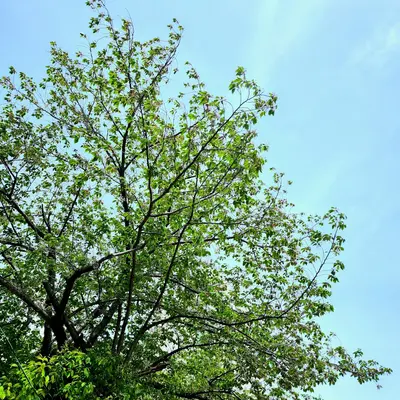
This magnificent native shade tree is famous for its spectacular fall display of yellow, orange, red, and purple leaves all on the same tree. The distinctive star-shaped leaves and interesting spiky seed balls make it a conversation starter, while its fast growth and dense shade make it highly practical for large landscapes.
Sun
Full sun to partial shade
Zones
5–9
USDA hardiness
Height
60-100 feet
Planting Timeline
Showing dates for American Sweetgum in USDA Zone 7
All Zone 7 shade-tree →Zone Map
Click a state to update dates
American Sweetgum · Zones 5–9
Growing Details
Complete Growing Guide
Light: Full sun (6 or more hours of direct sunlight a day), Partial Shade (Direct sunlight only part of the day, 2-6 hours). Soil: Clay, Loam (Silt), Sand. Soil pH: Acid (<6.0), Neutral (6.0-8.0). Drainage: Good Drainage, Moist, Occasionally Dry, Occasionally Wet. Height: 60 ft. 0 in. - 100 ft. 0 in.. Spread: 40 ft. 0 in. - 50 ft. 0 in.. Spacing: more than 60 feet. Growth rate: Rapid. Maintenance: Low, Medium. Propagation: Seed. Regions: Coastal, Mountains, Piedmont.
Harvesting
Female flowers give way to a globose head (the infamous gum ball) which are hard, beak shaped, bristly fruiting capsules 1 to 3 inches in diameter appearing in August-September. Gum balls mature to dark brown and usually remain on the tree through the winter, but can create clean-up problems during the general period of December through April as the clusters fall to the ground. The capsules contain two tiny seeds (syncarp). The fruits persist through the winter and attract birds.
Color: Brown/Copper. Type: Capsule. Length: 1-3 inches. Width: 1-3 inches.
Garden value: Edible, Showy
Harvest time: Fall, Winter
Storage & Preservation
American Sweetgum is a deciduous shade tree, not a harvested crop, so traditional storage and preservation methods do not apply. However, freshly collected seeds can be stratified and stored in cool, moist conditions (32-41°F) for 30-60 days to improve germination rates. Seeds should be kept in sealed containers with slightly damp sand or peat moss to maintain moisture without rot. For long-term seed storage, keep in cool, dry conditions at 32-41°F with low humidity. Cuttings can be propagated using hormone-treated hardwood cuttings stored in cool, humid environments over winter.
History & Origin
Origin: Eastern United States, Mexico
Advantages
- +Attracts: Moths, Pollinators, Small Mammals, Songbirds
- +Fast-growing
- +Low maintenance
Companion Plants
The canopy on a mature sweetgum can spread 40 feet wide, so what grows beneath it lives in deep shade for most of the day. Hostas, ferns, astilbe, and coral bells are built for exactly that situation — they prefer protection from afternoon sun rather than fighting it. Wild ginger (Asarum canadense) holds up particularly well as a groundcover directly under the tree because it handles dry shade and doesn't flinch at competition from the sweetgum's shallow surface roots. Azaleas and rhododendrons fit naturally along the drip line, where light is filtered but not gone — both want the same acidic soil the sweetgum prefers, somewhere in the pH 5.5–6.5 range, so you're not fighting different soil requirements.
Eastern Redbud (Cercis canadensis) earns its place as a mid-story companion. It tops out at 20–30 feet, manages partial shade once the sweetgum fills in overhead, and blooms in early spring before the sweetgum has put out a single leaf — so you get color in the gap.
The plants to keep away are a short list but a firm one. Black walnut (Juglans nigra) releases juglone from its roots and hulls, and sweetgum is sensitive enough to that compound that planting the two within 50 feet of each other leads to gradual decline. Silver maple competes hard for the same shallow moisture the sweetgum depends on. Kentucky bluegrass directly over the root zone compacts soil and creates drought stress — mulch that area out to at least 6 feet from the trunk instead.
Plant Together
Hostas
Thrives in partial shade created by sweetgum, complementary root depths
Ferns
Enjoys acidic soil conditions and filtered light from sweetgum canopy
Azaleas
Benefits from acidic leaf litter and partial shade protection
Rhododendrons
Shares preference for acidic soil and appreciates wind protection
Wild Ginger
Ground cover that thrives under sweetgum's acidic leaf mulch
Coral Bells
Tolerates acidic conditions and provides color contrast under canopy
Astilbe
Flourishes in moist, shaded conditions with acidic soil
Eastern Redbud
Understory tree that complements sweetgum's vertical structure
Keep Apart
Black Walnut
Releases juglone toxin that can inhibit sweetgum growth and health
Silver Maple
Competes aggressively for water and nutrients with shallow root system
Kentucky Bluegrass
Struggles under dense canopy and acidic leaf litter conditions
Pests & Disease Resistance
Resistance
Good disease resistance
Common Pests
Scale, caterpillars, webworms
Diseases
Leaf spot, canker, root rot in poorly drained soils
Troubleshooting American Sweetgum
What you'll see, why it happens, and what to do about it.
Branches with clusters of silky white webbing, leaves chewed to skeletons inside the web, late summer
Likely Causes
- Fall webworm (Hyphantria cunea) — caterpillars that enclose branch tips in communal webs and feed inside them
- Eastern tent caterpillar (Malacosoma americanum) — similar webbing but appears in early spring at branch forks
What to Do
- 1.Prune out and destroy the webbed branches while the colony is still contained — do this before the web expands
- 2.For large trees where pruning isn't practical, Bacillus thuringiensis (Bt) spray applied directly into the web is effective on young caterpillars
- 3.Tolerate light infestations on mature trees — a 60-foot sweetgum can lose a few branch tips without meaningful harm
Bark sunken, discolored, or oozing resin in patches on the trunk or main branches, possibly with dead wood above the site
Likely Causes
- Canker disease (Botryosphaeria or Nectria spp.) — fungal pathogens that enter through wounds, pruning cuts, or freeze-damaged tissue
- Mechanical injury from lawn equipment or improper pruning that left a large stub
What to Do
- 1.Prune affected branches back to healthy wood, cutting just outside the branch collar — sterilize your saw between cuts with 70% isopropyl alcohol
- 2.Don't paint or seal the wound; NC State Extension advises against wound dressings, as they can trap moisture and slow compartmentalization
- 3.Improve drainage and avoid overwatering — root stress weakens the tree's natural resistance to canker pathogens
Frequently Asked Questions
When is the best time to plant American Sweetgum trees?▼
How fast does American Sweetgum grow?▼
Is American Sweetgum good for beginners?▼
Can you grow American Sweetgum in containers?▼
What pests affect American Sweetgum trees?▼
How long does American Sweetgum live?▼
Zone-by-Zone Planting Calendar
Growing Guides from Wind River Greens
Sources & References
External authority sources used in compiling this guide.
- ExtensionNC State Extension
See the Methodology page for how this data is sourced, what's AI-assisted, and known limitations.