Planting Timeline
Showing dates for Detroit Dark Red Beet in USDA Zone 7
All Zone 7 root-vegetable →Zone Map
Click a state to update dates
Detroit Dark Red Beet · Zones 2–10
Growing Details
Zone-by-Zone Planting Calendar
| Zone | Indoor Start | Transplant | Direct Sow | Harvest |
|---|---|---|---|---|
| Zone 3 | — | — | April – July | June – September |
| Zone 4 | — | — | April – July | June – September |
| Zone 5 | — | — | March – August | May – October |
| Zone 6 | — | — | March – August | May – October |
| Zone 7 | — | — | March – September | May – November |
| Zone 8 | — | — | February – September | April – November |
| Zone 9 | — | — | January – March | March – May |
| Zone 10 | — | — | November – February | January – April |
Complete Growing Guide
Start your Detroit Dark Red beets with proper soil preparation — this variety demands loose, well-draining soil to develop those perfectly round roots. Work compost or aged manure into your bed about 4-6 inches deep, removing any rocks or debris that could cause forked or stunted roots. Avoid fresh manure, which can cause excessive leaf growth at the expense of root development.
Direct sow seeds 2-4 weeks before your last frost date when soil temperature reaches 45°F. Plant seeds ½ inch deep and 2 inches apart in rows spaced 12 inches apart. Each 'seed' is actually a cluster containing 2-4 seeds, so expect multiple seedlings to emerge. Thin to 3-4 inches apart when plants reach 2 inches tall — use the thinned greens in salads rather than wasting them.
For continuous harvests, succession plant every 2-3 weeks through midsummer. In zones 3-5, stop planting by mid-July; in zones 6-8, you can plant through August for fall harvests. Detroit Dark Red actually sweetens after light frosts, making fall plantings particularly rewarding.
Fertilize lightly with balanced 10-10-10 fertilizer at planting, then side-dress with compost when roots begin swelling. Avoid high-nitrogen fertilizers which promote leaf growth over root development. Maintain consistent moisture — about 1 inch per week — as irregular watering can cause woody, cracked roots or poor germination.
Common mistakes include planting too thickly (leading to small, crowded roots), harvesting greens too aggressively early in the season (which stunts root growth), and planting in compacted soil. Detroit Dark Red's round shape makes it more forgiving of clay soils than long varieties, but still performs best in loose, sandy loam.
Maximize yields by harvesting every other beet when they reach golf ball size, allowing remaining plants more space to grow larger. The variety's excellent storage qualities mean you can let some grow to full size while harvesting others young for tender roots and greens.
Harvesting
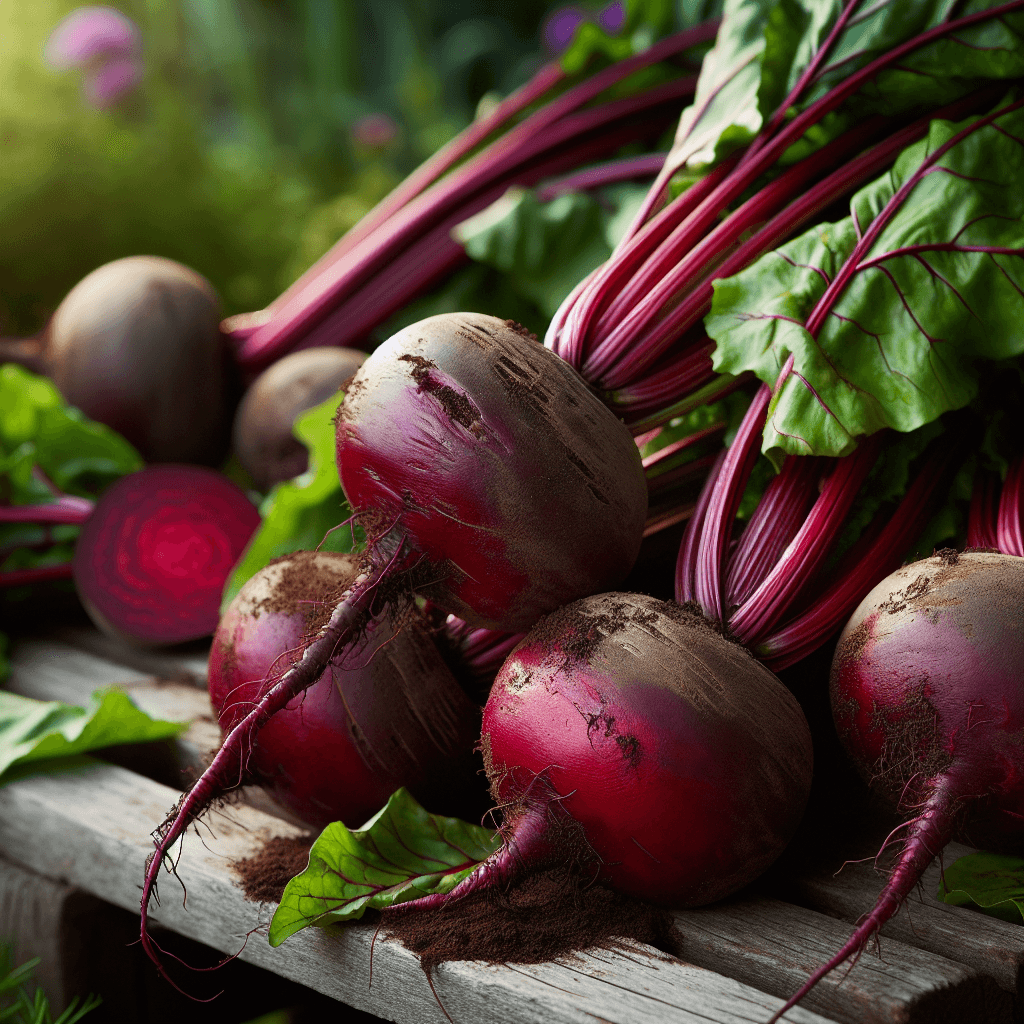
Harvest Detroit Dark Red beets when roots reach 1½ to 3 inches in diameter — typically 55-65 days from seeding. You'll know they're ready when the shoulders push above soil level, showing deep crimson color. Smaller beets (1½-2 inches) offer the most tender texture, while larger ones develop the full, complex earthy flavor this variety is prized for.
Harvest in the morning when roots are fully hydrated and soil is slightly moist but not muddy. Gently brush away soil around the shoulder to check size, then grasp the greens close to the root and pull straight up with a slight twisting motion. For larger beets in heavy soil, loosen around the root with a garden fork first to prevent breaking.
Cut greens 1 inch above the root immediately after harvesting to prevent moisture loss. Detroit Dark Red's greens are particularly tender when roots are golf-ball sized, becoming more robust as roots mature. The variety's minimal white zoning means even larger roots maintain good eating quality, unlike some varieties that become woody.
Storage & Preservation
Fresh Detroit Dark Red beets store exceptionally well — a key reason for their century-plus popularity. Remove greens immediately, leaving 1-inch stems to prevent bleeding. Store unwashed roots in perforated plastic bags in the refrigerator for up to 3 months. The variety's dense flesh and minimal white zoning help maintain quality during extended storage.
For longer preservation, Detroit Dark Red excels at traditional root cellaring in slightly moist sand at 32-35°F. The roots can last 6 months this way. For modern preservation, roast and freeze in portions, or pickle using traditional recipes — the variety's firm texture holds up beautifully to vinegar brines. Pressure can whole small beets or slice larger ones for canning. The deep crimson color intensifies during cooking, making Detroit Dark Red ideal for preserving methods that showcase beet's vibrant hue.
History & Origin
Detroit Dark Red emerged in 1892 from D.M. Ferry & Company's seed trials in Detroit, Michigan, developed as an improvement over the earlier Detroit beet varieties. Ferry's breeders selected for deeper color, rounder shape, and reduced white zoning — characteristics that made it superior to the flatter, more variable beets common in the late 1800s.
The variety gained rapid acceptance among market gardeners and home gardeners alike, becoming the standard red beet in American gardens by the early 1900s. Its reliability, storage qualities, and consistent performance made it invaluable during both World Wars when home food production was critical. Many seed companies developed their own strains, but the core characteristics established by Ferry remained the benchmark.
Detroit Dark Red represents the pinnacle of 19th-century plant breeding — achieved through careful selection rather than modern hybridization techniques. Its longevity in gardens for over 130 years testifies to the variety's fundamental soundness, adapting to diverse growing conditions while maintaining the sweet, earthy flavor and deep color that made it famous.
Advantages
- +Exceptional storage life of 3-6 months when properly stored, longer than most beet varieties
- +Minimal white zoning creates uniform deep crimson color throughout the root
- +Dual-purpose variety provides excellent greens and roots from single planting
- +Superior cold tolerance allows fall planting and harvesting after light frosts for enhanced sweetness
- +Consistent round shape makes it ideal for uniform cooking and attractive presentations
- +Reliable germination and growth in diverse soil conditions compared to newer varieties
- +Time-tested genetics provide stability and predictable results across growing seasons
Considerations
- -Seeds may have lower germination rates than modern hybrid varieties
- -Slower to size up compared to some modern fast-growing beet varieties
- -Color can bleed significantly when cut, staining hands and cutting boards
- -Root quality diminishes if allowed to grow too large in warm weather
- -More susceptible to bolting in hot climates than heat-adapted varieties
Companion Plants
Plant Together
Lettuce
Shallow roots don't compete with beet taproot, provides ground cover
Onions
Repel aphids and other pests that damage beet leaves
Garlic
Natural pest deterrent, helps protect beets from root maggots
Carrots
Different root depths allow efficient space utilization without competition
Radishes
Break up soil for beet root development, harvest before beets mature
Swiss Chard
Same family as beets, similar growing requirements and care needs
Cabbage
Beets help improve soil structure for brassicas, compatible growth habits
Spinach
Cool season crop with similar water and nutrient needs
Keep Apart
Pole Beans
Can stunt beet growth through competition and potential allelopathic effects
Mustard
Competes aggressively for nutrients and may inhibit beet root development
Fennel
Inhibits growth of most garden plants including beets through allelopathy
Pests & Disease Resistance
Resistance
Good resistance to bolting and scab
Common Pests
Leaf miners, aphids, flea beetles
Diseases
Cercospora leaf spot, downy mildew, scab