Planting Timeline
Showing dates for Bulls Blood Beet in USDA Zone 7
All Zone 7 root-vegetable →Zone Map
Click a state to update dates
Bulls Blood Beet · Zones 2–10
Growing Details
Zone-by-Zone Planting Calendar
| Zone | Indoor Start | Transplant | Direct Sow | Harvest |
|---|---|---|---|---|
| Zone 3 | — | — | April – August | June – October |
| Zone 4 | — | — | April – August | June – November |
| Zone 5 | — | — | April – August | June – November |
| Zone 6 | — | — | March – September | May – November |
| Zone 7 | — | — | March – September | May – December |
| Zone 8 | — | — | February – November | April – January |
| Zone 9 | — | — | January – December | March – February |
| Zone 10 | — | — | January – December | March – February |
Complete Growing Guide
Bulls Blood beet thrives in cool weather, making it perfect for spring planting 2-3 weeks before your last frost when soil temperature reaches 50°F. You'll get the best germination by soaking seeds overnight before planting, as beet 'seeds' are actually clusters that benefit from this pre-treatment.
Prepare your soil by working in 2-3 inches of compost to a depth of 8 inches. Bulls Blood performs best in slightly alkaline soil (pH 6.5-7.0), so test and amend with lime if needed. Unlike many vegetables, beets tolerate some clay content, but ensure drainage is adequate to prevent root rot.
Direct sow seeds ½ inch deep in rows 12 inches apart, then thin seedlings to 3-4 inches apart once they reach 2 inches tall. Don't discard thinnings—they make excellent microgreens. For continuous harvests, make successive plantings every 2-3 weeks through late spring, then resume in late summer for fall crops when temperatures drop below 75°F.
Fertilize lightly at planting with balanced 10-10-10, then side-dress with compost tea every 3 weeks. Avoid high-nitrogen fertilizers which promote leaf growth at the expense of root development. However, if you're primarily growing Bulls Blood for its ornamental foliage, slightly higher nitrogen actually enhances the dramatic dark coloration.
Maintain consistent moisture throughout the growing season—irregular watering causes woody, tough roots and can trigger premature bolting. Mulch around plants with straw to retain moisture and suppress weeds, keeping mulch 2 inches from stems to prevent pest harboring.
Common mistakes include planting too early in cold soil (leads to bolting), overcrowding (results in small roots), and deep cultivation near plants (damages shallow feeder roots). Instead, hand-weed close to plants and cultivate only between rows.
In zones 3-6, focus on spring and fall plantings. Zones 7-9 can grow Bulls Blood through winter with light protection. Zone 10+ gardeners should treat this as a winter crop, planting October through February.
Harvesting
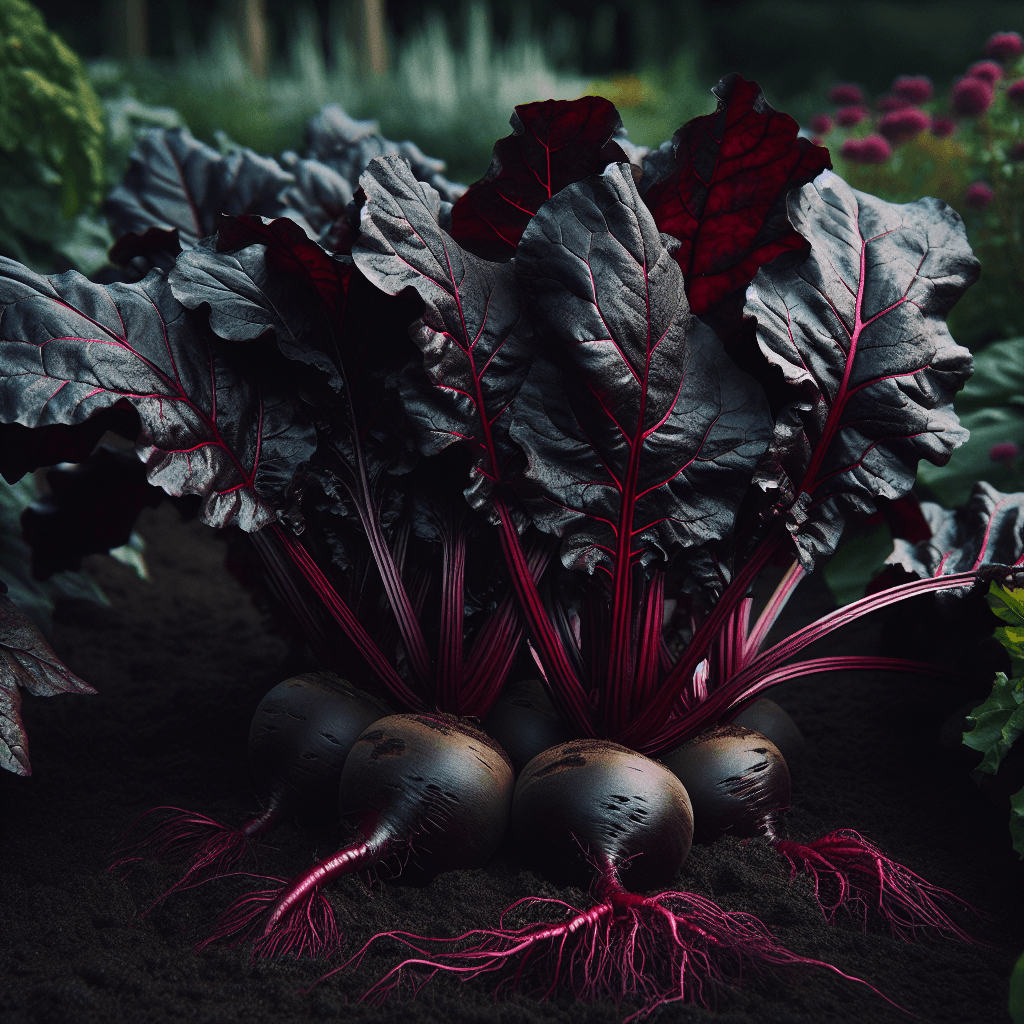
Harvest Bulls Blood baby leaves when they're 3-4 inches long, typically 30 days from planting, by cutting outer leaves with clean scissors. Leave the center growing point intact for continued leaf production. The deep burgundy coloration is most intense in cool weather—expect some fading during hot spells.
For root harvest, Bulls Blood is ready in 55-65 days when roots reach 2-3 inches in diameter. Check by gently brushing away soil around one root to gauge size. Roots larger than 3 inches become woody and lose their sweet flavor. The shoulders should be deep red and firm when gently squeezed.
Harvest in the morning when plants are fully hydrated for maximum crispness. Twist and pull roots straight up, or use a garden fork to loosen soil first in heavy clay. Cut leaves 1 inch above the crown immediately after harvest—leaving stubs prevents bleeding and extends storage life. Both roots and leaves are at peak flavor after light frost, which concentrates sugars and intensifies the burgundy leaf color.
Storage & Preservation
Store Bulls Blood roots in the refrigerator crisper drawer with tops removed, wrapped in perforated plastic bags. They'll maintain quality for 2-3 weeks at 32-40°F with high humidity. Leave an inch of stem to prevent bleeding during storage.
The dramatic leaves are best used fresh within 2-3 days, stored like salad greens in sealed containers with a damp paper towel. For preservation, Bulls Blood roots excel when pickled—their deep color creates stunning jarred beets. Roast and freeze roots in portions, or can using standard beet canning procedures. The leaves can be blanched and frozen like spinach, though they'll lose their ornamental appeal. Dehydrated Bulls Blood leaves make an attractive and nutritious powder for smoothies, retaining much of their mineral content and adding natural color to foods.
History & Origin
Bulls Blood beet originated in the late 1800s as a selection from Detroit Dark Red varieties, developed specifically for its extraordinarily dark foliage that resembles the deep burgundy color of dried blood. This heirloom was particularly prized in Victorian-era ornamental gardens, where edible landscaping was fashionable among wealthy estate owners.
The variety gained popularity in European markets where both the roots and leaves were valued—the dramatic foliage for garnishes and the sweet roots for traditional dishes. American seed companies began offering Bulls Blood in the early 1900s, marketing it as both an ornamental and culinary variety.
During World War II, Bulls Blood nearly disappeared from commercial catalogs as utilitarian varieties took precedence. It was preserved by dedicated home gardeners and made a comeback during the heirloom revival of the 1980s. Today, Bulls Blood has found new purpose in the microgreens industry and farm-to-table restaurants, where chefs prize its dramatic color and mild, sweet flavor. The variety represents the historical tradition of dual-purpose vegetables that served both aesthetic and nutritional needs in home gardens.
Advantages
- +Stunning ornamental value with burgundy-black foliage that intensifies in cool weather
- +Dual harvest potential—baby leaves at 30 days, mature roots at 55-65 days
- +Excellent bolt resistance compared to other beet varieties
- +Leaves maintain deep color even when grown in partial shade
- +Superior cold tolerance allows extended growing seasons
- +Natural pest deterrent properties—dark foliage seems less attractive to flea beetles
- +Exceptional storage life with proper handling and temperature control
Considerations
- -Leaf color fades significantly in temperatures above 80°F
- -Lower root yields compared to dedicated storage beet varieties
- -Requires consistent moisture—drought stress quickly affects leaf quality
- -Seeds can be slower to germinate than standard beet varieties
- -More expensive seed cost due to specialty heirloom status
Companion Plants
Plant Together
Lettuce
Shallow roots don't compete with beet taproot, provides ground cover
Onions
Repels aphids and root maggots that commonly attack beets
Garlic
Natural pest deterrent, repels aphids and soil-dwelling pests
Cabbage
Compatible growth habits, both benefit from similar soil conditions
Radishes
Break up compacted soil for beet roots, harvest before beets mature
Spinach
Similar growing requirements, efficient use of garden space
Carrots
Different root depths minimize competition, complement each other well
Bush Beans
Fix nitrogen in soil which benefits beet leaf development
Keep Apart
Pole Beans
May stunt beet growth and reduce root development
Mustard
Can inhibit beet germination and early growth through allelopathy
Fennel
Inhibits growth of most garden plants including beets through allelopathy
Pests & Disease Resistance
Resistance
Good tolerance to leaf spot diseases
Common Pests
Leaf miners, aphids, flea beetles
Diseases
Cercospora leaf spot, downy mildew, damping off