Carolina Reaper
Capsicum chinense 'Carolina Reaper'
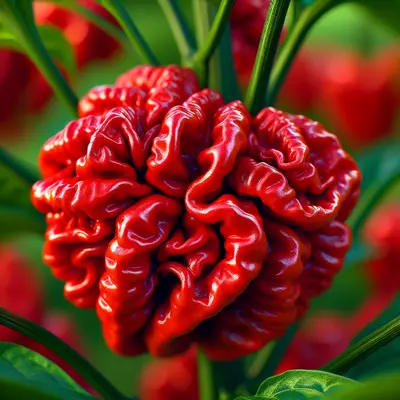
The world's hottest pepper according to Guinness World Records, bred by Ed Currie in South Carolina for extreme heat enthusiasts. These wrinkled, scorpion-tailed peppers pack an incredible 2.2 million+ Scoville units along with a surprising fruity sweetness before the intense heat kicks in. Despite their fearsome reputation, they're surprisingly easy to grow and produce abundantly for those brave enough to handle the ultimate pepper challenge.
Harvest
90-120d
Days to harvest
Sun
Full sun
Zones
10–11
USDA hardiness
Height
12-30 inches
Planting Timeline
Showing dates for Carolina Reaper in USDA Zone 7
All Zone 7 pepper →Zone Map
Click a state to update dates
Carolina Reaper · Zones 10–11
Growing Details
Complete Growing Guide
Carolina Reapers demand warm soil—delay planting until nighttime temperatures consistently exceed 60°F, as they're more cold-sensitive than standard peppers and will sulk or drop flowers in cooler conditions. These plants stretch significantly in low light, so provide 14-16 hours of bright, direct sunlight daily to maintain compact growth and maximize fruit set. Unlike milder pepper varieties, Reapers are prone to blossom-end rot when watering is inconsistent; maintain even soil moisture rather than alternating between wet and dry. Spider mites thrive on their dense foliage in hot, dry conditions, so increase humidity through afternoon misting or strategic spacing. Their 90-120 day timeline means starting seeds indoors 10-12 weeks before your last frost date is essential for adequate fruiting before season's end. One practical advantage: pinch the first flowers that appear in early summer to redirect energy into plant establishment, resulting in dramatically higher yields come late summer.
Light: Full sun (6 or more hours of direct sunlight a day). Soil: Clay, High Organic Matter, Loam (Silt), Sand. Soil pH: Acid (<6.0), Alkaline (>8.0), Neutral (6.0-8.0). Drainage: Good Drainage, Moist. Height: 1 ft. 0 in. - 2 ft. 6 in.. Spread: 1 ft. 0 in. - 2 ft. 0 in.. Spacing: 12 inches-3 feet. Growth rate: Medium. Maintenance: Medium. Regions: Coastal, Mountains, Piedmont.
Harvesting
Carolina Reapers reach peak harvest readiness when their wrinkled skin transitions from green to a deep crimson red, a color change that typically signals maximum heat and flavor development. The pods should feel firm yet slightly yielding when gently squeezed, and their characteristic scorpion-tail shape becomes more pronounced as they mature. These peppers support continuous harvesting throughout the season rather than requiring a single flush; removing ripe pods encourages further flowering and fruit production on established plants. Time your first harvest after the initial flush reaches full color, as this establishes the plant's productivity cycle and ensures subsequent waves of peppers develop with optimal potency and sweetness.
Fruits are a non-pulpy berry and vary considerably across cultivars in shape and color. Many tend to have a lumpy, crinkled appearance compared to other species. They contain high capsaicin levels.
Color: Gold/Yellow, Green, Orange, Purple/Lavender, Red/Burgundy, White. Type: Berry. Length: 1-3 inches. Width: 1-3 inches.
Garden value: Edible, Good Dried, Showy
Harvest time: Fall, Summer
Storage & Preservation
Store fresh Carolina Reapers at 50-60°F with 85-90% humidity in breathable containers like paper bags or cardboard boxes; avoid plastic, which traps moisture and encourages rot. Under these conditions, whole peppers keep for 2-3 weeks. For longer storage, refrigerate at 40°F where they'll last 4-6 weeks, though the skin may wrinkle slightly.
Freezing works exceptionally well—slice or dice peppers, spread on a tray to freeze individually, then transfer to bags for up to 8 months. Drying concentrates the heat and fruity notes; hang whole peppers or slice them and air-dry at 125-135°F for 8-12 hours until brittle. Fermentation develops complex flavors; pack sliced peppers with salt (5% by weight) in jars and let sit 2-4 weeks for a hot sauce base. Because of their extreme heat, dried Reapers are potent—a single small piece flavors a large pot, making preservation essential for managing their intense punch.
History & Origin
Developed by Ed Currie of The Pepper Palace in South Carolina, the Carolina Reaper emerged in the early 2010s as the result of deliberate crossbreeding aimed at creating the world's hottest pepper. Currie selectively bred a Red Habanero with a Pakistani Naga Morich, then continued refinement over multiple generations to stabilize the extreme heat traits and distinctive wrinkled, tail-like morphology. The variety gained official recognition when Guinness World Records certified it as the hottest pepper in 2013, with average Scoville ratings exceeding 2.2 million units. While Currie's breeding methodology and exact parentage details remain proprietary, the Carolina Reaper represents a modern achievement in intentional pepper breeding rather than a traditional heirloom or institutional breeding program.
Origin: Bolivia, northern Brazil, and Peru
Advantages
- +World record holder for hottest pepper delivers unmatched extreme heat experience
- +Surprising fruity sweetness before heat makes flavor complex and interesting
- +Surprisingly easy to grow and produces abundantly despite intimidating reputation
- +Wrinkled scorpion-tailed appearance makes dramatic ornamental addition to gardens
- +High Scoville rating (2.2M+) means tiny amounts flavor large batches
Considerations
- -Extreme heat requires careful handling, processing, and protective equipment always
- -Vulnerable to multiple diseases including bacterial leaf spot and pepper mosaic virus
- -Long 90-120 day growing season demands extended warm climate or indoor start
- -Susceptible to common pests like aphids, spider mites, and whiteflies
Companion Plants
Basil is the companion most people reach for with Capsicum chinense, and it does pull its weight — not through any proven pest-repelling chemistry, but because it thrives in the same conditions (full sun, consistent moisture, soil above 60°F) without competing aggressively for root space or water. Marigolds (Tagetes spp.) are worth more than their reputation: dense plantings along the bed edge have been shown to suppress root-knot nematodes (Meloidogyne spp.) over a full season, which matters here because C. chinense varieties take 90 to 120 days to fruit and nematode damage compounds over that window. Plant them 12 inches out from the pepper row — tucked underneath, they'd just compete for water. Onions and chives are genuinely useful along the perimeter: their sulfur compounds are off-putting to aphids (Myzus persicae), which are both a direct pest and the main vector for pepper mosaic virus. A border of alliums won't eliminate aphid pressure, but it can slow colonization enough to matter on a long-season crop.
Fennel produces allelopathic compounds from its roots that suppress growth across a wide range of vegetables — keep it at least 3 feet from any Capsicum planting, preferably in a different bed entirely. Brassicas are a subtler problem: they don't harm peppers directly, but they pull in harlequin bugs and cabbage worms — both flagged in UGA Extension's garden pest guidance — and those insects migrate readily to pepper plants once the brassicas decline in summer heat. If you're growing Reapers through August and September, that migration lands right at peak fruiting.
Plant Together
Basil
Repels aphids, spider mites, and thrips while potentially enhancing pepper flavor
Marigold
Deters nematodes, aphids, and whiteflies with natural pest-repelling compounds
Oregano
Repels aphids and provides ground cover to retain soil moisture
Parsley
Attracts beneficial insects like hoverflies and parasitic wasps
Carrots
Helps break up soil for pepper roots and doesn't compete for nutrients
Onions
Repels aphids, thrips, and other pests with sulfur compounds
Nasturtium
Acts as trap crop for aphids and cucumber beetles
Chives
Deters aphids and may improve pepper growth and flavor
Keep Apart
Black Walnut
Produces juglone toxin that inhibits nightshade family growth
Fennel
Releases allelopathic compounds that stunt pepper growth
Brassicas
Compete for similar nutrients and may inhibit pepper development
Nutrition Facts
Per 100g serving. % Daily Value based on 2,000 calorie diet. Source: USDA FoodData Central (FDC #169394)
Pests & Disease Resistance
Resistance
Good natural resistance typical of C. chinense varieties
Common Pests
Aphids, spider mites, whiteflies, pepper weevil
Diseases
Bacterial leaf spot, pepper mosaic virus, phytophthora blight
Troubleshooting Carolina Reaper
What you'll see, why it happens, and what to do about it.
Sunken, dark, leathery patch on the bottom or side of the fruit — sometimes with secondary mold growing over it
Likely Causes
- Blossom end rot — a localized calcium deficiency in the developing fruit, not always a sign of low soil calcium
- Inconsistent watering causing calcium uptake to stall even when calcium is present in the soil
- High ammonium nitrogen fertilizer pushing vegetative growth faster than calcium can move into fruit
What to Do
- 1.Water consistently — 1 to 2 inches per week without letting the soil dry out between sessions; mulch heavily to hold moisture
- 2.Pull back on high-nitrogen fertilizers once plants start setting fruit; switch to a lower-nitrogen, calcium-containing formula
- 3.Get a soil test before adding calcium amendments — NC State Extension notes the problem is usually uptake, not deficiency
White or tan bleached patches on the fruit surface, usually on the side facing the sun
Likely Causes
- Sun scald — exposed fruit tissue dies when direct sun heats the skin past what the tissue can handle
- Defoliation from bacterial leaf spot (Xanthomonas campestris pv. vesicatoria) stripping the canopy that shaded the fruit
What to Do
- 1.Don't over-prune foliage — leave enough leaf cover to shade developing fruit
- 2.If bacterial leaf spot has stripped the canopy, treat remaining foliage with a copper-based bactericide and stop any overhead watering immediately
- 3.Shade cloth (30–40%) can protect fruit during heat spikes above 95°F
Leaves with water-soaked spots that turn brown and scabby, sometimes with yellowing halos; fruit may show raised, scabby lesions
Likely Causes
- Bacterial leaf spot (Xanthomonas campestris pv. vesicatoria) — spreads fast in warm, wet weather and splashes up from soil
- Overhead irrigation wetting foliage for extended periods
What to Do
- 1.Switch to drip irrigation or water at the base; keep leaves dry
- 2.Apply copper hydroxide sprays on a 7-day schedule during wet stretches — start at first symptom, not after it's widespread
- 3.Pull and trash (don't compost) any heavily infected leaves; rotate nightshades out of that bed for at least 2 seasons per NC State Extension's rotation guidance
Stunted, distorted new growth; leaves with mosaic yellowing, mottling, or puckering; fruit may be streaked or deformed
Likely Causes
- Pepper mosaic virus (PeMV) or Tobacco mosaic virus (TMV) — both spread mechanically via hands and tools, and by aphid feeding
- Aphid pressure (Myzus persicae is a primary vector) going uncontrolled during early growth
What to Do
- 1.There's no cure once a plant is infected — remove and bag the whole plant before the virus spreads to neighbors
- 2.Control aphids with insecticidal soap or a hard water spray directed at leaf undersides; check every 3 days during warm weather
- 3.Wash hands and dip pruning tools in a 10% bleach solution between plants; the virus moves easily on contact
Frequently Asked Questions
How long does it take to grow Carolina Reapers from seed?▼
Can you grow Carolina Reapers in containers?▼
What does a Carolina Reaper taste like?▼
Are Carolina Reapers safe to eat?▼
Carolina Reaper vs Ghost Pepper - what's the difference?▼
When should I plant Carolina Reaper seeds?▼
Zone-by-Zone Planting Calendar
| Zone | Indoor Start | Transplant | Direct Sow | Harvest |
|---|---|---|---|---|
| Zone 1 | May – May | July – August | — | November – August |
| Zone 2 | April – May | June – July | — | October – September |
| Zone 11 | January – January | January – February | — | May – July |
| Zone 12 | January – January | January – February | — | May – July |
| Zone 13 | January – January | January – February | — | May – July |
| Zone 3 | April – April | June – July | — | October – October |
| Zone 4 | March – April | June – June | — | September – October |
| Zone 5 | March – March | May – June | — | September – October |
| Zone 6 | March – March | May – June | — | September – November |
| Zone 7 | February – March | April – May | — | August – October |
| Zone 8 | February – February | April – May | — | August – October |
| Zone 9 | January – January | March – April | — | July – September |
| Zone 10 | January – January | February – March | — | June – August |
Growing Guides from Wind River Greens
Sources & References
External authority sources used in compiling this guide.
See the Methodology page for how this data is sourced, what's AI-assisted, and known limitations.
More Peppers
Sweet Pepper 'Carmen'
Ghost Pepper 'Bhut Jolokia'
Scotch Bonnet 'Scotch Bonnet Orange'
Chocolate Habanero
Sweet Italian Pepper 'Marconi Rosso'
Purple Beauty Bell Pepper
Mad Hatter
Chipotle 'Morita'