Mad Hatter
Capsicum baccatum
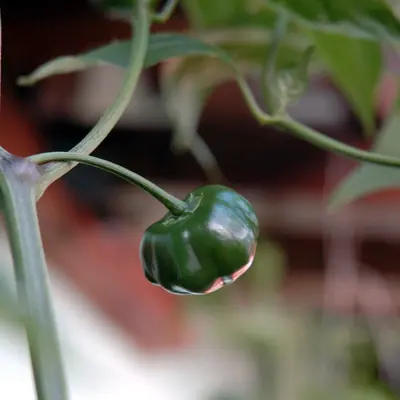
These unusually shaped peppers resemble a bishop's crown. Fruits avg. 2 1/4" in diameter and are borne on big bushy plants. Moderately sweet flesh with floral and citrus notes and a touch of heat near the seed cavity. AAS Winner.
Harvest
85d
Days to harvest
Sun
Full sun
Zones
4–11
USDA hardiness
Height
1 ft. 0 in. - 3 ft. 8 in.
Planting Timeline
Showing dates for Mad Hatter in USDA Zone 7
All Zone 7 pepper →Zone Map
Click a state to update dates
Mad Hatter · Zones 4–11
Growing Details
Succession Planting
Peppers aren't a true succession crop — Mad Hatter will keep producing from July through first frost on a single planting, and at 85 days to harvest there isn't time for a second round in zone 7. If you want staggered harvest, start a second flat indoors 3-4 weeks after the first (so late March instead of late February) and transplant that batch in mid-May. That gives you fresh, vigorous plants coming online in September when the original plants are tiring out.
Complete Growing Guide
These unusually shaped peppers resemble a bishop's crown. Fruits avg. 2 1/4" in diameter and are borne on big bushy plants. Moderately sweet flesh with floral and citrus notes and a touch of heat near the seed cavity. AAS Winner. According to Johnny's Selected Seeds, Mad Hatter is 85 green; 105 red ripe to maturity, annual, hybrid (f1). Notable features: Heat Scale: Slightly Hot, AAS (All-America Selections) Winners.
Light: Full sun (6 or more hours of direct sunlight a day). Soil: Clay, High Organic Matter, Loam (Silt), Sand. Soil pH: Acid (<6.0), Alkaline (>8.0), Neutral (6.0-8.0). Drainage: Good Drainage. Spacing: 12 inches-3 feet. Growth rate: Rapid. Maintenance: Low. Propagation: Seed.
Harvesting
Mad Hatter reaches harvest at 85 green; 105 red ripe from sowing per Johnny's Selected Seeds. Expect 2 1/4" at peak. As an annual, harvest continues until frost ends the season.
A non-pulpy berry, often with large pockets of air inside containing many seeds. Fruits range in color, shape, and heat level depending on species and cultivar. The most common color is bright red due to the presence of carotenoid compounds. The seeds are round and flat, yellowish in color.
Color: Black, Cream/Tan, Gold/Yellow, Green, Orange, Pink, Purple/Lavender, Red/Burgundy, White. Type: Berry. Length: 1-3 inches. Width: 1-3 inches.
Garden value: Edible, Good Dried, Showy
Harvest time: Fall, Summer
Edibility: Fruits used as a vegetable and spice. Different species and cultivars have different textures, heat levels, and cullinary uses.
Storage & Preservation
Mad Hatter peppers keep best at 45–50°F with 90–95% humidity in a perforated plastic bag within the crisper drawer, where they'll hold for 2–3 weeks. For longer storage, freezing works well: dice or slice, spread on a tray, freeze solid, then transfer to freezer bags for up to eight months. Drying is excellent for these smaller fruits—whole or halved peppers dry readily in a dehydrator at 135°F over 12–18 hours, yielding concentrated flavor perfect for powders or reconstitution in soups. Canning requires proper hot-pack procedures if you choose it, though these peppers are thinner-walled than bells and lose some texture. Fermentation is particularly rewarding here: pack sliced peppers with salt (2–3% by weight) and let them ferment at room temperature for 3–4 weeks, creating a tangy condiment. Given Mad Hatter's prolific production during its 85-day season, batch-drying several harvests ensures you capture the full yield without overwhelming your fresh storage capacity.
History & Origin
Mad Hatter is an F1 hybrid developed through controlled cross-pollination. Listed in the Johnny's Selected Seeds catalog.
Origin: Tropical Americas, especially South America
Advantages
- +Unique bishop's crown shape makes these peppers visually striking and conversation-starting
- +Award-winning ACS selection indicates proven performance across diverse growing regions
- +Complex flavor profile with floral, citrus, and moderate heat appeals to adventurous cooks
- +Productive bushy plants generate abundant fruit despite moderate-sized individual peppers
- +Moderately sweet taste with seed cavity heat offers versatility for fresh and cooked use
Considerations
- -Eighty-five day maturity requires long growing season unsuitable for short climates
- -Moderate difficulty rating suggests inconsistent success for beginning pepper gardeners
- -Unusual shape may complicate harvesting and reduce commercial market appeal
- -Lower individual fruit weight means higher plant count needed for substantial harvests
Companion Plants
Mad Hatter is a Capsicum baccatum, which means it gets bigger and more sprawling than your average bell — easily 3 feet wide by August in our zone 7 Georgia garden — so companion choices need to respect that footprint. Basil planted 12-15 inches off the pepper's drip line occupies the lower understory without competing for the same root zone, and it pulls in hoverflies and parasitic wasps that work on the aphids and thrips NC State flags for peppers. Marigolds (Tagetes patula especially) belong on the bed corners because they suppress root-knot nematodes (Meloidogyne incognita), which show up reliably in our sandy southeastern soils.
Onions, carrots, and parsley all fit because they're vertical, shallow-rooted, and don't shade the pepper out. Parsley also hosts black swallowtail caterpillars, which I leave alone — the adults pollinate. Nasturtiums I use as an aphid decoy; plant them three feet off the pepper row, not in it, or they'll smother the baccatum's lower branches by mid-August.
The hard nos: fennel exudes terpenes that inhibit germination and stunt most neighbors, so it stays in its own pot. Brassicas pull hard on the same nitrogen window peppers want during fruit set, and they harbor flea beetles that jump straight to pepper foliage. Black walnut is a juglone problem — keep peppers well outside the canopy drip line.
Plant Together
Basil
Repels aphids, spider mites, and thrips while potentially improving pepper flavor
Marigolds
Deters nematodes, aphids, and whiteflies with natural compounds
Tomatoes
Share similar growing conditions and can help deter each other's pests
Oregano
Repels aphids and provides ground cover to retain soil moisture
Carrots
Deep roots don't compete for space and help break up soil for pepper roots
Onions
Deter aphids, thrips, and other soft-bodied insects with sulfur compounds
Parsley
Attracts beneficial insects like hoverflies that prey on pepper pests
Nasturtiums
Act as trap crop for aphids and cucumber beetles while attracting predatory insects
Keep Apart
Black Walnut Trees
Release juglone toxin that stunts pepper growth and can kill plants
Fennel
Produces allelopathic compounds that inhibit pepper growth and development
Brassicas
Compete heavily for nutrients and can stunt pepper growth in close proximity
Apricot Trees
Can harbor diseases like verticillium wilt that easily transfer to peppers
Nutrition Facts
Per 100g serving. % Daily Value based on 2,000 calorie diet. Source: USDA FoodData Central (FDC #169394)
Pests & Disease Resistance
Common Pests
Spider mites, aphids, flea beetles, thrips
Diseases
Blossom end rot (calcium deficiency from inconsistent watering), phytophthora blight, pepper weevil
Troubleshooting Mad Hatter
What you'll see, why it happens, and what to do about it.
Flattened, tan or dark sunken spots on the fruit — sometimes on the blossom end, sometimes on the side
Likely Causes
- Blossom end rot from localized calcium deficiency in the developing fruit (NC State notes this often shows on the side in peppers, not just the bottom)
- Inconsistent watering — wet/dry swings during fruit set
- Over-fertilizing with ammonium nitrogen, which interferes with calcium uptake
What to Do
- 1.Mulch heavily with straw or shredded leaves to even out soil moisture — aim for 1 to 1.5 inches of water per week, delivered steadily
- 2.Pull off the affected fruit so the plant redirects energy; new fruit usually comes in clean once moisture stabilizes
- 3.Switch to a balanced fertilizer (something like 5-10-10) and lay off the high-nitrogen feeds until fruit set is past
Fine stippling and bronzing on upper leaves, with tiny webs underneath — usually mid-July onward
Likely Causes
- Two-spotted spider mites (Tetranychus urticae), which explode in hot dry weather
- Dusty, drought-stressed plants — mites thrive on both
What to Do
- 1.Blast the undersides of leaves with a hard water spray every 3 days for two weeks — this alone breaks most infestations
- 2.Follow up with insecticidal soap or 1% horticultural oil, applied at dusk so you don't burn leaves in Georgia sun
- 3.Keep the plants watered consistently; stressed peppers are mite magnets
Mad Hatter pods coming in unexpectedly hot, or sweet pepper neighbors tasting spicy when they shouldn't
Likely Causes
- Saved seed from last year's crop grown near hot peppers — NC State Extension notes the capsaicin gene is dominant and bees move pepper pollen freely between plants
- Heat and drought stress during fruit development can also push capsaicin levels up in baccatum types
What to Do
- 1.Don't save seed from peppers grown within 300+ feet of hot varieties — buy fresh seed, or bag individual blossoms with organza sachets for isolation
- 2.Keep soil moisture steady through fruit development to avoid stress-driven heat spikes
- 3.Taste-test one pod before serving guests; baccatum heat varies plant to plant anyway
Frequently Asked Questions
How long does Mad Hatter pepper take to grow from seed to harvest?▼
Is Mad Hatter pepper good for beginners?▼
Can you grow Mad Hatter peppers in containers?▼
What does Mad Hatter pepper taste like?▼
When should I plant Mad Hatter pepper transplants outside?▼
What's the difference between Mad Hatter and a regular bell pepper?▼
Zone-by-Zone Planting Calendar
| Zone | Indoor Start | Transplant | Direct Sow | Harvest |
|---|---|---|---|---|
| Zone 3 | April – April | June – July | — | September – October |
| Zone 4 | March – April | June – June | — | September – October |
| Zone 5 | March – March | May – June | — | August – October |
| Zone 6 | March – March | May – June | — | August – October |
| Zone 7 | February – March | April – May | — | July – September |
| Zone 8 | February – February | April – May | — | July – September |
| Zone 9 | January – January | March – April | — | June – August |
| Zone 10 | January – January | February – March | — | May – July |
| Zone 1 | May – May | July – August | — | October – August |
| Zone 2 | April – May | June – July | — | September – September |
| Zone 11 | January – January | January – February | — | April – June |
| Zone 12 | January – January | January – February | — | April – June |
| Zone 13 | January – January | January – February | — | April – June |
Growing Guides from Wind River Greens
Sources & References
External authority sources used in compiling this guide.
- ExtensionNC State Extension
- BreederJohnny's Selected Seeds
- USDAUSDA FoodData Central
See the Methodology page for how this data is sourced, what's AI-assisted, and known limitations.
More Peppers
Carolina Reaper
Sweet Pepper 'Carmen'
Ghost Pepper 'Bhut Jolokia'
Scotch Bonnet 'Scotch Bonnet Orange'
Chocolate Habanero
Sweet Italian Pepper 'Marconi Rosso'
Purple Beauty Bell Pepper
Chipotle 'Morita'