Sweet Pepper 'Mini Bell Mix'
Capsicum annuum 'Mini Bell Mix'
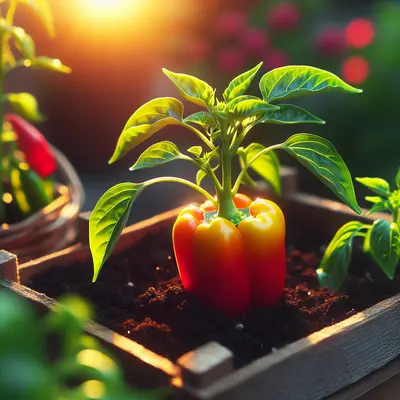
Adorable bite-sized bell peppers in a rainbow of colors including red, yellow, orange, and purple, perfect for snacking and lunch boxes. These compact plants are incredibly productive, churning out dozens of crisp, sweet mini peppers throughout the season. Ideal for container gardening and small spaces, they bring both beauty and functionality to any garden.
Harvest
60-70d
Days to harvest
Sun
Full sun
Zones
4–11
USDA hardiness
Height
1-3 feet
Planting Timeline
Showing dates for Sweet Pepper 'Mini Bell Mix' in USDA Zone 7
All Zone 7 pepper →Zone Map
Click a state to update dates
Sweet Pepper 'Mini Bell Mix' · Zones 4–11
Growing Details
Succession Planting
Mini Bell peppers keep producing from a single planting all season — you don't succession sow them the way you would lettuce or radishes. Start seeds indoors in February or March (8–10 weeks before your last frost), transplant out in April or May once nights are reliably above 50°F, and harvest runs July through September in zone 7. One planting per season is the standard approach.
Complete Growing Guide
These miniature peppers mature quickly at 60-70 days, so direct sow or transplant after frost danger passes and soil reaches 70°F for optimal germination. Unlike larger bell pepper varieties, 'Mini Bell Mix' thrives in containers and tolerates slight crowding, making succession planting every 2-3 weeks feasible for continuous harvests. The compact 1-3 foot height means they need support only in windy locations, though consistent moisture prevents blossom-end rot—a common issue in compact varieties with high fruit density. Watch for spider mites and aphids, which target the dense foliage more readily than sprawling cultivars; preventative neem oil applications in early summer reduce pest pressure significantly. Provide full sun (6-8 hours minimum) and well-draining soil rich in potassium to maximize sweet flavor and prevent the fruit splitting that occurs when watering becomes inconsistent. To boost productivity, pinch the first flowers when plants reach 6 inches tall, redirecting energy into stronger branching rather than early fruit set.
Light: Full sun (6 or more hours of direct sunlight a day). Soil: Clay, High Organic Matter, Loam (Silt), Sand. Soil pH: Acid (<6.0), Alkaline (>8.0), Neutral (6.0-8.0). Drainage: Good Drainage. Height: 1 ft. 0 in. - 3 ft. 8 in.. Spread: 0 ft. 6 in. - 1 ft. 0 in.. Spacing: 12 inches-3 feet. Growth rate: Medium. Maintenance: Low. Propagation: Seed. Regions: Coastal, Mountains, Piedmont.
Harvesting
Harvest Mini Bell Mix peppers when they reach their full mature color—vibrant red, yellow, orange, or purple—and measure approximately two inches long, with a firm, glossy skin that yields slightly to gentle pressure. These miniature peppers are sweetest at full maturity, though they can be picked at the green stage if space is limited. Practice continuous harvesting throughout the season by regularly picking ripe peppers rather than waiting for a single flush, which encourages the plant to produce even more blooms and fruits. Time your harvests for early morning when peppers are fully hydrated and crispest, using sharp pruners to cleanly remove peppers at the stem rather than pulling, which minimizes plant damage and promotes ongoing productivity.
Fruits are a non-pulpy berry and vary considerably across cultivars. Some are long, thin, bright red, and spicy; others are thick, large, and sweet-tasting; others still are small and in ornamental shapes and colors, grown as decoration.
Color: Black, Gold/Yellow, Green, Orange, Red/Burgundy. Type: Berry. Length: 1-3 inches. Width: < 1 inch.
Garden value: Edible, Good Dried, Showy
Harvest time: Summer
Edibility: Fruits edible, but spiciness is unpredictable in intensity.
Storage & Preservation
Store freshly harvested Mini Bell peppers in the refrigerator at 45–50°F with 90–95% humidity, ideally in a perforated plastic bag on the crisper drawer. They'll keep for two to three weeks under these conditions. For longer preservation, freezing works exceptionally well: dice or slice them raw, spread on a baking sheet to freeze individually, then transfer to freezer bags for up to eight months. Roasting and freezing in oil is another excellent option that concentrates their natural sweetness. You can also dry them whole or sliced at low temperature (around 135°F) until brittle, then store in airtight containers. Given their thin walls and mild flavor, these peppers are less suitable for traditional canning but work beautifully in quick pickles. A useful trick specific to this variety: because they're so small and sweet, freeze them whole unblanched—they thaw quickly and retain excellent texture for snacking straight from the freezer or adding to stir-fries.
History & Origin
Sweet Pepper 'Mini Bell Mix' belongs to the broader category of miniature bell peppers developed through modern ornamental and culinary breeding programs, though specific breeder credits and introduction dates remain poorly documented in readily available sources. The variety likely emerged from selective breeding of standard bell peppers (Capsicum annuum) during the late 20th century, as seed companies increasingly focused on compact cultivars suited to container gardening and home gardeners with limited space. The "Mini Bell Mix" designation suggests it represents a seed company's curated blend rather than a single-origin heritage variety, combining multiple color morphs selected for their ornamental appeal and productivity in confined growing conditions.
Origin: Tropical North and South America
Advantages
- +Produces dozens of colorful mini peppers in just 60-70 days
- +Perfect bite-sized portions ideal for snacking and children's lunch boxes
- +Thrives in containers and small spaces with compact plant growth
- +Rainbow of colors adds visual beauty while providing sweet, mild flavor
- +Easy to grow variety suitable for beginner gardeners
Considerations
- -Susceptible to multiple pests including aphids, spider mites, and whiteflies
- -Vulnerable to bacterial spot and powdery mildew diseases
- -Prone to blossom end rot requiring consistent calcium and watering management
Companion Plants
Basil and French marigolds (Tagetes patula) are the two worth planting closest. Basil is shallow-rooted and compact, so it doesn't compete for space or moisture at pepper root depth. French marigolds have solid documentation behind them for suppressing soil nematodes, and their scent confuses aphids and whiteflies — both of which hit Mini Bells reliably. Onions and carrots fill gaps at different root depths without pulling from the same moisture layer as the peppers. One thing to actually pay attention to: NC State Extension flags that planting hot peppers within insect flight range of sweet peppers is a real problem. Capsaicin is dominant, cross-pollination happens, and your Mini Bells can come out tasting hot. Keep the two types at least a bed or two apart.
Fennel is the one to pull from the vicinity entirely. It produces allelopathic root compounds that stunt most vegetables, and peppers aren't an exception. Brassicas — cabbage, broccoli, kale — aren't allelopathic, but they draw heavy aphid and whitefly pressure on their own, so grouping them next to peppers just doubles your pest load in one spot without any upside.
Plant Together
Basil
Repels aphids, spider mites, and thrips while potentially improving pepper flavor
Tomatoes
Similar growing requirements and can share space efficiently, both benefit from same soil conditions
Marigolds
Repel nematodes, aphids, and whiteflies while attracting beneficial insects
Oregano
Deters pests like aphids and spider mites with its strong aromatic oils
Carrots
Help break up soil for pepper roots and don't compete for the same nutrients
Onions
Repel aphids, thrips, and other pests that commonly attack peppers
Parsley
Attracts beneficial insects like hoverflies and predatory wasps that control pepper pests
Lettuce
Provides living mulch and ground cover while peppers provide afternoon shade
Keep Apart
Fennel
Produces allelopathic compounds that inhibit pepper growth and development
Brassicas
Compete heavily for nutrients and may stunt pepper growth through root competition
Black Walnut
Produces juglone toxin that causes wilting and death in pepper plants
Nutrition Facts
Per 100g serving. % Daily Value based on 2,000 calorie diet. Source: USDA FoodData Central (FDC #169394)
Pests & Disease Resistance
Resistance
Good general disease resistance typical of modern hybrids
Common Pests
Aphids, spider mites, whiteflies, thrips
Diseases
Bacterial spot, powdery mildew, blossom end rot
Troubleshooting Sweet Pepper 'Mini Bell Mix'
What you'll see, why it happens, and what to do about it.
Sunken, leathery dark patch on the bottom (or side) of developing fruit, sometimes with secondary black mold
Likely Causes
- Blossom end rot — localized calcium deficiency in the developing fruit
- Inconsistent watering or drought stress preventing calcium uptake
- High ammonium-nitrogen fertilizer salts blocking calcium absorption
What to Do
- 1.Water consistently — aim for 1 inch per week and don't let the soil dry out between waterings
- 2.Mulch around the base of plants before dry spells hit, ideally by the time plants start blooming
- 3.Ease off high-nitrogen fertilizers; switch to a lower-ammonium formulation and work in calcium-rich amendments like gypsum if your soil test shows low calcium
Leaves stippled silvery or bronze, tiny webbing on undersides, plants look dull and stressed during hot dry stretches
Likely Causes
- Two-spotted spider mite (Tetranychus urticae) — populations explode above 85°F in dry conditions
- Thrips feeding can produce similar silvery streaking and distorted new growth
What to Do
- 1.Knock mites off with a hard spray of water directed at leaf undersides — do it in the morning so foliage dries before nightfall
- 2.Apply insecticidal soap or neem oil to leaf undersides, repeating every 5–7 days for at least 3 applications
- 3.Keep soil moisture consistent; drought-stressed plants are more susceptible and mite populations build faster on them
Small water-soaked spots on leaves and fruit that turn brown and scabby, often with a yellow halo around leaf lesions
Likely Causes
- Bacterial spot (Xanthomonas campestris pv. vesicatoria) — spreads fast in warm, wet weather and splashes up from bare soil
- Overhead irrigation or rain hitting unprotected soil around the base of plants
What to Do
- 1.Remove and bag affected leaves — don't put them in the compost
- 2.Mulch heavily with straw to cut down on soil splash, and water at the base rather than overhead
- 3.Rotate peppers out of the affected bed for at least 2 seasons — and don't follow them with tomatoes, eggplant, or potatoes, since NC State Extension's organic disease management guidance notes that all nightshades share disease cycles
Frequently Asked Questions
How long does Mini Bell Mix take to grow from seed?▼
Can you grow Mini Bell Mix in containers?▼
What does Mini Bell Mix taste like compared to regular bell peppers?▼
Is Mini Bell Mix good for beginner gardeners?▼
When should I plant Mini Bell Mix seeds?▼
How many Mini Bell Mix peppers does one plant produce?▼
Zone-by-Zone Planting Calendar
| Zone | Indoor Start | Transplant | Direct Sow | Harvest |
|---|---|---|---|---|
| Zone 1 | May – May | July – August | — | September – August |
| Zone 2 | April – May | June – July | — | September – September |
| Zone 11 | January – January | January – February | — | April – June |
| Zone 12 | January – January | January – February | — | April – June |
| Zone 13 | January – January | January – February | — | April – June |
| Zone 3 | April – April | June – July | — | August – October |
| Zone 4 | March – April | June – June | — | August – October |
| Zone 5 | March – March | May – June | — | August – October |
| Zone 6 | March – March | May – June | — | July – September |
| Zone 7 | February – March | April – May | — | July – September |
| Zone 8 | February – February | April – May | — | June – August |
| Zone 9 | January – January | March – April | — | May – July |
| Zone 10 | January – January | February – March | — | May – July |
Growing Guides from Wind River Greens
Sources & References
External authority sources used in compiling this guide.
See the Methodology page for how this data is sourced, what's AI-assisted, and known limitations.
More Peppers
Carolina Reaper
Sweet Pepper 'Carmen'
Ghost Pepper 'Bhut Jolokia'
Scotch Bonnet 'Scotch Bonnet Orange'
Chocolate Habanero
Sweet Italian Pepper 'Marconi Rosso'
Purple Beauty Bell Pepper
Mad Hatter