Sweet Pepper 'Gypsy'
Capsicum annuum 'Gypsy'
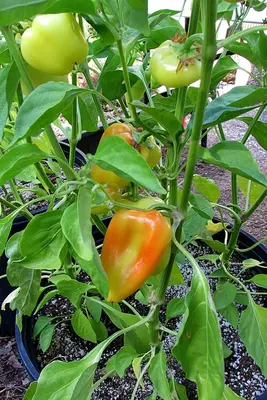
An All-America Selections winner beloved for its exceptional productivity and sweet, crisp flavor in a compact plant perfect for small gardens. This hybrid produces an abundance of colorful peppers that transition from pale yellow to orange to bright red, making it as ornamental as it is delicious. The thin-skinned fruits are perfect for fresh eating and cook quickly in stir-fries.
Harvest
65-70d
Days to harvest
Sun
Full sun
Zones
4–11
USDA hardiness
Height
1-3 feet
Planting Timeline
Showing dates for Sweet Pepper 'Gypsy' in USDA Zone 7
All Zone 7 pepper →Zone Map
Click a state to update dates
Sweet Pepper 'Gypsy' · Zones 4–11
Growing Details
Succession Planting
Gypsy is a single-planting crop — it keeps setting fruit from one transplant through the whole season rather than exhausting itself after a single flush. Start seeds indoors in February or March (germination takes 10–14 days at a soil temperature of 75–85°F), transplant once nights are reliably above 55°F, and that planting carries you through July–September harvest in zone 7. A second sowing adds no real benefit.
If you want front-end insurance, start a backup flat 3 weeks after the first so you have replacement transplants ready if a late frost takes your originals — but that's contingency planning, not succession. A healthy Gypsy plant in a decent year will set 20–30 fruits without any staggering needed.
Complete Growing Guide
This compact hybrid's 65-70 day maturity means you can direct-sow after frost danger passes and expect fruit in midsummer, making it ideal for short-season gardeners. Gypsy thrives in full sun with consistently warm soil and benefits from afternoon shade in extremely hot climates, which prevents sunscald on its thin-skinned fruits. Unlike thicker-walled bell peppers, this cultivar's delicate skin makes it more susceptible to sunburn and cracking during temperature fluctuations, so mulch heavily and maintain even soil moisture. The plant's compact 1-3 foot stature means it can become root-bound quickly in containers; use at least 5-gallon pots and fertilize every two weeks once flowering begins. While generally pest-resistant, watch for spider mites in hot, dry conditions, which stress thin-skinned varieties. A practical tip: remove the first flower cluster to encourage stronger branching and more productive overall fruit set, offsetting the plant's natural tendency toward early flowering rather than lateral growth.
Light: Full sun (6 or more hours of direct sunlight a day). Soil: Clay, High Organic Matter, Loam (Silt), Sand. Soil pH: Acid (<6.0), Alkaline (>8.0), Neutral (6.0-8.0). Drainage: Good Drainage. Height: 1 ft. 0 in. - 3 ft. 8 in.. Spread: 0 ft. 6 in. - 1 ft. 0 in.. Spacing: 12 inches-3 feet. Growth rate: Medium. Maintenance: Low. Propagation: Seed. Regions: Coastal, Mountains, Piedmont.
Harvesting
Gypsy peppers reach peak harvest when they transition from pale yellow through orange to their signature bright red color, though they are equally delicious at any stage. The fruits are ready when they feel firm yet slightly yielding to gentle pressure, typically reaching 3 to 4 inches long. For maximum sweetness and crisp texture, wait until peppers have fully colored, which intensifies their sugar content. This variety thrives under continuous harvesting—regularly picking mature peppers encourages the compact plant to produce even more flowers and fruit throughout the season rather than concentrating energy into a single flush. Begin harvesting when peppers first show color change to promote sustained productivity over several months.
Fruits are a non-pulpy berry and vary considerably across cultivars. Some are long, thin, bright red, and spicy; others are thick, large, and sweet-tasting; others still are small and in ornamental shapes and colors, grown as decoration.
Color: Black, Gold/Yellow, Green, Orange, Red/Burgundy. Type: Berry. Length: 1-3 inches. Width: < 1 inch.
Garden value: Edible, Good Dried, Showy
Harvest time: Summer
Edibility: Fruits edible, but spiciness is unpredictable in intensity.
Storage & Preservation
Freshly harvested Gypsy peppers store best in the refrigerator's crisper drawer at 45–50°F with 90–95% humidity, where they'll keep for up to two weeks. Avoid storing them near ethylene-producing fruits like apples or bananas, which accelerate ripening and decay. For longer preservation, freezing works exceptionally well: dice or slice the peppers raw, spread them on a baking sheet to freeze individually, then transfer to freezer bags for up to eight months. Alternatively, roast whole peppers until the skin chars, cool, peel, and freeze the tender flesh in oil for convenient addition to winter dishes. Canning as pickled peppers is popular given their crisp texture, which holds up beautifully in brine. Their thin, tender skin makes them less suitable for successful drying compared to thicker-walled varieties, though you can still dry them if desired. Because Gypsy's sweetness and delicate flesh excel in fresh applications, consider preserving a portion raw-frozen to enjoy that signature crispness even after storage.
History & Origin
Sweet Pepper 'Gypsy' emerged from the All-America Selections (AAS) program, which evaluates and recognizes outstanding new garden varieties across North America. While detailed records of its original breeder and exact development year are not widely documented in publicly available sources, 'Gypsy' represents the AAS commitment to identifying superior hybrid peppers suited for home gardeners. The variety exemplifies mid-20th-century breeding priorities emphasizing compact plant architecture, high yield, and ornamental appeal alongside culinary qualities. As a Capsicum annuum hybrid, it belongs to the broader lineage of sweet bell peppers refined through decades of selection for productivity in limited spaces, though its specific parentage and breeding institution remain largely undocumented in accessible horticultural literature.
Origin: Tropical North and South America
Advantages
- +All-America Selections winner known for exceptional productivity and reliability
- +Compact plant size ideal for small gardens and container growing
- +Sweet, crisp flavor with thin skin cooks quickly in stir-fries
- +Ornamental appeal with colorful progression from yellow to orange to red
- +Matures quickly in 65-70 days with abundant fruit production
Considerations
- -Thin skin makes fruits vulnerable to bacterial spot and anthracnose disease
- -Susceptible to blossom end rot requiring consistent calcium and watering
- -Prone to multiple pest infestations including aphids, flea beetles, spider mites
Companion Plants
Basil fits between pepper plants at 12–18 inches and forces better airflow around the base — that's the practical payoff, whatever you think of the pest-confusion claims. French marigolds (not the giant African types) pull aphid predators into the bed and disrupt thrips at soil level. Keep brassicas — cabbage, broccoli, kale — well clear; they're heavy nitrogen feeders on a different watering schedule, and in zone 7 Georgia the spring planting window overlaps badly with pepper establishment, putting both crops in direct competition for the same root zone. Skip fennel entirely: it's allelopathic to most vegetables and reliably stunts Capsicum annuum. One practical note from NC State Extension — sweet and hot peppers cross-pollinate easily by insects, so if you're growing any hot varieties within a few rows, the seed inside your Gypsy fruit may carry capsaicin even when the flesh tastes mild.
Plant Together
Basil
Repels aphids, spider mites, and thrips while potentially improving pepper flavor
Marigold
Deters nematodes, aphids, and whiteflies with natural compounds
Tomato
Similar growing requirements and can share space efficiently
Oregano
Repels cucumber beetles and provides ground cover to retain soil moisture
Parsley
Attracts beneficial insects like hoverflies that prey on pepper pests
Carrots
Grow well in pepper shade and help break up soil without competing for nutrients
Nasturtium
Acts as trap crop for aphids and cucumber beetles, drawing them away from peppers
Chives
Repels aphids and may help improve pepper growth and flavor
Keep Apart
Black Walnut
Produces juglone toxin that stunts growth and can kill pepper plants
Fennel
Releases allelopathic compounds that inhibit pepper growth and development
Brassicas
Compete heavily for nutrients and may stunt pepper growth due to different soil pH preferences
Nutrition Facts
Per 100g serving. % Daily Value based on 2,000 calorie diet. Source: USDA FoodData Central (FDC #169394)
Pests & Disease Resistance
Resistance
Excellent resistance to tobacco mosaic virus
Common Pests
Aphids, flea beetles, cutworms, spider mites
Diseases
Bacterial spot, blossom end rot, anthracnose
Troubleshooting Sweet Pepper 'Gypsy'
What you'll see, why it happens, and what to do about it.
Sunken, dark, leathery patch on the bottom or side of the fruit — shows up on peppers that are still on the plant
Likely Causes
- Blossom end rot — localized calcium deficiency in the developing fruit
- Inconsistent watering causing water stress that limits calcium uptake
- High ammonium-nitrogen fertilizer salts interfering with calcium movement
What to Do
- 1.Water consistently to 1 inch per week — drought stress followed by a big drink is the usual trigger
- 2.Mulch the bed heavily (straw works fine) before dry spells hit, ideally by the time plants are blooming
- 3.Back off high-nitrogen synthetic fertilizers; get a soil test to confirm calcium levels before adding lime or gypsum
White or tan papery patches on the side of the fruit facing the sun, skin feels thin and collapsed
Likely Causes
- Sun scald — direct UV exposure on fruit that lost its leaf canopy, or was suddenly exposed after aggressive pruning
- Spider mite feeding that stripped foliage and left fruit unshaded
What to Do
- 1.Don't over-prune the canopy; Gypsy sets a lot of fruit low on the plant and needs that leaf cover through July and August
- 2.Check the undersides of leaves for spider mites — fine webbing and stippled yellowing are the giveaway — and knock them back with insecticidal soap or a hard water spray
- 3.Scald-damaged fruit won't recover, but pick it immediately so secondary molds don't move to healthy fruit nearby
Small, water-soaked spots on leaves and fruit that turn brown with yellow halos, sometimes with a raised or scabby texture on the pepper skin
Likely Causes
- Bacterial spot (Xanthomonas campestris pv. vesicatoria) — spreads fast in warm, wet weather
- Overhead irrigation or rain splash moving bacteria from soil or infected debris onto foliage
What to Do
- 1.Switch to drip irrigation if you haven't already; keeping water off the leaves slows spread significantly
- 2.Remove and bag (don't compost) heavily infected leaves and fruit
- 3.Rotate peppers and all other nightshades — tomatoes, eggplant, potatoes — out of the affected bed for at least 2 seasons, per NC State Extension's nightshade disease management guidance
Clusters of tiny soft-bodied insects on new growth and flower buds; leaves curling downward or coated in sticky residue
Likely Causes
- Aphids — commonly green peach aphid (Myzus persicae) — colonize fast once they find the plant
- Ants farming aphids and protecting them from predators in exchange for honeydew
What to Do
- 1.Spray a hard stream of water to knock them off; do it in the morning so foliage dries before nightfall
- 2.If the population is established, apply insecticidal soap or neem oil directly to the colonies — coverage on the undersides of leaves matters more than volume
- 3.Check for ant trails up the main stem; if ants are present, a sticky barrier like Tanglefoot around the base breaks the cycle
Frequently Asked Questions
How long does Sweet Pepper 'Gypsy' take to grow from seed?▼
Can you grow Sweet Pepper 'Gypsy' in containers?▼
Is Sweet Pepper 'Gypsy' good for beginners?▼
What does Sweet Pepper 'Gypsy' taste like compared to bell peppers?▼
When should I plant Sweet Pepper 'Gypsy' seeds?▼
Do Sweet Pepper 'Gypsy' plants need support or staking?▼
Zone-by-Zone Planting Calendar
| Zone | Indoor Start | Transplant | Direct Sow | Harvest |
|---|---|---|---|---|
| Zone 3 | April – April | June – July | — | August – October |
| Zone 4 | March – April | June – June | — | August – October |
| Zone 5 | March – March | May – June | — | August – October |
| Zone 6 | March – March | May – June | — | July – September |
| Zone 7 | February – March | April – May | — | July – September |
| Zone 8 | February – February | April – May | — | June – August |
| Zone 9 | January – January | March – April | — | May – July |
| Zone 10 | January – January | February – March | — | May – July |
| Zone 1 | May – May | July – August | — | September – August |
| Zone 2 | April – May | June – July | — | September – September |
| Zone 11 | January – January | January – February | — | April – June |
| Zone 12 | January – January | January – February | — | April – June |
| Zone 13 | January – January | January – February | — | April – June |
Growing Guides from Wind River Greens
Sources & References
External authority sources used in compiling this guide.
See the Methodology page for how this data is sourced, what's AI-assisted, and known limitations.
More Peppers
Carolina Reaper
Sweet Pepper 'Carmen'
Ghost Pepper 'Bhut Jolokia'
Scotch Bonnet 'Scotch Bonnet Orange'
Chocolate Habanero
Sweet Italian Pepper 'Marconi Rosso'
Purple Beauty Bell Pepper
Mad Hatter