Bell Pepper 'Golden California Wonder'
Capsicum annuum 'Golden California Wonder'
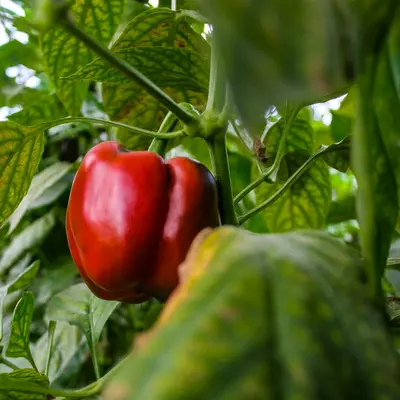
A stunning golden-yellow version of the classic California Wonder bell pepper that brings sunshine to your garden and plate. These thick-walled, blocky peppers start green and ripen to a brilliant golden yellow with exceptional sweet flavor. Perfect for gardeners who want reliable production of beautiful, versatile peppers for fresh eating or cooking.
Harvest
70-75d
Days to harvest
Sun
Full sun
Zones
4–11
USDA hardiness
Height
1-3 feet
Planting Timeline
Showing dates for Bell Pepper 'Golden California Wonder' in USDA Zone 7
All Zone 7 pepper →Zone Map
Click a state to update dates
Bell Pepper 'Golden California Wonder' · Zones 4–11
Growing Details
Complete Growing Guide
This cultivar's 70-75 day timeline refers to days after transplant, so start seeds indoors 8-10 weeks before your last frost for peak summer production. Golden California Wonder thrives in full sun (6-8 hours minimum) and consistently warm soil above 70°F—it's less tolerant of cold than some pepper varieties, so delay transplanting until nighttime temperatures stay above 55°F. These thick-walled peppers are prone to sunscald if exposed suddenly to intense heat after transplanting, so acclimate seedlings gradually and consider afternoon shade in extremely hot climates. Watch for spider mites in dry conditions and anthracnose in humid weather; maintain good air circulation and avoid overhead watering. The blocky fruit shape makes them heavier than other types, so stake or cage plants early. One key advantage: unlike many peppers, this cultivar sets fruit reliably even under slightly variable conditions, making it forgiving for beginners willing to provide consistent warmth and moisture.
Light: Full sun (6 or more hours of direct sunlight a day). Soil: Clay, High Organic Matter, Loam (Silt), Sand. Soil pH: Acid (<6.0), Alkaline (>8.0), Neutral (6.0-8.0). Drainage: Good Drainage. Height: 1 ft. 0 in. - 3 ft. 8 in.. Spread: 0 ft. 6 in. - 1 ft. 0 in.. Spacing: 12 inches-3 feet. Growth rate: Medium. Maintenance: Low. Propagation: Seed. Regions: Coastal, Mountains, Piedmont.
Harvesting
Harvest Golden California Wonder peppers when they reach full size and transition from green to their signature golden yellow color, as this indicates peak sweetness and thick-walled maturity. The peppers should feel firm with a slight give when gently squeezed, and their blocky shape will be fully developed. For continuous harvests throughout the season, pick peppers regularly rather than waiting for all fruits to mature simultaneously; removing peppers encourages the plant to produce more blooms. A key timing tip: harvest in early morning when peppers are fully hydrated and crisp, maximizing their crispness and shelf life. You can also harvest at the mature green stage if needed, though allowing full color development delivers superior flavor and nutritional content.
Fruits are a non-pulpy berry and vary considerably across cultivars. Some are long, thin, bright red, and spicy; others are thick, large, and sweet-tasting; others still are small and in ornamental shapes and colors, grown as decoration.
Color: Black, Gold/Yellow, Green, Orange, Red/Burgundy. Type: Berry. Length: 1-3 inches. Width: < 1 inch.
Garden value: Edible, Good Dried, Showy
Harvest time: Summer
Edibility: Fruits edible, but spiciness is unpredictable in intensity.
Storage & Preservation
Harvest Golden California Wonder peppers when they reach full golden color for optimal sweetness. Store fresh peppers in the refrigerator at 45-50°F with 90-95% humidity, ideally in a perforated plastic bag or crisper drawer, where they'll keep for 2-3 weeks. For longer preservation, freezing works exceptionally well for this variety—simply dice or slice, spread on a baking sheet to freeze individually, then transfer to freezer bags for up to eight months. Roasting intensifies their natural sweetness; char them whole over an open flame, cool in a covered bowl, then peel and freeze the flesh in oil for convenient winter use. Canning is possible using tested safe recipes, though the peppers soften somewhat. These peppers also dry reasonably well in a dehydrator or low oven, concentrating their mild flavor for later rehydration. Because of their thick walls and low acidity, handle any preservation method carefully to ensure safety.
History & Origin
The 'Golden California Wonder' is a golden-yellow sport or selection derived from the classic 'California Wonder' bell pepper, which was developed in the 1920s and became one of America's most popular garden varieties. While specific breeding documentation for the golden mutation is limited, this variety emerged through the natural color variations that appear in 'California Wonder' populations—a common occurrence in pepper breeding. Seed companies, particularly those specializing in vegetable varieties, isolated and stabilized the yellow phenotype to create this distinct cultivar. The golden form maintains the thick walls, blocky shape, and reliable productivity of its parent while offering the distinctive yellow coloration and slightly sweeter flavor profile that has made it a consistent favorite among home gardeners seeking reliable pepper production.
Origin: Tropical North and South America
Advantages
- +Stunning golden-yellow color adds visual appeal to gardens and dishes
- +Thick-walled fruits ideal for stuffing, roasting, or eating fresh
- +Reliable producer with 70-75 day maturity and easy growing requirements
- +Sweet, mild flavor appeals to broad range of palates
Considerations
- -Susceptible to bacterial spot disease in humid or wet conditions
- -Vulnerable to blossom end rot without consistent calcium and watering
- -Multiple pest pressures including aphids, spider mites, and pepper weevils
Companion Plants
Basil and French marigolds (Tagetes patula) are the two worth planting close. Basil's volatile oils are claimed to deter aphids and thrips, and the evidence for that is thinner than garden magazines suggest — but it shares the same watering schedule as peppers, doesn't compete much at 18-inch spacing, and you'll actually use it. French marigolds produce thiophenes in their roots that suppress root-knot nematodes in the soil over a full season; that one has real documented support, not just word of mouth.
Fennel is the clear problem — its roots release allelopathic compounds that stunt most vegetables, and peppers are no exception. Skip brassicas as bed neighbors too: they prefer cooler soil temperatures and run their roots at a similar depth, so they're pulling from the same moisture and nutrient zone right when your peppers are trying to set fruit. One genuinely useful heads-up from NC State Extension: if you're saving seed from Golden California Wonder, keep any hot pepper varieties at least 50 feet away. Capsaicin's gene is dominant, and insect cross-pollination can leave you with a sweet pepper that isn't.
Plant Together
Basil
Repels aphids, spider mites, and thrips while potentially improving pepper flavor
Marigold
Deters nematodes, aphids, and whiteflies with natural compounds
Tomato
Similar growing requirements and can share space efficiently
Oregano
Repels cucumber beetles and provides ground cover to retain soil moisture
Parsley
Attracts beneficial insects like hoverflies that prey on pepper pests
Carrots
Improve soil structure and don't compete for nutrients at same soil level
Nasturtium
Acts as trap crop for aphids and cucumber beetles
Chives
Repels aphids and may help deter larger pests like rabbits
Keep Apart
Black Walnut
Releases juglone toxin that stunts pepper growth and causes wilting
Fennel
Inhibits growth of peppers through allelopathic compounds
Brassicas
Heavy nitrogen feeders that compete directly with peppers for nutrients
Nutrition Facts
Per 100g serving. % Daily Value based on 2,000 calorie diet. Source: USDA FoodData Central (FDC #2258588)
Pests & Disease Resistance
Resistance
Good resistance to tobacco mosaic virus
Common Pests
Aphids, pepper weevil, spider mites, thrips
Diseases
Bacterial spot, blossom end rot, pepper mild mottle virus
Troubleshooting Bell Pepper 'Golden California Wonder'
What you'll see, why it happens, and what to do about it.
Sunken, leathery dark patch on the bottom or side of the fruit, sometimes with secondary gray or black mold on the affected area
Likely Causes
- Blossom end rot — localized calcium deficiency in the developing fruit, as described in NC State Extension's disease guides
- Inconsistent watering causing water stress that blocks calcium uptake
- High ammonium nitrogen fertilizer competing with calcium absorption
What to Do
- 1.Water consistently at 1 to 1.5 inches per week — big dry spells followed by heavy soaks are exactly what triggers this
- 2.Mulch around the base of plants to hold soil moisture before dry spells hit, ideally before the plants reach blooming stage
- 3.Get a soil test first; if calcium is genuinely low, work in lime or gypsum — don't start with foliar calcium sprays until you know what the soil pH is doing at 6.0–6.8
Tiny clustering insects on new growth and leaf undersides; leaves cupping or puckering; sticky residue on foliage
Likely Causes
- Aphids (green peach aphid, Myzus persicae, or cotton aphid, Aphis gossypii) — colonize fast in warm weather
- Thrips (Frankliniella occidentalis) — harder to spot but cause similar distortion on young leaves and flowers
What to Do
- 1.Knock aphids off with a firm spray of water; repeat every 2–3 days on small infestations
- 2.For thrips or persistent aphid pressure, apply insecticidal soap or neem oil, coating the leaf undersides thoroughly — do it in the evening to avoid burning foliage
- 3.Plant nasturtiums at the bed edge as a trap crop; check them first each morning and you'll often catch a buildup before it moves to the peppers
Frequently Asked Questions
How long does Golden California Wonder take to grow from seed?▼
Can you grow Golden California Wonder in containers?▼
What does Golden California Wonder pepper taste like?▼
When should I plant Golden California Wonder peppers?▼
Is Golden California Wonder good for beginner gardeners?▼
Golden California Wonder vs regular California Wonder - what's the difference?▼
Zone-by-Zone Planting Calendar
| Zone | Indoor Start | Transplant | Direct Sow | Harvest |
|---|---|---|---|---|
| Zone 1 | May – May | July – August | — | September – August |
| Zone 2 | April – May | June – July | — | September – September |
| Zone 11 | January – January | January – February | — | April – June |
| Zone 12 | January – January | January – February | — | April – June |
| Zone 13 | January – January | January – February | — | April – June |
| Zone 3 | April – April | June – July | — | August – October |
| Zone 4 | March – April | June – June | — | August – October |
| Zone 5 | March – March | May – June | — | August – October |
| Zone 6 | March – March | May – June | — | July – September |
| Zone 7 | February – March | April – May | — | July – September |
| Zone 8 | February – February | April – May | — | June – August |
| Zone 9 | January – January | March – April | — | May – July |
| Zone 10 | January – January | February – March | — | May – July |
Growing Guides from Wind River Greens
Sources & References
External authority sources used in compiling this guide.
See the Methodology page for how this data is sourced, what's AI-assisted, and known limitations.
More Peppers
Carolina Reaper
Sweet Pepper 'Carmen'
Ghost Pepper 'Bhut Jolokia'
Scotch Bonnet 'Scotch Bonnet Orange'
Chocolate Habanero
Sweet Italian Pepper 'Marconi Rosso'
Purple Beauty Bell Pepper
Mad Hatter