Bell Pepper 'Big Bertha'
Capsicum annuum 'Big Bertha'
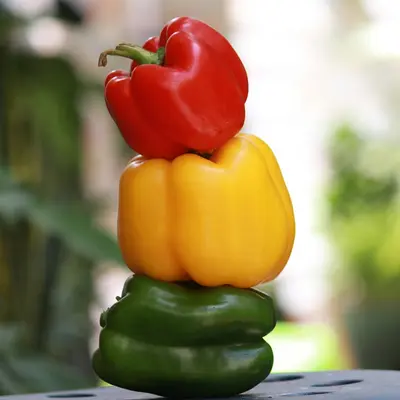
A prize-winning hybrid that produces enormous bell peppers up to 7 inches long and 4 inches wide, often weighing over a pound each. This reliable variety delivers exceptional yields of thick-walled, sweet peppers that are perfect for stuffing or fresh eating. Big Bertha has been a garden favorite for decades thanks to its impressive size and excellent disease resistance.
Harvest
72-75d
Days to harvest
Sun
Full sun
Zones
4–11
USDA hardiness
Height
1-3 feet
Planting Timeline
Showing dates for Bell Pepper 'Big Bertha' in USDA Zone 7
All Zone 7 pepper →Zone Map
Click a state to update dates
Bell Pepper 'Big Bertha' · Zones 4–11
Growing Details
Complete Growing Guide
Big Bertha's 72-75 day maturity is relatively quick for such a large-fruited variety, so start seeds indoors 8-10 weeks before your last frost to maximize the growing season and allow sufficient time for those massive peppers to develop fully. This cultivar thrives in warm soil (70-85°F) and benefits from consistent moisture and rich, well-draining soil amended with compost, since the enormous fruit load demands substantial nutrition. While Big Bertha boasts solid disease resistance, its dense foliage can trap moisture and invite fungal issues like powdery mildew in humid climates—ensure good air circulation by pruning lower branches. The heavy peppers require sturdy caging or staking to prevent branch breakage under their own weight, a practical necessity often overlooked by first-time growers. Avoid nitrogen-heavy fertilizers once flowering begins, as excess vegetative growth will delay fruit set.
Light: Full sun (6 or more hours of direct sunlight a day). Soil: Clay, High Organic Matter, Loam (Silt), Sand. Soil pH: Acid (<6.0), Alkaline (>8.0), Neutral (6.0-8.0). Drainage: Good Drainage. Height: 1 ft. 0 in. - 3 ft. 8 in.. Spread: 0 ft. 6 in. - 1 ft. 0 in.. Spacing: 12 inches-3 feet. Growth rate: Medium. Maintenance: Low. Propagation: Seed. Regions: Coastal, Mountains, Piedmont.
Harvesting
Harvest Big Bertha peppers when they reach their full 7-inch length and display a deep red, yellow, or orange color for maximum sweetness, though they are edible at the mature green stage. The thick walls should feel firm and glossy to the touch. Practice continuous harvesting by picking peppers regularly throughout the season to encourage the plant to produce more fruit rather than waiting for all peppers to ripen simultaneously. For optimal yields, remove peppers with pruning shears rather than pulling by hand to avoid damaging the branches, and prioritize harvesting mature peppers first so the plant directs energy toward developing remaining fruit.
Fruits are a non-pulpy berry and vary considerably across cultivars. Some are long, thin, bright red, and spicy; others are thick, large, and sweet-tasting; others still are small and in ornamental shapes and colors, grown as decoration.
Color: Black, Gold/Yellow, Green, Orange, Red/Burgundy. Type: Berry. Length: 1-3 inches. Width: < 1 inch.
Garden value: Edible, Good Dried, Showy
Harvest time: Summer
Edibility: Fruits edible, but spiciness is unpredictable in intensity.
Storage & Preservation
Store freshly harvested Big Bertha peppers in a perforated plastic bag in the refrigerator's crisper drawer, maintaining temperatures between 45–50°F with 90–95% humidity for optimal longevity. Under these conditions, expect a fresh shelf life of 2–3 weeks before quality declines.
For longer preservation, freezing works well: dice or slice the peppers, spread them on a baking sheet to freeze individually, then transfer to freezer bags for up to eight months. Roasting and freezing intensifies their natural sweetness. Canning whole or in strips requires a pressure canner due to their low acidity. Drying is also viable—slice lengthwise and dry at 135°F until leathery, yielding concentrated flavor for winter cooking.
Their thick walls make Big Bertha particularly suitable for roasting and freezing whole before peeling; the charred skin slips away cleanly, and they retain excellent texture when thawed for stuffed pepper recipes.
History & Origin
Bell Pepper 'Big Bertha' emerged as a hybrid cultivar during the late 20th century, though detailed documentation of its specific breeder and introduction year remains limited in readily available horticultural records. The variety represents the broader trend of commercial pepper breeding programs that focused on developing larger-fruited, high-yielding bell pepper types suited to both home gardeners and commercial producers. Big Bertha likely descends from earlier large-fruited pepper breeding lines developed through conventional hybridization techniques, capitalizing on desirable traits from multiple Capsicum annuum germplasm sources. Its rapid adoption as a garden favorite suggests successful marketing and distribution through major American seed companies, cementing its position as a reliable standard in home vegetable cultivation.
Origin: Tropical North and South America
Advantages
- +Produces enormous peppers over a pound each, ideal for stuffing.
- +Prize-winning hybrid with exceptional yields of thick-walled sweet peppers.
- +Reliable variety with excellent disease resistance and proven garden performance.
- +Easy to grow with mild, crisp flavor perfect for fresh eating.
- +Matures in just 72-75 days, delivering results relatively quickly.
Considerations
- -Susceptible to multiple diseases including bacterial spot and anthracnose.
- -Vulnerable to blossom end rot, requiring consistent calcium and watering.
- -Large fruit size demands substantial plant support and sturdy stakes.
- -Attractive to multiple pests including aphids, spider mites, and hornworms.
Companion Plants
Basil and French marigolds (Tagetes patula) are the two worth planting closest. Basil may interfere with aphid and whitefly host-finding through volatile compounds — the research is genuinely mixed on how much it helps, but it doesn't compete hard for water or nutrients at 18-inch spacing, so the risk is zero. French marigolds are a different story: their roots release thiophenes, compounds with documented suppressive effects on root-knot nematodes (Meloidogyne spp.), which can be a real problem in sandy soils. Keep fennel out of the picture entirely — it's allelopathic and stunts most vegetables in its vicinity, and peppers are not an exception. Brassicas pull calcium and sulfur aggressively and can carry shared diseases into a nightshade bed, so they belong in their own rotation block.
Plant Together
Basil
Repels aphids, spider mites, and thrips while potentially improving pepper flavor
Tomatoes
Share similar growing conditions and can help deter pests when planted together
Oregano
Repels aphids and provides ground cover to retain soil moisture
Marigolds
Deter nematodes, aphids, and whiteflies with their strong scent
Carrots
Help break up soil and don't compete for nutrients or space
Onions
Repel aphids, spider mites, and other pests that attack peppers
Parsley
Attracts beneficial insects like hoverflies that prey on pepper pests
Nasturtiums
Act as trap crop for aphids and cucumber beetles
Keep Apart
Fennel
Releases allelopathic compounds that inhibit pepper growth and development
Brassicas
Compete heavily for nutrients and can stunt pepper growth
Black Walnut
Produces juglone toxin that is harmful to peppers and most nightshades
Nutrition Facts
Per 100g serving. % Daily Value based on 2,000 calorie diet. Source: USDA FoodData Central (FDC #2258588)
Pests & Disease Resistance
Resistance
Good resistance to tobacco mosaic virus and bacterial leaf spot
Common Pests
Aphids, spider mites, pepper hornworm, cutworms
Diseases
Bacterial spot, anthracnose, blossom end rot, verticillium wilt
Troubleshooting Bell Pepper 'Big Bertha'
What you'll see, why it happens, and what to do about it.
Sunken, leathery black or brown patch on the bottom — or side — of developing fruit
Likely Causes
- Blossom end rot — localized calcium deficiency in the developing fruit, as NC State Extension describes
- Inconsistent watering or drought stress blocking calcium uptake
- High ammonium-nitrogen fertilizer levels interfering with calcium availability
What to Do
- 1.Water consistently — 1 to 1.5 inches per week — and mulch heavily before dry spells hit, ideally by the time plants are blooming
- 2.Get a soil test before adding calcium amendments; if pH is already 6.0–6.8, calcium is likely present but uptake is the problem, not supply
- 3.Back off on high-nitrogen synthetic fertilizers, especially ammonium-based ones, mid-season
Small, water-soaked spots on leaves and fruit that darken and develop raised or scabby lesions
Likely Causes
- Bacterial spot (Xanthomonas campestris pv. vesicatoria) — spreads fast in warm, wet conditions
- Overhead irrigation or rain splash moving bacteria from soil to foliage
What to Do
- 1.Switch to drip irrigation or soaker hoses to keep foliage dry
- 2.Apply a copper-based bactericide at first sign of symptoms; repeat every 7–10 days during wet stretches
- 3.Rotate peppers and other nightshades — tomatoes, eggplant, potatoes — out of the bed for at least 2 seasons; NC State Extension specifically flags the whole family for rotation
Colonies of small soft-bodied insects clustered on new growth, leaves curling downward, sticky residue on foliage
Likely Causes
- Aphid infestation — multiple species attack peppers; they concentrate on leaf undersides and growing tips
- Absence of natural predators, often because a nearby broad-spectrum spray wiped them out earlier in the season
What to Do
- 1.Knock aphids off with a firm spray of water in the morning so foliage dries before evening
- 2.Apply insecticidal soap or neem oil directly to colonies, covering leaf undersides; repeat every 5–7 days
- 3.Plant nasturtiums (Tropaeolum majus) at the bed edges — they draw in aphid predators like parasitic wasps and lacewings without competing with the peppers for root space
Frequently Asked Questions
How long does Big Bertha pepper take to grow?▼
Can you grow Big Bertha peppers in containers?▼
Is Big Bertha pepper good for beginners?▼
What does Big Bertha pepper taste like?▼
When should I plant Big Bertha pepper seeds?▼
How big do Big Bertha peppers actually get?▼
Zone-by-Zone Planting Calendar
| Zone | Indoor Start | Transplant | Direct Sow | Harvest |
|---|---|---|---|---|
| Zone 3 | April – April | June – July | — | August – October |
| Zone 4 | March – April | June – June | — | August – October |
| Zone 5 | March – March | May – June | — | August – October |
| Zone 6 | March – March | May – June | — | July – September |
| Zone 7 | February – March | April – May | — | July – September |
| Zone 8 | February – February | April – May | — | June – August |
| Zone 9 | January – January | March – April | — | May – July |
| Zone 10 | January – January | February – March | — | May – July |
| Zone 1 | May – May | July – August | — | September – August |
| Zone 2 | April – May | June – July | — | September – September |
| Zone 11 | January – January | January – February | — | April – June |
| Zone 12 | January – January | January – February | — | April – June |
| Zone 13 | January – January | January – February | — | April – June |
Growing Guides from Wind River Greens
Sources & References
External authority sources used in compiling this guide.
See the Methodology page for how this data is sourced, what's AI-assisted, and known limitations.
More Peppers
Carolina Reaper
Sweet Pepper 'Carmen'
Ghost Pepper 'Bhut Jolokia'
Scotch Bonnet 'Scotch Bonnet Orange'
Chocolate Habanero
Sweet Italian Pepper 'Marconi Rosso'
Purple Beauty Bell Pepper
Mad Hatter