Banana Pepper 'Sweet Banana'
Capsicum annuum 'Sweet Banana'
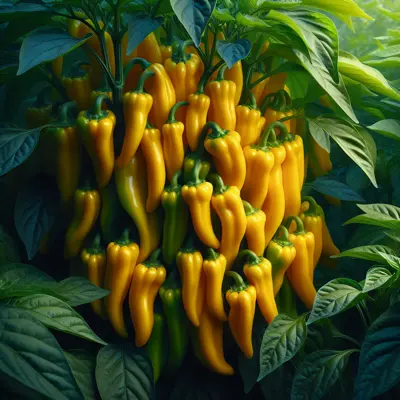
The perfect mild pepper for gardeners who love the flavor of peppers without any heat whatsoever. Sweet Banana peppers are incredibly productive, producing loads of pale yellow, curved pods that add beautiful color and sweet crunch to any dish. Easy to grow and harvest continuously throughout the season, they're ideal for pickling, fresh eating, and adding to pizza and sandwiches.
Harvest
70-80d
Days to harvest
Sun
Full sun
Zones
4–11
USDA hardiness
Height
1-3 feet
Planting Timeline
Showing dates for Banana Pepper 'Sweet Banana' in USDA Zone 7
All Zone 7 pepper →Zone Map
Click a state to update dates
Banana Pepper 'Sweet Banana' · Zones 4–11
Growing Details
Succession Planting
Sweet Banana peppers keep producing on the same plant all season — 70 to 80 days to first harvest, then they just keep going until frost — so you don't need to stagger plantings the way you would with lettuce or beans. One well-timed transplant set out in April or May (zone 7) will carry you through a July–September harvest window without any additional successions.
If you want a backup planting — say, a late cold snap took out some transplants — start a second tray indoors in March and hold it until nighttime temps are reliably above 55°F before setting it out. Past mid-May in zone 7, you're cutting into your harvest window more than you're gaining anything.
Complete Growing Guide
Sweet Banana peppers mature faster than most pepper varieties at 70-80 days, allowing successive plantings in shorter seasons for extended harvests. These plants thrive in warm soil above 70°F and produce prolifically in full sun with consistent moisture—inconsistent watering can cause blossom-end rot and fruit drop, so mulch heavily to regulate soil temperature and retain moisture. Unlike hotter pepper varieties, Sweet Banana plants tend toward vigorous, bushy growth that may require light pruning to maintain airflow and reduce fungal disease pressure, particularly in humid climates. The thin-walled fruit attracts spider mites and aphids more readily than thicker-skinned peppers, so scout regularly and consider preventative neem oil applications during the growing season. A practical tip: harvest peppers at the pale yellow stage rather than waiting for full maturity; removing fruit continuously triggers more flower production and sustains yields through summer.
Light: Full sun (6 or more hours of direct sunlight a day). Soil: Clay, High Organic Matter, Loam (Silt), Sand. Soil pH: Acid (<6.0), Alkaline (>8.0), Neutral (6.0-8.0). Drainage: Good Drainage. Height: 1 ft. 0 in. - 3 ft. 8 in.. Spread: 0 ft. 6 in. - 1 ft. 0 in.. Spacing: 12 inches-3 feet. Growth rate: Medium. Maintenance: Low. Propagation: Seed. Regions: Coastal, Mountains, Piedmont.
Harvesting
Sweet Banana peppers reach peak harvest readiness when they transition from pale green to their signature pale yellow color, typically measuring 6-8 inches long with a slightly waxy feel and gentle give when squeezed. Unlike single-harvest peppers, this prolific cultivar thrives on continuous picking throughout the season, which actually encourages more fruit production rather than limiting it. Begin harvesting when peppers achieve that buttery yellow hue, as they develop maximum sweetness and crispness at this stage, though they can be picked slightly earlier if you prefer a firmer texture. Regular harvesting every few days keeps plants focused on producing new flowers and fruit rather than ripening existing peppers to full maturity, extending your harvest window into late summer or early fall.
Fruits are a non-pulpy berry and vary considerably across cultivars. Some are long, thin, bright red, and spicy; others are thick, large, and sweet-tasting; others still are small and in ornamental shapes and colors, grown as decoration.
Color: Black, Gold/Yellow, Green, Orange, Red/Burgundy. Type: Berry. Length: 1-3 inches. Width: < 1 inch.
Garden value: Edible, Good Dried, Showy
Harvest time: Summer
Edibility: Fruits edible, but spiciness is unpredictable in intensity.
Storage & Preservation
Store freshly harvested Banana Peppers in a perforated plastic bag in the refrigerator's crisper drawer, maintaining temperatures between 45–50°F with moderate humidity. At these conditions, they'll keep for two to three weeks, though they're best used within ten days for peak crispness.
For longer storage, freezing works well—simply dice or slice them raw and freeze on a sheet tray before transferring to freezer bags. They'll lose some crunch but retain flavor for up to eight months. Pickling is ideal for this variety given its mild sweetness; pack sliced peppers in hot vinegar brine with spices and process in a water bath for shelf-stable jars. Roasting followed by peeling and freezing in oil preserves their tender texture beautifully for winter cooking.
Because of their thinner walls compared to bell peppers, Banana Peppers are particularly well-suited to quick pickling methods—they soften nicely and absorb brine flavors in just two to three weeks without extended processing time.
History & Origin
The origins of Sweet Banana peppers are rooted in the broader history of Capsicum annuum domestication in Mesoamerica, though documentation of this specific cultivar's development remains sparse. What is known is that banana-type peppers—characterized by their elongated, curved pods—emerged as a distinct morphological group through selective breeding, likely gaining prominence during the twentieth century as seed companies refined varieties for commercial and home gardening markets. The "Sweet Banana" designation suggests deliberate breeding for mild flavor and consistent sweetness, distinguishing it from hotter banana pepper varieties. However, specific breeder attribution, introduction year, or seed company origin for this particular cultivar is not well-documented in readily available horticultural records, leaving its precise genealogy within the broader banana pepper lineage somewhat unclear.
Origin: Tropical North and South America
Advantages
- +No heat makes Sweet Banana perfect for heat-sensitive gardeners and families.
- +Incredibly productive plants yield continuous harvests throughout the entire growing season.
- +Mild, sweet flavor works beautifully fresh, pickled, or cooked on pizzas.
- +Pale yellow curved pods add stunning ornamental color to garden beds.
- +Quick maturity at 70-80 days provides fast rewards for impatient gardeners.
Considerations
- -Susceptible to multiple diseases including bacterial spot and pepper mosaic virus.
- -Vulnerable to common pepper pests like aphids, flea beetles, and weevils.
- -Blossom end rot risk requires consistent calcium and watering management.
- -Thin-walled pods may soften quickly if left on plant too long.
Companion Plants
Marigolds — French marigolds (Tagetes patula) specifically — produce root exudates that suppress soil nematodes, and their scent disrupts several pest species that would otherwise target peppers. Basil pulls its weight as a companion mostly because it shares the same water and fertility demands as Sweet Banana, not because the pest-deterrence claims are airtight. They're low-conflict neighbors, and that matters in a tight bed. Onions and carrots round out the planting well: their roots occupy different soil depths than peppers, and alliums throw off enough aromatic compounds at ground level to confuse pests without competing for the calcium peppers need at 6–12 inches down.
Keep brassicas — cabbage, broccoli, kale — out of the same bed. They pull calcium and nitrogen hard at exactly the root zone Sweet Banana depends on, and you'll feel that competition first in a dry spell. Fennel is allelopathic and will stunt whatever's nearby; give it a dedicated spot away from everything else. One practical note from NC State Extension: if you're saving seed, keep Sweet Banana at least 100 feet from any hot pepper variety. The gene for heat is dominant, and a single insect visit can put capsaicin into your sweet pepper seed — meaning next year's crop bites back.
Plant Together
Basil
Repels aphids, spider mites, and thrips while potentially improving pepper flavor
Tomatoes
Similar growing requirements and can share space efficiently, mutual pest deterrence
Marigolds
Repel nematodes, aphids, and whiteflies with their strong scent
Oregano
Deters pests like aphids and spider mites while attracting beneficial insects
Carrots
Help break up soil for pepper roots and don't compete for nutrients
Onions
Repel aphids, thrips, and other pests that commonly attack peppers
Parsley
Attracts beneficial insects like hoverflies and parasitic wasps that control pepper pests
Nasturtiums
Act as trap crops for aphids and cucumber beetles, protecting peppers
Keep Apart
Black Walnut
Produces juglone toxin that inhibits pepper growth and can cause wilting
Fennel
Allelopathic properties inhibit growth of peppers and most other garden plants
Brassicas
Heavy nitrogen feeders that compete with peppers and may stunt their growth
Nutrition Facts
Per 100g serving. % Daily Value based on 2,000 calorie diet. Source: USDA FoodData Central (FDC #169394)
Pests & Disease Resistance
Resistance
Good resistance to common pepper diseases
Common Pests
Aphids, flea beetles, pepper weevil, cutworms
Diseases
Bacterial spot, blossom end rot, pepper mosaic virus, anthracnose
Troubleshooting Banana Pepper 'Sweet Banana'
What you'll see, why it happens, and what to do about it.
Sunken, leathery tan or black patch on the bottom of the fruit, usually showing up once fruits are sizing up
Likely Causes
- Blossom end rot — a localized calcium deficiency in the developing fruit
- Inconsistent watering or drought stress that interrupts calcium uptake
- High ammonium-nitrogen fertilizer applications that interfere with calcium movement
What to Do
- 1.Water consistently — 1 to 1.5 inches per week; let the soil dry out and you'll see this every time
- 2.Mulch the bed to hold soil moisture steady before dry spells hit, not after
- 3.Ease off high-nitrogen synthetic fertilizers mid-season; switch to a balanced or low-N formula once plants are flowering
Small, water-soaked spots on leaves and fruit that turn brown with yellow halos, appearing any time after transplant
Likely Causes
- Bacterial spot (Xanthomonas campestris pv. vesicatoria) — spreads fast in warm, wet weather
- Overhead irrigation or rain splash moving bacteria from soil or infected tissue onto healthy leaves
What to Do
- 1.Switch to drip irrigation if you're overhead watering — keeping foliage dry cuts transmission significantly
- 2.Remove and bag (don't compost) heavily infected leaves and fruit
- 3.Rotate out of nightshades — tomatoes, eggplant, potatoes — for at least 2 seasons; NC State Extension's organic gardening guidance specifically flags nightshade rotation as a disease-cycle breaker
Mottled, wrinkled, or mosaic-patterned leaves; stunted new growth; plants that just look wrong from 10 feet away
Likely Causes
- Pepper mosaic virus (PeMV) — transmitted by aphids feeding on infected plants and moving to yours
- Aphid colonies on the undersides of leaves going unnoticed until damage is done
What to Do
- 1.Inspect the undersides of leaves weekly; knock aphid colonies off with a firm stream of water or apply insecticidal soap
- 2.Pull and bag any plant showing mosaic symptoms — there's no cure once a plant is infected, and it becomes a virus reservoir for the rest of the bed
- 3.Plant nasturtiums as a trap crop at the bed's edge to pull aphids away before they reach your peppers
Frequently Asked Questions
How long does Sweet Banana pepper take to grow from seed?▼
Can you grow Sweet Banana peppers in containers?▼
What does Sweet Banana pepper taste like?▼
When should I plant Sweet Banana pepper seeds?▼
Are Sweet Banana peppers good for beginners?▼
Sweet Banana vs Hungarian Wax peppers - what's the difference?▼
Zone-by-Zone Planting Calendar
| Zone | Indoor Start | Transplant | Direct Sow | Harvest |
|---|---|---|---|---|
| Zone 3 | April – April | June – July | — | September – October |
| Zone 4 | March – April | June – June | — | August – October |
| Zone 5 | March – March | May – June | — | August – October |
| Zone 6 | March – March | May – June | — | August – October |
| Zone 7 | February – March | April – May | — | July – September |
| Zone 8 | February – February | April – May | — | July – September |
| Zone 9 | January – January | March – April | — | June – August |
| Zone 10 | January – January | February – March | — | May – July |
| Zone 1 | May – May | July – August | — | October – August |
| Zone 2 | April – May | June – July | — | September – September |
| Zone 11 | January – January | January – February | — | April – June |
| Zone 12 | January – January | January – February | — | April – June |
| Zone 13 | January – January | January – February | — | April – June |
Growing Guides from Wind River Greens
Sources & References
External authority sources used in compiling this guide.
See the Methodology page for how this data is sourced, what's AI-assisted, and known limitations.
More Peppers
Carolina Reaper
Sweet Pepper 'Carmen'
Ghost Pepper 'Bhut Jolokia'
Scotch Bonnet 'Scotch Bonnet Orange'
Chocolate Habanero
Sweet Italian Pepper 'Marconi Rosso'
Purple Beauty Bell Pepper
Mad Hatter