Golden Sweet
Pisum sativum 'Golden Sweet'
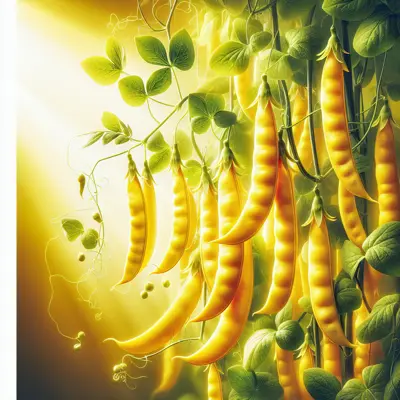
Golden Sweet is a hybrid pea variety renowned for its exceptional sweetness and crisp, tender texture. Reaching maturity in approximately 60 days, this variety produces vibrant green pods filled with plump, sugary peas ideal for fresh eating, steaming, or light cooking. The plants thrive in full sun conditions and well-drained, fertile soil enriched with organic matter. Golden Sweet stands out among pea varieties for its superior flavor profile, delivering a distinctly sweet taste that appeals to both home gardeners and culinary enthusiasts. This variety maintains moderate growing difficulty and is best harvested at peak ripeness for optimal sweetness and texture.
Harvest
60d
Days to harvest
Sun
Full sun
Zones
10–11
USDA hardiness
Height
1-10 feet
Planting Timeline
Showing dates for Golden Sweet in USDA Zone 7
All Zone 7 pea →Zone Map
Click a state to update dates
Golden Sweet · Zones 10–11
Growing Details
Succession Planting
Direct sow Golden Sweet every 14-18 days starting around March 1 in zone 7, and keep going through late April. Don't push past early May — once daytime highs are consistently hitting 80°F, germination gets unreliable and any plants that do establish will race to finish before the heat shuts them down. At 60 days to harvest, a March 1 sowing puts you picking in late April, and a mid-April sowing gets you into late June at the tail end of what's reasonable.
For a fall run, direct sow again around September 1 — soil temps will have dropped enough by then for reliable germination (you want soil below 75°F), and the 60-day clock puts harvest in early November before hard frost. That fall window often outperforms the spring one in this region because you're not racing against summer heat on the back end.
Complete Growing Guide
Crack-resistant, 15-20 gm., deep-yellow fruits grow in long clusters on tall, healthy plants. Mild, sweet flavor. Leaf mold resistance is a plus for indoor culture. Indeterminate. According to Johnny's Selected Seeds, Golden Sweet is 60 days to maturity, annual, hybrid (f1), indeterminate growth habit. Disease resistance includes Fusarium Wilt, Resistant to Leaf Molds A-E. Notable features: Greenhouse Performer.
Light: Full sun (6 or more hours of direct sunlight a day). Soil: Clay, High Organic Matter, Loam (Silt), Sand. Soil pH: Acid (<6.0), Neutral (6.0-8.0). Drainage: Good Drainage, Moist. Height: 1 ft. 0 in. - 10 ft. 0 in.. Spread: 1 ft. 0 in. - 4 ft. 0 in.. Spacing: 3 feet-6 feet. Growth rate: Rapid. Maintenance: High. Propagation: Seed. Regions: Coastal, Mountains, Piedmont.
Harvesting
Golden Sweet reaches harvest at 60 days from sowing per Johnny's Selected Seeds. Expect 15-20 g at peak. As an annual, harvest continues until frost ends the season.
The fruits are smooth, shiny, glossy, and are classified as berries. The size, shape, and color will vary depending on the variety or cultivar. The color of the fruits may be red, yellow, orange, green, purple, or pink. The fruits may contain over 100 yellow to light brown seeds.
Color: Gold/Yellow, Green, Orange, Pink, Purple/Lavender, Red/Burgundy, Variegated. Type: Berry. Length: > 3 inches. Width: > 3 inches.
Garden value: Edible, Showy
Harvest time: Fall, Summer
Edibility: The fruits or berries of the tomato are edible. They may be eaten raw, cooked, dried, or processed. They are a rich source of Vitamin A, Vitamin C, folic acid, and antioxidants. Lycopene is an antioxidant that gives the tomato its rich red color. Many plants will drop fruit when ripe or the fruit will come off easily. Tomatoes will continue to ripen once picked. Store them at room temperature.
Storage & Preservation
Golden Sweet peas are best stored immediately after harvest in breathable containers lined with paper towels to manage excess moisture. Keep them in the refrigerator at 32–40°F with humidity around 90–95%; they'll maintain peak crispness and sweetness for 3–5 days. For longer preservation, blanch pods for 2 minutes, then plunge into ice water before freezing in airtight bags—frozen peas retain their tender texture and exceptional sweetness for up to 8 months. Alternatively, dry them fully on the vine if you want whole dried peas for winter cooking, though this sacrifices the delicate flavor profile. Since these snap peas are prized for their crisp eating quality, avoid canning, which softens the pods considerably. The waxy coating on Golden Sweet pods helps prevent moisture loss, so store them unwashed until just before use to extend shelf life by a day or two.
History & Origin
Golden Sweet is an F1 hybrid developed through controlled cross-pollination. Listed in the Johnny's Selected Seeds catalog.
Origin: Peru
Advantages
- +Crack-resistant fruits make harvesting and storage more reliable
- +Exceptionally sweet flavor with crisp texture offers superior eating quality
- +Leaf mold resistance enables successful indoor greenhouse cultivation
- +Long fruit clusters provide abundant yields on single plants
- +Quick 60-day maturity allows multiple plantings per season
Considerations
- -Susceptible to pea weevil and leafminer requires vigilant pest management
- -Multiple disease vulnerabilities including powdery mildew and downy mildew
- -Indeterminate growth requires staking or trellising support structures
Companion Plants
Carrots and radishes are the two companions I'd plant with Golden Sweet without much debate. Carrots share the cool-season window and their fine root structure doesn't compete with the pea's shallow feeders — you're getting two crops out of the same square footage. Radishes mature in 25-30 days and do the added work of loosening compacted soil before the pea roots need the space. Lettuce and spinach slot in along the south edge of the trellis: once Golden Sweet climbs past 3-4 feet it casts real shade, and those greens will take it without much complaint.
French marigolds (Tagetes patula) are worth a border row for reasons beyond the usual vague "pest confusion" pitch. NC State Extension specifically recommends a solid planting of them to knock back soil nematode populations in affected beds — the root chemistry is documented, not folklore. If your pea bed is anywhere near cucumbers or other susceptible crops, that's a meaningful reason to put them there.
Onions and garlic are the ones to skip. Alliums produce sulfur compounds that suppress Rhizobium bacteria — the same root-nodule organisms that let peas fix their own nitrogen from the air. Planting garlic 18-24 inches away sounds like enough buffer, but here in our zone 7 Georgia garden that's tricky to manage since garlic overwinters in the exact beds you want cleared for March pea sowing. Better to assign them to completely separate beds and not fight the timing. Gladiolus shares several fungal pathogens with peas and will act as a disease reservoir; it belongs in a different part of the garden entirely.
Plant Together
Carrots
Peas fix nitrogen in soil that carrots benefit from, while carrots break up soil for pea roots
Radishes
Break up compacted soil and mature quickly, allowing space for pea growth
Lettuce
Benefits from nitrogen fixed by peas and provides ground cover to retain soil moisture
Spinach
Enjoys the nitrogen-rich environment created by peas and shares similar growing conditions
Mint
Deters ants and rodents that may eat pea seeds, while tolerating partial shade from pea vines
Chives
Repels aphids and other pests that commonly attack pea plants
Marigolds
Attract beneficial insects and may help deter nematodes in the soil
Cucumber
Can climb together with peas on shared trellises and benefit from nitrogen fixation
Keep Apart
Onions
May inhibit pea growth and nitrogen fixation through root secretions
Garlic
Allelopathic compounds can stunt pea growth and interfere with beneficial root bacteria
Gladiolus
Competes heavily for nutrients and may harbor thrips that damage pea plants
Nutrition Facts
Per 100g serving. % Daily Value based on 2,000 calorie diet. Source: USDA FoodData Central (FDC #170419)
Pests & Disease Resistance
Resistance
Fusarium Wilt races 1 (High); Resistant to Leaf Molds A-E (High)
Common Pests
Aphids, thrips, pea weevil, leafminer
Diseases
Powdery mildew, bacterial blight, pea enation virus, downy mildew
Troubleshooting Golden Sweet
What you'll see, why it happens, and what to do about it.
White powdery coating on upper leaf surfaces, usually appearing after plants have been in the ground 30-40 days
Likely Causes
- Powdery mildew — a fungal infection that spreads by airspores and thrives in warm, dry days with cool nights
- Overcrowded planting at less than 4-inch spacing that restricts airflow between vines
What to Do
- 1.Remove and trash (don't compost) the worst-affected leaves immediately
- 2.Apply a dilute baking soda spray (1 tablespoon per gallon of water) or a sulfur-based fungicide as a knockdown — repeat every 7 days
- 3.Next season, hold to the wider end of the 4-6 inch spacing range and trellis vertically so leaves dry faster after rain
Distorted, puckered new growth with sticky residue on leaves and stems, sometimes with tiny green or black insects clustered at the shoot tips
Likely Causes
- Aphid infestation — NC State Extension notes that aphid feeding causes leaf curling and distortion often mistaken for herbicide damage
- Pea enation virus, which aphids transmit while feeding — once the virus is in the plant, the distortion won't reverse even after you kill the aphids
What to Do
- 1.Knock aphids off with a firm stream of water from a hose; repeat daily for 3-4 days on small infestations
- 2.If populations are heavy, spray with insecticidal soap, coating the undersides of leaves where they congregate
- 3.Pull and trash any plant showing mosaic patterning or translucent blistering on pods — that's likely pea enation virus and it won't recover
Water-soaked lesions on pods and stems that turn brown and papery, sometimes with a greasy-looking ooze in wet weather
Likely Causes
- Bacterial blight (Pseudomonas syringae pv. pisi) — spreads fastest when you work in the garden while foliage is still wet
- Overhead irrigation that keeps leaves damp for hours at a stretch
What to Do
- 1.Stay out of the pea rows when leaves are wet — bacterial blight travels on hands and tools
- 2.Switch to drip irrigation or water at the base of plants; if overhead sprinklers are your only option, run them in the morning so foliage dries before noon
- 3.Cut out affected tissue and rotate this bed out of legumes for at least 2 seasons
Frequently Asked Questions
How long does Golden Sweet pea take to grow from seed to harvest?▼
Can you grow Golden Sweet peas in containers?▼
What do Golden Sweet peas taste like compared to regular snow peas?▼
When should I plant Golden Sweet peas in my area?▼
Are Golden Sweet peas good for beginner gardeners?▼
Why are my Golden Sweet pea pods tough and stringy?▼
Zone-by-Zone Planting Calendar
| Zone | Indoor Start | Transplant | Direct Sow | Harvest |
|---|---|---|---|---|
| Zone 3 | — | — | May – June | July – October |
| Zone 4 | — | — | April – June | June – October |
| Zone 5 | — | — | April – May | June – November |
| Zone 6 | — | — | April – May | June – November |
| Zone 7 | — | — | March – May | May – November |
| Zone 8 | — | — | March – April | May – December |
| Zone 9 | — | — | February – March | April – December |
| Zone 10 | — | — | January – March | March – December |
| Zone 1 | — | — | June – July | August – September |
| Zone 2 | — | — | May – July | July – September |
| Zone 11 | — | — | January – February | February – December |
| Zone 12 | — | — | January – February | February – December |
| Zone 13 | — | — | January – February | February – December |
Growing Guides from Wind River Greens
Sources & References
External authority sources used in compiling this guide.
- BreederJohnny's Selected Seeds
- USDAUSDA FoodData Central
See the Methodology page for how this data is sourced, what's AI-assisted, and known limitations.