Green Arrow
Pisum sativum 'Green Arrow'
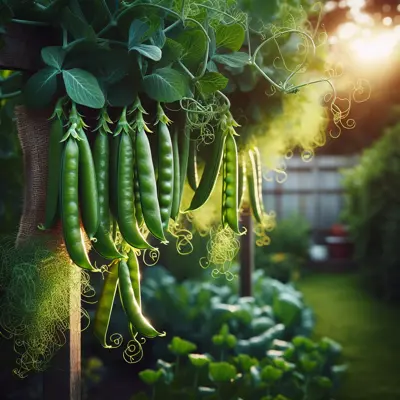
A high-yielding shelling pea that consistently produces heavy crops of long, dark green pods packed with sweet peas. Developed for its exceptional productivity and disease resistance, Green Arrow matures its crop uniformly, making it perfect for preserving or farmers market sales. This reliable variety performs well in various climates and soil conditions, earning its place as a garden staple.
Harvest
68-75d
Days to harvest
Sun
Full sun to partial shade
Zones
2–11
USDA hardiness
Height
12-18 inches
Planting Timeline
Showing dates for Green Arrow in USDA Zone 7
All Zone 7 pea →Zone Map
Click a state to update dates
Green Arrow · Zones 2–11
Growing Details
Succession Planting
In zone 7, direct sow Green Arrow every 14 days starting around March 1 and keep going through mid-April. Once daytime highs push consistently past 75–80°F, pods stop setting and the planting isn't worth finishing out — in most Georgia springs that cutoff falls somewhere between late April and mid-May depending on the year. A second sowing in late summer (mid-August through early September) can catch a fall harvest, with pods coming in 68-75 days later through October and into November.
Don't try to push a summer sowing — pea germination drops sharply when soil temperatures climb above 85°F, and the plants that do come up just sit there. Work both shoulder seasons instead of fighting the middle of the calendar.
Complete Growing Guide
Start preparing your Green Arrow pea bed in early spring while soil temperatures are still cool. Choose a spot that receives morning sun but has some afternoon protection in hot climates, as peas prefer temperatures between 55-70°F. Work compost or aged manure into your soil to a depth of 8-10 inches, but avoid fresh nitrogen fertilizers which encourage leafy growth at the expense of pod production.
Direct sow Green Arrow seeds 3-4 weeks before your last frost date when soil can be worked. Plant seeds 1-1.5 inches deep and 2-3 inches apart in double rows spaced 6 inches apart. This spacing maximizes your harvest in limited space while providing good air circulation. Soak seeds overnight in lukewarm water before planting to improve germination rates, especially in cool soil.
Install your support system at planting time to avoid disturbing roots later. Green Arrow vines reach 24-28 inches tall and produce heavy pods that require sturdy 3-foot netting or trellis support. Use bamboo poles or metal posts every 6 feet with pea netting stretched between them. The vines will naturally grab onto the support with their tendrils.
Water consistently but avoid overhead watering once plants begin flowering, as wet foliage promotes fungal diseases. Apply 1 inch of water weekly at soil level, increasing slightly during pod fill. Mulch around plants with straw or shredded leaves to maintain soil moisture and suppress weeds that compete for nutrients.
Avoid the common mistake of over-fertilizing with nitrogen. Peas fix their own nitrogen through root nodules, so excess nitrogen delays flowering and reduces yields. Instead, side-dress with compost tea or low-nitrogen fertilizer (5-10-10) once pods begin forming. In zones 7-9, make successive plantings every 2-3 weeks until 10 weeks before summer heat arrives for continuous harvests.
Harvesting
Begin checking Green Arrow pods 68-75 days after planting when they reach 4-5 inches long and appear plump but still bright green. The pods should feel firm and well-filled when gently squeezed, with peas clearly visible through the pod walls. Harvest in early morning when pods are crisp and sugar content is highest from overnight cool temperatures.
Test readiness by gently pressing a pod - mature peas should feel round and firm but not hard. If pods appear flat or peas feel small and soft, wait another few days. Pods that turn light green or show white patches are past prime eating quality. Pick by grasping the pod stem and pulling with a quick twist motion rather than yanking straight down, which can damage the vine and reduce future production. Green Arrow produces pods in clusters, so harvest every 2-3 days during peak season to encourage continued production and prevent pods from becoming tough and starchy.
Storage & Preservation
Fresh Green Arrow pods keep best when stored unwashed in perforated plastic bags in your refrigerator's crisper drawer at 32-40°F. They'll maintain peak quality for 5-7 days, though sugar content begins converting to starch immediately after harvest. For longest fresh storage, leave peas in pods until ready to use.
For freezing, shell peas and blanch in boiling water for 1-2 minutes, then plunge into ice water before draining and packaging in freezer bags. Frozen peas keep for 8-12 months. Green Arrow's uniform maturity makes it excellent for pressure canning - process pint jars for 40 minutes at 11 pounds pressure. You can also dehydrate shelled peas at 125°F for 8-12 hours until hard, then store in airtight containers for soups and stews.
History & Origin
Green Arrow was developed in the 1960s by plant breeders seeking to create the perfect market garden pea. This hybrid variety was specifically bred to address common commercial growing challenges: inconsistent maturity, disease susceptibility, and variable pod production that plagued earlier varieties.
The variety's development focused on combining the heavy-yielding characteristics of tall English peas with improved disease resistance and uniform ripening. Breeders selected parent lines that consistently produced long, straight pods packed with 9-11 peas each, significantly higher than the 6-7 peas typical of varieties available at the time.
Green Arrow quickly gained popularity among commercial growers and serious home gardeners throughout the 1970s and 1980s for its reliability and processing qualities. Its resistance to fusarium wilt races 1 and 2, powdery mildew, and pea enation mosaic virus made it particularly valuable in regions where these diseases had limited pea production. Today, it remains a standard variety in seed catalogs specifically because of its proven track record for consistent, heavy yields across diverse growing conditions.
Advantages
- +Exceptional uniform maturity allows for single-harvest processing and preserving
- +Disease resistance to fusarium wilt races 1 and 2, powdery mildew, and pea enation mosaic virus
- +Consistently produces 9-11 peas per pod, significantly higher than most varieties
- +Pods maintain sweetness longer after harvest compared to standard shelling peas
- +Performs reliably across diverse soil types and climate conditions
- +Concentrated harvest period perfect for farmers market sales and bulk processing
- +Strong vines support heavy pod loads without lodging or breaking
Considerations
- -Requires sturdy 3-foot support system due to vine height and heavy pod production
- -Short harvest window means you must be ready to process large quantities quickly
- -More susceptible to bacterial blight and downy mildew than some newer varieties
- -Takes longer to mature (68-75 days) compared to early pea varieties
- -Hybrid variety means you cannot save seeds for replanting next season
Companion Plants
Carrots and radishes pair well with Green Arrow because their roots work at different depths — peas stay shallow while carrots push 8-12 inches down, so they're not drawing from the same water and nutrients at the same time. Radishes also mature fast enough to come out of the ground before the peas need the full bed, and they pull flea beetle pressure away from your peas while they're still in it. Lettuce and spinach fill gaps cleanly since all three crops run on the same cool-season schedule, and their low canopy won't shade 12-18 inch pea plants.
Onions and garlic are the ones to keep at a distance. Here in the southeast, I've watched gardeners tuck alliums right against their legume rows and then scratch their heads at the stunted plants — sulfur compounds from allium roots interfere with the Rhizobium bacteria that fix nitrogen on pea roots. That nitrogen fixation is a real yield driver for this variety, so give your allium bed at least 18 inches of clearance.
Plant Together
Carrots
Peas fix nitrogen in soil which carrots need, while carrots don't compete for space
Radishes
Break up soil for pea roots and mature quickly before peas need full space
Lettuce
Grows in shade of pea vines and benefits from nitrogen fixation
Spinach
Cool-season companion that benefits from nitrogen and doesn't compete for light
Marigolds
Repel aphids and other pests that commonly attack pea plants
Mint
Deters ants and rodents that may eat pea seeds and pods
Chives
Repel aphids and improve overall garden health near peas
Turnips
Benefit from nitrogen fixation and don't interfere with pea vine growth
Keep Apart
Onions
Can inhibit pea growth and nitrogen fixation through root compounds
Garlic
May stunt pea growth and interfere with beneficial root bacteria
Gladiolus
Compete heavily for nutrients and can inhibit pea pod development
Nutrition Facts
Per 100g serving. % Daily Value based on 2,000 calorie diet. Source: USDA FoodData Central (FDC #170419)
Pests & Disease Resistance
Resistance
Resistant to fusarium wilt races 1 and 2, powdery mildew, and pea enation mosaic virus
Common Pests
Pea weevil, aphids, thrips, cucumber beetles
Diseases
Bacterial blight, downy mildew, white mold, damping-off
Troubleshooting Green Arrow
What you'll see, why it happens, and what to do about it.
Leaf tips curling or puckering, sticky residue on foliage, stunted new growth — usually showing up within the first 3-4 weeks after germination
Likely Causes
- Aphid infestation — colonies cluster on new growth and undersides of leaves, injecting toxic compounds while feeding
- Thrips feeding, which causes similar distortion and off-color streaking on leaves
What to Do
- 1.Knock aphids off with a firm spray of water — do this in the morning so foliage dries before evening
- 2.Apply insecticidal soap to the undersides of leaves; repeat every 5-7 days until populations drop
- 3.Plant chives or marigolds within 12 inches of the pea row — both attract predatory insects that work through aphid colonies faster than you will
Gray-purple fuzzy growth on undersides of leaves, yellow patches on the upper surface — often appearing during cool, wet stretches in March or April
Likely Causes
- Downy mildew (Peronospora viciae) — thrives at 45–65°F with high humidity, which is exactly what a Georgia spring delivers
- Overcrowded planting at less than 2-inch spacing that traps moisture between plants
What to Do
- 1.Strip affected leaves and trash them — don't add them to the compost pile
- 2.Thin plants to at least 2-3 inches apart to open up airflow through the row
- 3.Switch to drip irrigation or water at the base; Peronospora viciae spreads quickly through moisture sitting on leaf surfaces
Frequently Asked Questions
How long does Green Arrow pea take to grow?▼
Can you grow Green Arrow peas in containers?▼
Is Green Arrow pea good for beginners?▼
When should I plant Green Arrow peas?▼
What does Green Arrow pea taste like?▼
Green Arrow vs Lincoln pea - what's the difference?▼
Zone-by-Zone Planting Calendar
| Zone | Indoor Start | Transplant | Direct Sow | Harvest |
|---|---|---|---|---|
| Zone 3 | — | — | May – June | July – October |
| Zone 4 | — | — | April – June | July – October |
| Zone 5 | — | — | April – May | June – November |
| Zone 6 | — | — | April – May | June – November |
| Zone 7 | — | — | March – May | May – November |
| Zone 8 | — | — | March – April | May – December |
| Zone 9 | — | — | February – March | April – December |
| Zone 10 | — | — | January – March | March – December |
| Zone 1 | — | — | June – July | August – September |
| Zone 2 | — | — | May – July | July – September |
| Zone 11 | — | — | January – February | February – December |
| Zone 12 | — | — | January – February | February – December |
| Zone 13 | — | — | January – February | February – December |
Growing Guides from Wind River Greens
Sources & References
External authority sources used in compiling this guide.
See the Methodology page for how this data is sourced, what's AI-assisted, and known limitations.