Hazelnut (Lewis)
Corylus avellana 'Lewis'
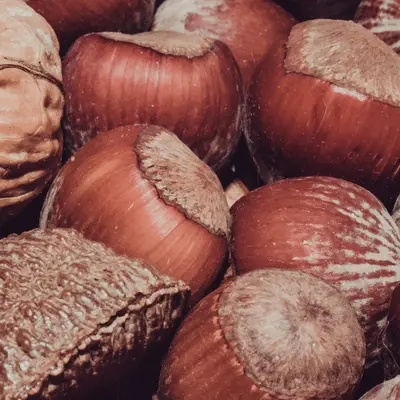
A premium hazelnut variety developed by Oregon State University, prized for its large, flavorful nuts and excellent cracking quality. Lewis produces consistently heavy crops of nuts that are perfect for fresh eating or culinary use, with a rich, buttery flavor that rivals European varieties. This variety shows good resistance to eastern filbert blight, making it suitable for a wider range of growing regions.
Harvest
120-150d
Days to harvest
Sun
Full sun to partial shade
Zones
4–8
USDA hardiness
Height
12-20 feet
Planting Timeline
Showing dates for Hazelnut (Lewis) in USDA Zone 7
All Zone 7 nut-tree →Zone Map
Click a state to update dates
Hazelnut (Lewis) · Zones 4–8
Growing Details
Complete Growing Guide
Plant Lewis hazelnuts in late fall or early spring in well-draining soil with full sun exposure, as this Oregon State University cultivar performs best with consistent moisture and excellent drainage to prevent root rot. Unlike generic hazelnut varieties, Lewis demonstrates remarkable resistance to eastern filbert blight, the primary disease limiting hazelnut cultivation in humid eastern regions, though you should still prune out any infected catkins promptly during dormancy. This cultivar requires cross-pollination from a compatible male flowering variety for optimal nut set, so plan your spacing accordingly—mature trees reach 12-20 feet and need 15-20 feet between plants. Watch for filbert aphids and hazelnut weevils, which can damage developing nuts; monitor trees in mid to late summer and apply dormant oil sprays if needed. One essential tip: thin crowded branches in late winter to improve air circulation and reduce disease pressure, which significantly enhances both nut quality and harvest reliability in Lewis plantings.
Light: Full sun (6 or more hours of direct sunlight a day), Partial Shade (Direct sunlight only part of the day, 2-6 hours). Soil: High Organic Matter, Loam (Silt), Shallow Rocky. Soil pH: Alkaline (>8.0), Neutral (6.0-8.0). Drainage: Good Drainage, Moist. Height: 12 ft. 0 in. - 20 ft. 0 in.. Spread: 8 ft. 0 in. - 15 ft. 0 in.. Spacing: 6-feet-12 feet. Maintenance: Low. Propagation: Layering, Root Cutting, Seed. Regions: Coastal, Mountains, Piedmont.
Harvesting
Hazelnuts reach peak harvest readiness when the husks transition from green to brown and begin splitting naturally, revealing the shell beneath, typically occurring in late August through September depending on your region. The nuts should feel firm and slightly loose within the husk when gently squeezed. Rather than a single harvest, Lewis hazelnuts drop progressively over several weeks, so plan for multiple passes through your orchard, gathering fallen nuts from the ground every 7-10 days to prevent pest damage and ensure optimal kernel quality. For best results, wait until at least 80 percent of the nuts have naturally dehisced before your first collection, as this indicates peak maturity and superior flavor development in the kernels.
The fruit, in the form of a nut, is enclosed by a short leafy involucre, or husk. They appear in clusters of 1 to 5 and are released from the husk in late summer when the nut has ripened. The rounded nuts are about 1" in diameter.
Color: Brown/Copper, Gold/Yellow. Type: Nut. Length: 1-3 inches. Width: 1-3 inches.
Garden value: Edible, Showy
Harvest time: Fall, Summer
Edibility: Hazelnuts (cobnuts) are edible, and this plant is used in the production of these nuts.
Storage & Preservation
Freshly harvested Lewis hazelnuts store best in a cool, dry location between 32–50°F with moderate humidity (60–70%). Keep them in breathable burlap sacks or mesh bags rather than airtight containers to prevent moisture accumulation and mold. Under these conditions, they'll maintain quality for 2–3 months.
For longer storage, freeze shelled or unshelled nuts at 0°F or below; they'll keep for up to two years. Roasting before freezing concentrates their naturally buttery flavor. Drying is equally effective—spread kernels in a dehydrator at 140°F until brittle, then store in airtight containers. Hazelnuts are excellent candidates for making homemade nut butter; process roasted kernels in a food processor until oils release and butter forms. This variety's thin shell and consistent kernel size make in-shell storage particularly practical compared to thicker-shelled cultivars, reducing processing time before use.
History & Origin
Developed through Oregon State University's hazelnut breeding program, the Lewis variety emerged from systematic efforts to create improved cultivars suited to North American growing conditions. While specific breeder attribution and exact development year remain undocumented in readily available sources, Lewis represents the university's broader initiative to enhance disease resistance and nut quality in commercial hazelnut production. The variety's inclusion in OSU's lineup reflects decades of crosses and selections aimed at combining the desirable characteristics of European Corylus avellana germplasm with resistance to eastern filbert blight, a persistent challenge in eastern growing regions.
Origin: Europe and Western Asia
Advantages
- +Large nuts with rich, buttery flavor rival premium European hazelnut varieties
- +Excellent cracking quality makes Lewis ideal for fresh eating and culinary use
- +OSU-bred variety shows strong resistance to eastern filbert blight disease
- +Consistently produces heavy annual nut crops with reliable yields
- +Moderate growing difficulty makes Lewis accessible to experienced home gardeners
Considerations
- -Filbert worm and squirrel pressure require active pest management strategies
- -Eastern filbert blight resistance good but not complete immunity exists
- -120-150 day maturation requires longer warm growing season than some regions
- -Crown rot susceptibility demands well-draining soil and careful irrigation management
Companion Plants
Comfrey is the most useful plant you can put near a hazelnut — its taproot can reach 6 feet down, mining calcium and potassium and depositing them at the surface as chop-and-drop mulch without competing with the shallow feeder roots hazelnuts rely on. Clover and wild garlic both fix or cycle nitrogen at ground level, which matters for young trees trying to put on 18-24 inches of growth per year. Chives and Tagetes patula marigolds deter aphid colonization by disrupting the host-search cues that winged Myzocallis coryli use to locate new growth. Black walnut is the plant to keep well away — juglone concentration is highest within the canopy drip line plus another 10-15 feet out, and Corylus is documented as sensitive; 50 feet of separation is the practical minimum.
Plant Together
Comfrey
Deep taproot brings nutrients to surface, leaves make excellent mulch and compost
Clover
Fixes nitrogen in soil, provides ground cover, attracts beneficial pollinators
Chives
Repels aphids and other pests, shallow roots don't compete with tree roots
Nasturtiums
Trap crop for aphids and cucumber beetles, deters ants and other crawling pests
Marigolds
Repel nematodes and various garden pests, attract beneficial predatory insects
Lavender
Attracts pollinators, repels moths and rodents that may damage nuts
Elderberry
Compatible growth habit, attracts beneficial insects, doesn't compete for nutrients
Wild Garlic
Natural fungicide properties, repels rodents and deer, shallow root system
Keep Apart
Black Walnut
Produces juglone which is toxic to hazelnuts and inhibits their growth
Pine Trees
Acidify soil significantly, hazelnuts prefer neutral to slightly alkaline conditions
Eucalyptus
Allelopathic compounds inhibit growth of nearby plants including fruit and nut trees
Nutrition Facts
Per 100g serving. % Daily Value based on 2,000 calorie diet. Source: USDA FoodData Central (FDC #2515375)
Pests & Disease Resistance
Resistance
Good resistance to eastern filbert blight
Common Pests
Filbert worm, aphids, mites, squirrels
Diseases
Eastern filbert blight, bacterial blight, crown rot
Troubleshooting Hazelnut (Lewis)
What you'll see, why it happens, and what to do about it.
Irregularly shaped, brown lesions on branches with bright orange spore masses visible in spring, cankers girdling small limbs
Likely Causes
- Eastern filbert blight (Anisogramma anomala) — a slow-moving but fatal fungal canker disease endemic to the eastern US
- Planting susceptible European varieties in high-humidity climates without adequate airflow
What to Do
- 1.Prune out infected branches at least 8-12 inches below any visible canker, sterilizing your pruners with 70% isopropyl between cuts
- 2.Burn or bag all pruned material — do not compost it
- 3.If you haven't planted yet, 'Lewis' was specifically bred at Oregon State for EFB resistance; confirm you have the right variety, not a mislabeled generic Corylus avellana
Nuts dropping prematurely in late July or August, with small entry holes visible in the shells
Likely Causes
- Filbertworm (Cydia latiferreana) — larvae bore into developing nuts and feed on the kernel
- Codling moth (Cydia pomonella) can cause similar damage if stone fruits are grown nearby
What to Do
- 1.Rake up and destroy dropped nuts daily during the 3-4 week drop window — larvae exit the nut into the soil to pupate, so removing nuts breaks the cycle
- 2.Apply Spinosad-based sprays at petal fall and repeat every 7-10 days through nut development, per label rates
- 3.Place sticky trunk bands or cardboard trap bands 24 inches up the trunk in late June to catch descending larvae before they pupate
Leaves curling or distorted in early spring, with sticky honeydew residue and small soft-bodied insects clustered on new growth
Likely Causes
- Hazelnut aphid (Myzocallis coryli) — common in spring flushes, populations can explode fast on new growth
- Filbert aphid (Corylobium avellanae) — slightly larger, same damage pattern
What to Do
- 1.Knock colonies off with a sharp blast from the hose — effective when caught early and less disruptive to beneficial insects than spraying
- 2.If populations persist above roughly 200 aphids per leaf cluster, apply insecticidal soap (2% solution) directly to affected growth
- 3.Avoid high-nitrogen fertilizer pushes in spring, which produce the soft, sugary new growth aphids prefer
Wilting, yellowing foliage on one or more shoots despite adequate soil moisture; dark brown discoloration at the crown or root collar when you dig
Likely Causes
- Crown rot (Phytophthora cinnamomi or P. cambivora) — both species thrive in waterlogged or poorly drained soil
- Planting too deep — burying the graft union or root collar traps moisture and invites infection
What to Do
- 1.Improve drainage immediately: if the site stays wet for more than 48 hours after heavy rain, mound-plant or install a French drain before the problem worsens
- 2.Pull back any mulch piled against the trunk and keep a 4-6 inch clear zone around the base
- 3.Confirmed Phytophthora infections rarely recover fully — remove the tree and don't replant Corylus in that exact spot for at least 3 years
Frequently Asked Questions
How long does it take for Hazelnut Lewis to produce nuts?▼
Is Hazelnut Lewis resistant to filbert blight?▼
What does Hazelnut Lewis taste like?▼
Can I grow Hazelnut Lewis in partial shade?▼
What soil conditions does Hazelnut Lewis prefer?▼
What pests should I watch for on Hazelnut Lewis?▼
Zone-by-Zone Planting Calendar
Growing Guides from Wind River Greens
Sources & References
External authority sources used in compiling this guide.
- ExtensionNC State Extension
- USDAUSDA FoodData Central
See the Methodology page for how this data is sourced, what's AI-assisted, and known limitations.