Chestnut (Dunstan)
Castanea dentata × mollissima 'Dunstan'
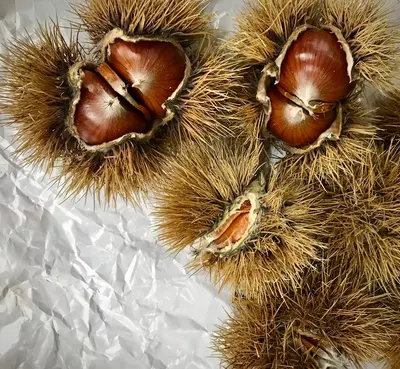
A remarkable American-Chinese chestnut hybrid that brings back the beloved American chestnut with blight resistance from Chinese genetics. These fast-growing trees produce sweet, large nuts that roast beautifully and offer the authentic chestnut flavor that was nearly lost to disease. Dunstan chestnuts are perfect for wildlife food plots and home orchards, combining nostalgia with modern disease resistance.
Harvest
120-150d
Days to harvest
Sun
Full sun to partial shade
Zones
5–8
USDA hardiness
Height
50-75 feet
Planting Timeline
Showing dates for Chestnut (Dunstan) in USDA Zone 7
All Zone 7 nut-tree →Zone Map
Click a state to update dates
Chestnut (Dunstan) · Zones 5–8
Growing Details
Complete Growing Guide
Light: Full sun (6 or more hours of direct sunlight a day), Partial Shade (Direct sunlight only part of the day, 2-6 hours). Soil: Clay, Loam (Silt), Shallow Rocky. Soil pH: Acid (<6.0). Drainage: Good Drainage, Moist, Occasionally Dry. Height: 50 ft. 0 in. - 75 ft. 0 in.. Spread: 50 ft. 0 in. - 75 ft. 0 in.. Spacing: more than 60 feet. Growth rate: Medium. Maintenance: High. Regions: Coastal, Mountains, Piedmont.
Harvesting
The fruit is a 2-2.5 inch wide prickly burr that opens about first frost. 2-3 sweet, edible nuts then drop to the ground in September to October.
Color: Brown/Copper. Type: Nut. Length: 1-3 inches. Width: 1-3 inches.
Garden value: Edible, Showy
Harvest time: Fall
Edibility: Nuts from this species are edible.
Storage & Preservation
Store freshly harvested chestnuts in a cool, humid environment between 32-50°F with 85-90% relative humidity—a refrigerator crisper drawer works well for small quantities. Keep them in perforated plastic bags to allow air circulation and prevent mold. Under these conditions, chestnuts remain fresh for 2-3 months, though quality gradually declines. For longer storage, freeze shelled nuts in airtight containers for up to a year. Drying is excellent for this variety; shell and halve the nuts, then dry at 140°F until brittle, which intensifies their nutty sweetness and concentrates starches ideal for flour milling. You can also roast and freeze whole nuts in their shells for convenient winter snacking. Dunstan's hybrid vigor means the nuts have notably thicker shells than native American chestnuts, so they're less prone to insect damage during storage—a significant practical advantage for home growers managing larger harvests.
History & Origin
Origin: E. Canada to N. Central & E. U.S.A
Advantages
- +Edible: Nuts from this species are edible.
Considerations
- -High maintenance
Companion Plants
Comfrey is the most useful plant you can put under a Dunstan. Its taproot reaches 6 feet or more, pulling up calcium and potassium that a shallow-rooted cover crop never touches, then depositing them on the surface when you cut and drop the leaves. Clover fixes nitrogen at ground level and stays short enough that it's not competing for light. Hazelnut and Serviceberry fit the same pH window (5.5–6.5) and fill in the mid-story productively — unlike oak, which hosts many of the same gall wasp species that target chestnuts and adds root competition at exactly the 30-foot spacing you're trying to use.
Black Walnut is the hard no. It exudes juglone from its roots and decomposing hulls across a wide zone, and while chestnuts aren't as sensitive as tomatoes or apples, there's enough documented suppression of nearby woody plants that putting a Dunstan within 50 feet is a bet with no upside. Apple trees are a softer concern — the main issue is practical: both fruit and nut crops peak in fall and draw the same deer pressure, so planting them together just stacks your wildlife problem into one corner of the property.
Plant Together
Comfrey
Deep roots mine nutrients and provide mulch, accumulates potassium beneficial for nut production
Clover
Fixes nitrogen in soil, provides ground cover and erosion control under canopy
Elderberry
Compatible growth habit, attracts beneficial insects, both prefer similar soil conditions
Wild Ginger
Thrives in partial shade under chestnuts, provides natural ground cover and pest deterrent
Hazelnut
Compatible nut tree, different harvest times, shares similar soil and climate preferences
Serviceberry
Understory shrub that tolerates chestnut shade, attracts pollinators and beneficial wildlife
Ramps
Native woodland plant that thrives under chestnut canopy, natural pest deterrent
Ferns
Shade-tolerant ground cover, helps retain soil moisture and suppress weeds
Keep Apart
Oak Trees
Strong competition for water and nutrients, both are dominant canopy trees
Black Walnut
Produces juglone which is toxic to chestnuts and inhibits their growth
Apple Trees
Compete for similar nutrients and both susceptible to shared fungal diseases
Nutrition Facts
Per 100g serving. % Daily Value based on 2,000 calorie diet. Source: USDA FoodData Central (FDC #170575)
Pests & Disease Resistance
Resistance
Excellent resistance to chestnut blight, good overall disease resistance
Common Pests
Chestnut weevil, gall wasps, deer, squirrels
Diseases
Chestnut blight (resistant), root rot in poorly drained soils
Troubleshooting Chestnut (Dunstan)
What you'll see, why it happens, and what to do about it.
Nuts are hollowed out or have small exit holes, with white grubs inside at harvest
Likely Causes
- Chestnut weevil (Curculio spp.) — adults lay eggs in developing nuts in late summer, larvae feed inside and exit through a round hole
- Improper harvest timing — nuts left on the ground too long give larvae time to burrow into soil and overwinter
What to Do
- 1.Harvest nuts within 2-3 days of drop; don't let them sit on the ground
- 2.Hot-water treat harvested nuts at 120°F for 20 minutes to kill any larvae already inside before storage
- 3.Rake and remove fallen burs and debris under the canopy each fall to break the weevil's soil-overwintering cycle
Young tree shows wilting, yellowing leaves, and dieback starting from the ground up, with dark discoloration at the root crown
Likely Causes
- Phytophthora root rot — a water mold that thrives in poorly drained or compacted soils
- Planting in a low spot or clay-heavy site that holds water after rain
What to Do
- 1.Don't plant in any area where water pools for more than 30 minutes after a heavy rain — the Dunstan is blight-resistant, not Phytophthora-resistant
- 2.If the tree is under 3 years old and caught early, mound the planting site 12-18 inches and pull mulch away from the root crown to improve drainage
- 3.For established trees showing crown dieback, submit a soil sample to your county extension office to confirm Phytophthora before treating
Entire crop of nuts disappears off the ground overnight, or burs are stripped from low branches before they open
Likely Causes
- Squirrels and deer — both will clean out a young tree's full production within days once nuts start dropping
- Small or single-tree planting with no competing forage draws disproportionate wildlife pressure
What to Do
- 1.Install electric fencing — a simple 2-strand setup at 8 and 18 inches — around the drip zone during the 6-week harvest window from late August through October
- 2.Harvest daily during peak drop, early morning, before squirrels work the ground
- 3.Plant at least 2-3 trees spaced 35 feet apart; the higher total volume means losing some doesn't wipe you out
Frequently Asked Questions
How long does it take Dunstan chestnuts to produce nuts?▼
Is Dunstan chestnut good for beginners?▼
Can you grow Dunstan chestnuts in containers?▼
What do Dunstan chestnuts taste like?▼
How much sun do Dunstan chestnut trees need?▼
What pests should I watch for on Dunstan chestnuts?▼
Zone-by-Zone Planting Calendar
Growing Guides from Wind River Greens
Sources & References
External authority sources used in compiling this guide.
- ExtensionNC State Extension
- USDAUSDA FoodData Central
See the Methodology page for how this data is sourced, what's AI-assisted, and known limitations.