English Walnut
Juglans regia
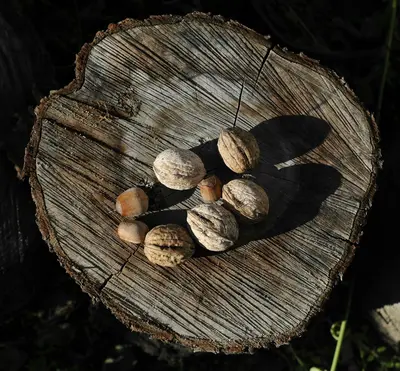
The classic walnut tree prized for producing large, easy-to-crack nuts with sweet, mild-flavored meats. This majestic shade tree combines beauty with bounty, offering decades of reliable harvests once established. Self-pollinating varieties make it perfect for home orchards where space limits you to a single tree.
Harvest
150-180d
Days to harvest
Sun
Full sun
Zones
3–7
USDA hardiness
Height
40-60 feet
Planting Timeline
Showing dates for English Walnut in USDA Zone 7
All Zone 7 nut-tree →Zone Map
Click a state to update dates
English Walnut · Zones 3–7
Growing Details
Complete Growing Guide
Light: Full sun (6 or more hours of direct sunlight a day). Soil: Clay, High Organic Matter, Loam (Silt). Soil pH: Neutral (6.0-8.0). Drainage: Good Drainage, Moist. Height: 40 ft. 0 in. - 60 ft. 0 in.. Spread: 40 ft. 0 in. - 60 ft. 0 in.. Spacing: more than 60 feet. Maintenance: Medium. Propagation: Grafting, Layering, Seed, Stem Cutting. Regions: Mountains, Piedmont.
Harvesting
The fruit is a round nut that is encased in a green, semi-fleshy husk that turns brown. The nut measures up to 2 inches long. It matures in the fall and has a very thin wrinkled shell. The nut is thin, smooth, and has shallow furrows. The meat of the nut is creamy white and sweet.
Color: Green. Type: Nut. Length: 1-3 inches. Width: 1-3 inches.
Garden value: Edible, Showy
Harvest time: Fall
Edibility: The nuts are edible. They may be eaten fresh, roasted, and salted.
Storage & Preservation
English walnuts keep best in their shells, stored in a cool, dry place between 32–50°F with humidity around 65–70 percent. A mesh bag or wooden crate allows air circulation and prevents moisture buildup. Shelled nuts deteriorate faster and should be refrigerated in airtight containers, where they'll hold for two to three months. For longer storage, freeze shelled kernels in vacuum-sealed bags or containers for up to a year without significant flavor loss. Drying is the traditional preservation method—spread freshly cracked nuts on screens in a warm, well-ventilated space for two to three weeks until brittle. Roasting at low heat (275°F for 10–15 minutes) intensifies the buttery flavor and extends shelf life slightly. For walnut oil production, cold-press dried kernels within a few months of harvest for optimal quality. A helpful tip: store in-shell walnuts in the refrigerator during warmer months to prevent rancidity from developing in the natural oils.
History & Origin
Origin: Europe to Central Asia
Advantages
- +Attracts: Moths, Small Mammals
- +Edible: The nuts are edible. They may be eaten fresh, roasted, and salted.
Companion Plants
The most practical thing to plant near an English walnut isn't about pest suppression — it's about working around juglone. Comfrey, white clover, and chives are all tolerant of it and serve real functions under or near the canopy. Comfrey's deep taproots pull up calcium and potassium, and the leaves make a decent chop-and-drop mulch. White clover fixes nitrogen at roughly 100–200 lbs per acre annually, which benefits the tree without competing aggressively for water. Chives and garlic planted toward the drip line may deter aphids — the allium compounds do seem to confuse soft-bodied insects, though it's not a guaranteed fix.
Nasturtiums and marigolds (especially Tagetes patula) are worth planting as ground cover in the outer zone, past about 30 feet from the trunk where juglone pressure drops off. Tagetes patula produces alpha-terthienyl in its roots, which has documented nematode-suppressing effects — useful if you're trying to protect any annual beds nearby. Daffodil bulbs planted around the base deter voles, which dig at surface nuts and shallow feeder roots more than most people expect.
The exclusions matter more here than with most trees. Tomatoes are extremely juglone-sensitive — not mildly stressed, but reliably dead within a season if planted too close. Apple trees are similarly vulnerable and will decline gradually rather than all at once, which makes the walnut easy to misdiagnose as the innocent party. Give both a hard 50-foot buffer from the drip line.
Plant Together
Comfrey
Deep roots bring nutrients to surface, leaves make excellent mulch and fertilizer
Chives
Repels aphids and other pests, improves soil health without competing for deep nutrients
Nasturtiums
Acts as trap crop for aphids and cucumber beetles, attracts beneficial insects
White Clover
Fixes nitrogen in soil, provides ground cover, and attracts pollinators
Garlic
Natural fungicide properties help prevent root rot and other soil-borne diseases
Marigolds
Repels nematodes and other soil pests, deters aphids and whiteflies
Lavender
Repels moths and other flying insects, attracts beneficial pollinators
Daffodils
Bulbs deter rodents that might damage walnut roots and eat fallen nuts
Keep Apart
Tomatoes
Walnut roots produce juglone which is toxic to tomatoes, causing wilting and death
Black Cherry
Susceptible to walnut's juglone toxin, can suffer stunted growth and eventual death
Apple Trees
Sensitive to juglone compound, can experience reduced vigor and fruit production
Nutrition Facts
Per 100g serving. % Daily Value based on 2,000 calorie diet. Source: USDA FoodData Central (FDC #2346394)
Pests & Disease Resistance
Resistance
Good resistance to walnut blight in newer varieties
Common Pests
Walnut husk fly, aphids, scale insects, codling moth
Diseases
Walnut blight, crown rot, thousand cankers disease
Troubleshooting English Walnut
What you'll see, why it happens, and what to do about it.
Blackened, water-soaked lesions on husks and young shoots in spring, nuts shriveling or dropping early
Likely Causes
- Walnut blight (Xanthomonas arboricola pv. juglandis) — a bacterial disease that spreads rapidly in cool, wet spring weather when catkins and new growth are most vulnerable
- Poor canopy airflow from overcrowded or unpruned scaffold branches
What to Do
- 1.Apply a fixed copper bactericide at bud break and again 10–14 days later — timing is everything here; late applications don't stop infections already underway
- 2.Prune to open up the canopy during dormancy so it dries out faster after rain
- 3.Rake and dispose of infected husks and leaf debris in fall; don't compost them
Yellowing leaves, stunted growth, or outright death of nearby garden plants within 50 feet of the tree
Likely Causes
- Juglone toxicity — English walnut roots and decomposing leaf litter release juglone (5-hydroxy-1,4-naphthoquinone), which is allelopathic to a wide range of plants
- Root competition for water and nutrients extending 50–60 feet from a mature trunk
What to Do
- 1.Keep tomatoes, apple trees, and black cherry at least 50 feet from the drip line — these are among the most juglone-sensitive species
- 2.If plants near the tree keep failing, test for juglone sensitivity before replanting; comfrey, chives, and white clover are all reasonably tolerant
- 3.Don't use walnut leaf mulch or fresh wood chips from walnut prunings in vegetable beds
Frequently Asked Questions
How long does it take English Walnut trees to produce nuts?▼
Can you grow English Walnut in containers?▼
Is English Walnut good for beginner gardeners?▼
What does English Walnut taste like?▼
When should I plant English Walnut trees?▼
Are English Walnut trees self-pollinating?▼
Zone-by-Zone Planting Calendar
Growing Guides from Wind River Greens
Sources & References
External authority sources used in compiling this guide.
See the Methodology page for how this data is sourced, what's AI-assisted, and known limitations.