Jade Dew Honeydew
Cucumis melo var. inodorus 'Jade Dew'
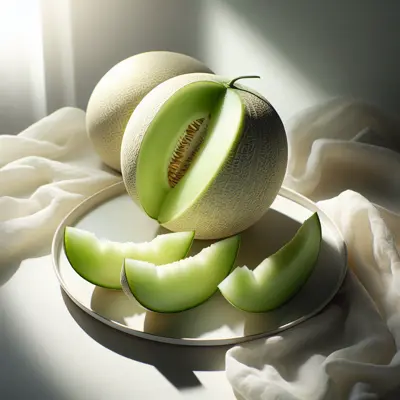
An exceptional honeydew variety that produces consistently sweet, pale green flesh with an incredibly smooth, creamy texture that melts in your mouth. Unlike many honeydews that can be bland, Jade Dew develops remarkable sweetness and a subtle floral aroma when properly ripened. This compact variety is perfect for smaller gardens while still producing full-sized, delicious fruits.
Harvest
85-95d
Days to harvest
Sun
Full sun
Zones
2–11
USDA hardiness
Height
6-9 feet
Planting Timeline
Showing dates for Jade Dew Honeydew in USDA Zone 7
All Zone 7 melon →Zone Map
Click a state to update dates
Jade Dew Honeydew · Zones 2–11
Growing Details
Succession Planting
Jade Dew runs 85–95 days from transplant to harvest, so you won't stack multiple rounds the way you would with a quick crop. One planting per season is the practical plan. Start seeds indoors 3–4 weeks before your last frost date, transplant after soil temps are reliably above 60°F, and you'll have fruit ready to cut in late summer.
If you want to stagger the harvest window, start a second tray 2–3 weeks after the first and transplant those out in late May. The first planting ripens in August, the second in September. Don't push transplants out past early June in most zones — melons need a solid 90-day run of warm weather, and once nights drop below 50°F consistently, fruit on the vine stops ripening and starts cracking.
Complete Growing Guide
Jade Dew's 85-95 day maturity makes it ideal for shorter growing seasons, but timing is critical—start seeds indoors 3-4 weeks before your last frost to maximize productivity before season's end. This compact variety thrives in warm soil (70-80°F) and benefits from consistent moisture without waterlogging, which reduces its tendency toward powdery mildew compared to other honeydews. Unlike standard honeydews, Jade Dew requires patient ripening to develop its signature floral sweetness; harvest only when the blossom end yields slightly to pressure and the skin shows a creamy yellow undertone rather than harvesting at full green maturity. Watch for spider mites in hot, dry conditions, as this cultivar shows moderate susceptibility. A practical tip: train vines vertically on sturdy trellises to improve air circulation, which significantly reduces fungal disease pressure while the smaller fruit size (typically 4-5 pounds) makes vertical growing feasible without excessive structural demands.
Light: Full sun (6 or more hours of direct sunlight a day). Soil: Clay, High Organic Matter, Loam (Silt). Soil pH: Acid (<6.0), Neutral (6.0-8.0). Drainage: Good Drainage, Moist. Height: 6 ft. 0 in. - 9 ft. 0 in.. Spread: 1 ft. 0 in. - 3 ft. 0 in.. Spacing: 12 inches-3 feet. Growth rate: Medium. Maintenance: Medium. Propagation: Seed. Regions: Coastal, Mountains, Piedmont.
Harvesting
Jade Dew honeydews reach peak harvest when the skin transitions from bright green to a pale, creamy yellow-green with a subtle netted pattern, the fruit yields slightly to gentle pressure at the blossom end, and a faint floral aroma becomes noticeable near the stem. Fruits typically weigh 4-5 pounds when mature and should feel heavy for their size. This variety produces a continuous harvest rather than all fruits ripening simultaneously, so plan to pick melons every 2-3 days during peak season once the first fruits mature. A key timing tip: harvest in early morning when temperatures are coolest to maximize the melon's crisp, creamy texture and preserve its delicate floral notes, as afternoon heat can diminish flavor quality.
Musky-scented, spherical to oblong berry with a rind (pepo), often furrowed with yellow, white or green flesh and many seeds. The rind may be green, yellow, tan, beige or white and the surface may be smooth, rough, warty, scaly, or netted. Seeds white, about 1/2 inch long, narrow. Seeds ripen in August and September.
Color: Gold/Yellow, Green, White. Type: Berry. Length: < 1 inch. Width: < 1 inch.
Garden value: Edible, Showy
Harvest time: Fall
Edibility: Eaten fresh, wrapped in prosciutto, in salads, or as a dessert. Watery, but delicate, flavor. Avoid the seeds as the sprouting seed produces a toxic substance in its embryo.
Storage & Preservation
Store freshly harvested Jade Dew melons at room temperature for 3-5 days to allow the flesh to reach optimal softness and texture. Once ripe, refrigerate whole melons for up to one week in the crisper drawer. Cut melon should be wrapped tightly and consumed within 3-4 days for best quality.
For preservation, cube ripe flesh and freeze on parchment-lined trays before transferring to freezer bags – frozen Jade Dew works beautifully in smoothies and agua frescas for up to 6 months. The high sugar content makes it excellent for sorbet and granita. You can also dehydrate thin slices at 135°F for 12-18 hours to create concentrated, chewy fruit leather. Pickled honeydew rind makes an unexpectedly delicious condiment – peel away the outer skin and pickle the white rind with rice vinegar, ginger, and chili flakes for an Asian-inspired preserve that keeps refrigerated for several weeks.
History & Origin
The exact origins of Jade Dew Honeydew remain largely undocumented in published breeding literature, though the variety represents the modern refinement of the inodorus melon class, which includes traditional honeydew cultivars developed throughout the twentieth century. The variety likely emerged from commercial breeding programs focused on improving sweetness and texture in honeydew melons, addressing long-standing consumer complaints about bland flavor in standard cultivars. Its introduction appears connected to specialty seed companies catering to home gardeners seeking superior-tasting melons in compact growing spaces, though the specific breeder and year of introduction are not clearly recorded in accessible horticultural archives.
Origin: Africa, Arabian Peninsula, India, Australia
Advantages
- +Exceptional sweetness and creamy texture distinguish Jade Dew from bland honeydew varieties.
- +Compact plant size makes it ideal for smaller garden spaces and containers.
- +85-95 day maturity provides reliable harvests in moderate growing seasons.
- +Subtle floral aroma and pale green flesh create an premium eating experience.
- +Full-sized fruits develop despite the plant's compact growth habit.
Considerations
- -Susceptible to multiple fungal diseases including powdery and downy mildew.
- -Requires consistent moisture and soil management for optimal sweetness development.
- -Vulnerable to several major pests including cucumber beetles and squash vine borers.
- -Moderate growing difficulty demands more attention than easier melon varieties.
Companion Plants
Basil and French marigolds (Tagetes patula) are the two companions most worth planting near Jade Dew. Basil's volatile oils are said to confuse aphids and thrips — whether that claim holds up under field conditions or not, it tops out at 6–8 inches tall and won't compete for root space or water. The marigolds do something more concrete: their roots release thiophenes that suppress root-knot nematodes in the soil over a full season, and the flowers pull in hoverflies that prey on aphid colonies. Neither one replaces scouting and intervention, but both pull their weight in a tight bed.
Nasturtiums are worth planting at the vine's perimeter because aphids tend to pile onto them before moving to the melons — you get early warning and a concentrated target to knock back with a hard water spray before populations spread. Radishes at the bed edges can slow cucumber beetle pressure and are out of the ground in 25–30 days, well before melon vines need the room.
Cucumbers are the companion to avoid entirely. They share the same Cucurbitaceae family as Jade Dew, which means they host the same diseases — powdery mildew, downy mildew, gummy stem blight — and the same pest pressure from cucumber beetles and vine borers. Planting them together concentrates all of that in one spot. Potatoes are a problem for a different reason: they're aggressive competitors for water at a similar root depth, and they can carry pathogens that move to neighboring crops. Put at least one full bed between them, or better, a different part of the garden entirely.
Plant Together
Basil
Repels aphids and thrips while potentially improving melon flavor
Marigold
Deters cucumber beetles and aphids with strong scent compounds
Nasturtium
Acts as trap crop for squash bugs and cucumber beetles
Radish
Repels cucumber beetles and squash vine borers naturally
Corn
Provides natural windbreak and vertical structure without competing for nutrients
Sunflower
Attracts beneficial insects and provides afternoon shade in hot climates
Oregano
Repels various pests and may enhance overall garden biodiversity
Lettuce
Utilizes different soil depths and can be harvested before melons need full space
Keep Apart
Cucumber
Competes for same nutrients and attracts shared pests like cucumber beetles
Potato
May stunt melon growth and both crops attract similar soil-borne diseases
Aromatic herbs (strong)
Sage and rosemary may inhibit melon germination and early growth
Nutrition Facts
Per 100g serving. % Daily Value based on 2,000 calorie diet. Source: USDA FoodData Central (FDC #2710816)
Pests & Disease Resistance
Resistance
Good resistance to powdery mildew and fusarium wilt
Common Pests
Aphids, cucumber beetles, squash vine borers, thrips
Diseases
Powdery mildew, downy mildew, bacterial fruit blotch, gummy stem blight
Troubleshooting Jade Dew Honeydew
What you'll see, why it happens, and what to do about it.
White powdery coating on upper leaf surfaces, usually spreading from the center of the vine outward, mid to late season
Likely Causes
- Powdery mildew — a fungal disease that thrives in warm, dry days combined with cool nights and poor airflow
- Crowded planting or sprawling vines piled on top of each other blocking air circulation
What to Do
- 1.Remove and bag (don't compost) the worst-affected leaves to slow spread
- 2.Apply a potassium bicarbonate or neem oil spray early in the morning on a dry day — repeat every 7–10 days
- 3.Space plants no closer than 36 inches and train vines so they're not overlapping
Dry, sunken brown or black spot on the blossom end of the fruit — leathery and flat, not fuzzy
Likely Causes
- Blossom-end rot — calcium deficiency in the developing fruit, triggered by inconsistent soil moisture
- Overfertilization with high-nitrogen fertilizers, which drives rapid growth faster than calcium uptake can follow
- Soil pH below 6.5, which limits calcium availability regardless of how much is in the soil
What to Do
- 1.Water consistently — 1 to 2 inches per week — and mulch heavily to buffer soil moisture swings
- 2.Test your soil and lime to bring pH into the 6.5–6.8 range; NC State Extension identifies improper pH as a direct blossom-end rot trigger
- 3.Back off nitrogen fertilizers once vines start running; switch to a lower-N formula at that point
Vines wilting despite adequate water, with small entry holes or sawdust-like frass at the base of the stem
Likely Causes
- Squash vine borer (Melittia cucurbitae) — larvae tunnel into the main stem and feed from the inside out
- Striped or spotted cucumber beetles feeding on stems and foliage, which also vector bacterial wilt
What to Do
- 1.Check the stem base for an entry hole; if you catch it early, slit the stem lengthwise, pull the larva out, and mound damp soil over the cut to encourage re-rooting
- 2.Use row cover from transplant until flowers open to block adult cucumber beetles and vine borer moths — pull it once blooms appear so pollinators can get in
- 3.Rotate cucurbits to a different bed each season to reduce overwintering pest populations
Frequently Asked Questions
How long does Jade Dew honeydew take to grow from seed?▼
Can you grow Jade Dew honeydew in containers?▼
What does Jade Dew honeydew taste like compared to regular honeydew?▼
Is Jade Dew honeydew good for beginner gardeners?▼
When should I plant Jade Dew honeydew seeds?▼
How can I tell when Jade Dew honeydew is ripe?▼
Zone-by-Zone Planting Calendar
| Zone | Indoor Start | Transplant | Direct Sow | Harvest |
|---|---|---|---|---|
| Zone 3 | May – May | June – July | June – August | October – October |
| Zone 4 | April – May | June – June | June – July | September – October |
| Zone 5 | April – April | May – June | May – July | September – October |
| Zone 6 | April – April | May – June | May – July | September – October |
| Zone 7 | March – April | May – May | May – June | August – October |
| Zone 8 | March – March | April – May | April – June | August – September |
| Zone 9 | February – February | March – April | March – May | July – August |
| Zone 10 | January – February | March – March | March – April | June – August |
| Zone 1 | June – June | July – August | July – September | November – August |
| Zone 2 | May – June | July – July | July – August | October – September |
| Zone 11 | January – January | February – February | February – March | May – July |
| Zone 12 | January – January | February – February | February – March | May – July |
| Zone 13 | January – January | February – February | February – March | May – July |
Growing Guides from Wind River Greens
Sources & References
External authority sources used in compiling this guide.
See the Methodology page for how this data is sourced, what's AI-assisted, and known limitations.
More Melons
Charleston Gray Watermelon
Ali Baba Watermelon
Cantaloup Charentais
Watermelon Charleston Gray
Hale's Best Cantaloupe
Cantaloupe Iroquois
Sugar Baby Watermelon
Tiger Baby Watermelon