Galia Melon
Cucumis melo var. reticulatus 'Galia'
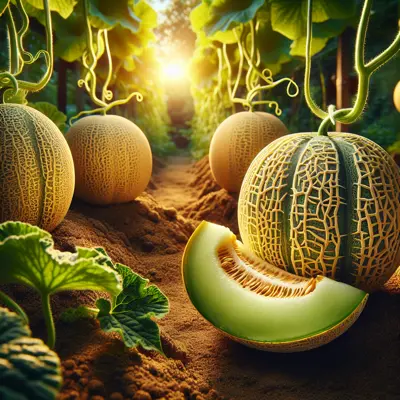
An Israeli-bred hybrid melon that combines the best traits of cantaloupe and honeydew, featuring aromatic pale green flesh with tropical flavor notes. This netted melon has become increasingly popular with home gardeners for its exceptional sweetness, long storage life, and distinctive spicy-sweet aroma. The cream-colored flesh is incredibly juicy and melts in your mouth.
Harvest
85-100d
Days to harvest
Sun
Full sun
Zones
2–11
USDA hardiness
Height
6-9 feet
Planting Timeline
Showing dates for Galia Melon in USDA Zone 7
All Zone 7 melon →Zone Map
Click a state to update dates
Galia Melon · Zones 2–11
Growing Details
Succession Planting
Galia melons aren't a cut-and-come-again crop — each vine sets multiple fruits over the season from a single planting, so there's no real succession cadence here the way there is with lettuce or radishes. Start seeds indoors 3–4 weeks before your last frost date, or direct sow once soil temperatures reach 70°F. One well-timed planting per season is the standard approach.
If you want to push the window, a second direct sowing in early June can work in zones 7–8, but you're betting that fruit will size up before nights drop below 50°F in October. At 85–100 days to harvest, a June 10 sowing puts you at fruit in late September to mid-October — tight, but a warm fall makes it doable.
Complete Growing Guide
Galia melons demand warmth and patience—wait until soil reaches 70°F before direct seeding, as this hybrid germinates poorly in cool conditions and will rot if planted too early. Space vines 4-6 feet apart in full sun with well-draining soil rich in organic matter, since Galias are heavy feeders that benefit from consistent moisture without waterlogging. This cultivar shows particular susceptibility to powdery mildew and fusarium wilt in humid climates, so provide excellent air circulation and avoid overhead watering. Unlike some melons, Galias won't slip from the vine when ripe; instead, check for a cream-colored skin tone and slight softness at the blossom end, typically around day 90-95. One essential practice: thin fruit to one melon per vine section once they reach golf-ball size—Galias produce fewer fruits than other varieties, but removing competitors ensures the exceptional sweetness and juiciness this Israeli hybrid is prized for.
Light: Full sun (6 or more hours of direct sunlight a day). Soil: Clay, High Organic Matter, Loam (Silt). Soil pH: Acid (<6.0), Neutral (6.0-8.0). Drainage: Good Drainage, Moist. Height: 6 ft. 0 in. - 9 ft. 0 in.. Spread: 1 ft. 0 in. - 3 ft. 0 in.. Spacing: 12 inches-3 feet. Growth rate: Medium. Maintenance: Medium. Propagation: Seed. Regions: Coastal, Mountains, Piedmont.
Harvesting
Galia melons reach peak harvest readiness when the netted rind transitions from green to a warm tan or beige color, typically around 85-100 days after planting. The melon should feel slightly soft when gently pressed at the blossom end, and a ripe fruit will slip easily from the vine with minimal resistance. Unlike some melons that produce continuously, Galia plants yield a concentrated harvest, so plan accordingly and check vines every 2-3 days during peak season. The most reliable timing indicator is the distinctive spicy-sweet aroma that intensifies as the fruit matures—when the fragrance becomes noticeably perfumed, harvest immediately, as this signals optimal sweetness and the fruit will not improve further on the vine.
Musky-scented, spherical to oblong berry with a rind (pepo), often furrowed with yellow, white or green flesh and many seeds. The rind may be green, yellow, tan, beige or white and the surface may be smooth, rough, warty, scaly, or netted. Seeds white, about 1/2 inch long, narrow. Seeds ripen in August and September.
Color: Gold/Yellow, Green, White. Type: Berry. Length: < 1 inch. Width: < 1 inch.
Garden value: Edible, Showy
Harvest time: Fall
Edibility: Eaten fresh, wrapped in prosciutto, in salads, or as a dessert. Watery, but delicate, flavor. Avoid the seeds as the sprouting seed produces a toxic substance in its embryo.
Storage & Preservation
Freshly harvested Galia melons continue ripening at room temperature for 2-3 days if needed, developing their full aromatic intensity. Once fully ripe, refrigerate whole melons in the crisper drawer where they'll maintain quality for 5-7 days. Cut melon should be wrapped tightly and consumed within 3 days.
For preservation, cube the flesh and freeze on baking sheets before transferring to freezer bags — frozen Galia melon works beautifully in smoothies and maintains its tropical flavor for 8-10 months. The high water content makes traditional canning unsuitable, but you can make excellent melon preserves or jams by combining with pectin and lemon juice. Dehydrating thin slices at 135°F creates intensely sweet fruit leather with concentrated flavor, though the texture differs significantly from fresh fruit.
History & Origin
Developed in Israel during the 1970s, the Galia melon emerged from deliberate breeding efforts to combine the aromatic qualities of cantaloupe with the pale green flesh and sweetness of honeydew. While specific breeder attribution remains undocumented in widely accessible sources, the variety gained prominence through Israeli agricultural research and seed production, eventually becoming a commercial success across Mediterranean and temperate growing regions. The Galia represents a significant achievement in melon hybridization, introducing the netted-skin characteristic typical of cantaloupe varieties while maintaining the distinctive tropical flavor profile and extended storage capability that distinguishes it from its parent types.
Origin: Africa, Arabian Peninsula, India, Australia
Advantages
- +Exceptional sweetness and tropical flavor notes distinguish Galia from standard cantaloupe varieties.
- +Pale green flesh remains juicy and tender with an impressive melting texture.
- +Israeli hybrid breeding combines best traits of cantaloupe and honeydew melons.
- +Extended storage life allows weeks of freshness after harvest.
- +Distinctive spicy-sweet aroma adds sensory appeal beyond typical melon varieties.
Considerations
- -Moderate difficulty requires consistent watering and soil management for success.
- -Susceptible to fusarium wilt and bacterial wilt causing sudden plant death.
- -Multiple pests including cucumber beetles, aphids, and thrips require regular monitoring.
- -85-100 day maturity demands long warm growing season unsuitable for short climates.
Companion Plants
Basil and French marigolds (Tagetes patula) are the two companions most worth planting near Galia melons. Basil produces volatile compounds thought to disorient aphids and thrips — both pests that show up reliably on melon foliage — though the field evidence is inconsistent enough that I'd call it a bonus rather than a strategy. Marigolds have better-documented support: NC State Extension's IPM case study on cucurbits recommends a solid planting of French marigolds in nematode-affected beds before returning susceptible crops. A border of them around your melon patch pulls weight in multiple directions.
Nasturtiums are worth planting at the edges — they draw aphids away from the main crop and pull in predatory insects at the same time. Radishes nearby can reduce pressure from cucumber beetles, which matters more for Galia than most people realize: beetles vector bacterial wilt (Erwinia tracheiphila), and once a plant wilts from it, it's done. There's no treatment. Anything that keeps beetle counts down is worth the bed space.
Skip cucumbers as a neighbor entirely. They share Pseudoperonospora cubensis, fusarium wilt, and the same cucumber beetle population, so you're just giving those problems two adjacent hosts to cycle between. NC State Extension points out that diversified plantings suffer fewer disease problems precisely because a single pathogen can't sweep through a uniform block of related crops — and cucumbers and Galia are about as related as it gets in the garden. Potatoes create a different kind of problem: similar rooting depth means they'll compete directly for water during the period when melons need the most consistent moisture to size up properly.
Plant Together
Basil
Repels aphids and whiteflies, may improve flavor
Marigold
Deters cucumber beetles and aphids with natural compounds
Nasturtium
Acts as trap crop for squash bugs and cucumber beetles
Radish
Repels cucumber beetles and squash vine borers
Sunflower
Provides beneficial shade and attracts pollinators
Corn
Offers natural windbreak and climbing support without competing for nutrients
Bush Beans
Fix nitrogen in soil and don't compete for space
Oregano
Repels pests and attracts beneficial insects
Keep Apart
Cucumber
Competes for same nutrients and attracts similar pests like cucumber beetles
Potato
May stunt melon growth and both are susceptible to similar diseases
Aromatic herbs (strong)
Strong scents from sage or rosemary can inhibit melon growth
Nutrition Facts
Per 100g serving. % Daily Value based on 2,000 calorie diet. Source: USDA FoodData Central (FDC #167765)
Pests & Disease Resistance
Resistance
Good resistance to powdery mildew and aphids
Common Pests
Cucumber beetles, aphids, thrips
Diseases
Downy mildew, fusarium wilt, bacterial wilt
Troubleshooting Galia Melon
What you'll see, why it happens, and what to do about it.
Dark, sunken, dry spot on the blossom end of the fruit, sometimes with mold growing on the rotted area
Likely Causes
- Blossom-end rot — calcium deficiency in the developing fruit, usually triggered by uneven soil moisture rather than a true lack of calcium in the soil
- Overfertilization with high-nitrogen fertilizers causing rapid, uneven growth
- Soil pH outside the 6.5–7.5 range limiting calcium uptake
What to Do
- 1.Mulch 3–4 inches deep with straw to buffer soil moisture swings, and water consistently to 1–1.5 inches per week
- 2.Back off nitrogen-heavy fertilizers once vines are running — excess nitrogen pushes leafy growth at the expense of fruit development
- 3.Test your soil pH and lime to 6.5–6.8 if needed; NC State Extension recommends this as a primary fix before reaching for calcium sprays, which they note are not very effective
Yellow, angular patches on upper leaf surfaces with gray-purple fuzzy growth on the undersides, spreading fast across the planting
Likely Causes
- Downy mildew (Pseudoperonospora cubensis) — a water mold that moves through the air and thrives in humid, wet conditions
- Overcrowded vines trapping moisture and limiting airflow
What to Do
- 1.Pull and trash (don't compost) heavily infected leaves as soon as you spot them — this slows spread but won't stop it once established
- 2.Train vines on a trellis or keep plants at least 36 inches apart so air moves through freely
- 3.Rotate this bed out of all cucurbits — cucumber, squash, watermelon — for at least 2 seasons; NC State Extension's IPM notes on cucurbits list rotation as the primary cultural tool against recurring downy mildew pressure
Frequently Asked Questions
How long does Galia melon take to grow from seed?▼
Can you grow Galia melons in containers?▼
What does Galia melon taste like compared to cantaloupe?▼
Is Galia melon good for beginners?▼
When should I plant Galia melon seeds?▼
How do you know when Galia melon is ripe?▼
Zone-by-Zone Planting Calendar
| Zone | Indoor Start | Transplant | Direct Sow | Harvest |
|---|---|---|---|---|
| Zone 3 | May – May | June – July | June – August | October – October |
| Zone 4 | April – May | June – June | June – July | September – October |
| Zone 5 | April – April | May – June | May – July | September – October |
| Zone 6 | April – April | May – June | May – July | September – October |
| Zone 7 | March – April | May – May | May – June | August – October |
| Zone 8 | March – March | April – May | April – June | August – September |
| Zone 9 | February – February | March – April | March – May | July – August |
| Zone 10 | January – February | March – March | March – April | June – August |
| Zone 1 | June – June | July – August | July – September | November – August |
| Zone 2 | May – June | July – July | July – August | October – September |
| Zone 11 | January – January | February – February | February – March | May – July |
| Zone 12 | January – January | February – February | February – March | May – July |
| Zone 13 | January – January | February – February | February – March | May – July |
Growing Guides from Wind River Greens
Sources & References
External authority sources used in compiling this guide.
See the Methodology page for how this data is sourced, what's AI-assisted, and known limitations.
More Melons
Charleston Gray Watermelon
Ali Baba Watermelon
Cantaloup Charentais
Watermelon Charleston Gray
Hale's Best Cantaloupe
Cantaloupe Iroquois
Sugar Baby Watermelon
Tiger Baby Watermelon