Burpee Hybrid Cantaloupe
Cucumis melo var. cantalupensis 'Burpee Hybrid'
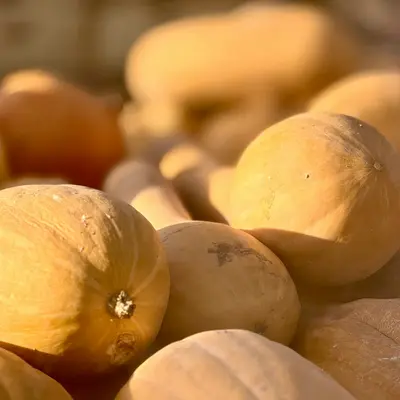
A reliable and productive hybrid cantaloupe that consistently delivers sweet, aromatic melons even in challenging growing conditions. This variety was specifically bred for home gardeners, offering excellent disease resistance and uniform fruit production. The thick, sweet orange flesh and classic netted rind make it a standout choice for beginners and experienced growers alike.
Harvest
80-85d
Days to harvest
Sun
Full sun
Zones
2–11
USDA hardiness
Height
6-9 feet
Planting Timeline
Showing dates for Burpee Hybrid Cantaloupe in USDA Zone 7
All Zone 7 melon →Zone Map
Click a state to update dates
Burpee Hybrid Cantaloupe · Zones 2–11
Growing Details
Succession Planting
Cantaloupe is a one-time fruiting crop per plant — the vine sets fruit, you harvest it, and that's the season. Succession sowing doesn't buy you much here the way it does with lettuce or beans. Start seeds indoors 3-4 weeks before your last frost date, or direct sow after soil temps hit 65°F. In zone 7, that means direct sowing from late May into early June at the latest; plants need 80-85 days to harvest, so anything going in the ground after mid-June is racing the first fall frost.
Complete Growing Guide
For optimal results with Burpee Hybrid Cantaloupe, plant seeds directly in warm soil after the last frost when temperatures consistently exceed 70°F, as this hybrid germinates poorly in cool conditions and requires the full 80-85 day window to reach peak sweetness. Unlike heirloom varieties, this cultivar's uniform fruit production means all melons mature nearly simultaneously, so stagger plantings two weeks apart for continuous harvest rather than facing a sudden glut. Plant in rich, well-draining soil with consistent moisture—this hybrid is prone to splitting if watering becomes irregular—and provide full sun with good air circulation to minimize powdery mildew, which this variety is otherwise resistant to. The vigorous 6-9 foot vines benefit from strategic pruning of secondary runners to direct energy into fruit rather than excessive foliage, and a practical tip is to place straw mulch directly under developing fruits to prevent soil-borne rot while keeping the plant's root zone cooler during heat spikes.
Light: Full sun (6 or more hours of direct sunlight a day). Soil: Clay, High Organic Matter, Loam (Silt). Soil pH: Acid (<6.0), Neutral (6.0-8.0). Drainage: Good Drainage, Moist. Height: 6 ft. 0 in. - 9 ft. 0 in.. Spread: 1 ft. 0 in. - 3 ft. 0 in.. Spacing: 12 inches-3 feet. Growth rate: Medium. Maintenance: Medium. Propagation: Seed. Regions: Coastal, Mountains, Piedmont.
Harvesting
Burpee Hybrid Cantaloupes reach peak ripeness when the netted rind develops a golden-tan background color beneath the netting, the fruit reaches 4-5 inches in diameter, and gentle pressure near the blossom end yields slightly to touch without feeling mushy. Harvest when the melon slips easily from the vine with a gentle twist—this abscission layer is the most reliable indicator of maturity for this cultivar. Rather than a single harvest, these plants produce continuously throughout the season, so check vines every 2-3 days during peak production. A crucial timing tip: pick melons in early morning when temperatures are cool to maximize sweetness and shelf life, as sugars concentrate overnight and the fruit maintains better quality when harvested before heat stress.
Musky-scented, spherical to oblong berry with a rind (pepo), often furrowed with yellow, white or green flesh and many seeds. The rind may be green, yellow, tan, beige or white and the surface may be smooth, rough, warty, scaly, or netted. Seeds white, about 1/2 inch long, narrow. Seeds ripen in August and September.
Color: Gold/Yellow, Green, White. Type: Berry. Length: < 1 inch. Width: < 1 inch.
Garden value: Edible, Showy
Harvest time: Fall
Edibility: Eaten fresh, wrapped in prosciutto, in salads, or as a dessert. Watery, but delicate, flavor. Avoid the seeds as the sprouting seed produces a toxic substance in its embryo.
Storage & Preservation
Fresh Burpee Hybrid Cantaloupe keeps best at room temperature for 2-3 days to complete ripening, then refrigerate for up to one week. Store cut pieces in airtight containers in the refrigerator for 3-4 days maximum. The ideal storage temperature is 36-40°F with 95% humidity.
For preservation, freeze cubed cantaloupe on baking sheets, then transfer to freezer bags for up to 8 months - perfect for smoothies though texture changes make it unsuitable for fresh eating. Dehydrate thin slices at 135°F for 8-12 hours to create concentrated fruit leather or dried snacks. You can also preserve cantaloupe in light syrup using a water bath canning method, though the texture becomes soft and is best used for dessert applications. Cantaloupe makes excellent jam when combined with lemon juice and pectin.
History & Origin
Developed by the W. Atlee Burpee Company in the mid-twentieth century, this hybrid cantaloupe represents the seed company's commitment to breeding melons suited for American home gardeners rather than commercial growers. While specific breeder names and exact development dates remain undocumented in widely available horticultural records, the variety emerged from Burpee's broader hybrid melon breeding program that crossed traditional open-pollinated cantaloupes to enhance disease resistance and fruit uniformity. The hybrid designation reflects crossing between parent varieties selected for complementary traits—vigor, sweetness, and adaptability to variable growing conditions. This cultivar exemplifies the post-World War II era of vegetable breeding when American seed companies invested heavily in home garden varieties with improved reliability and yield potential.
Origin: Africa, Arabian Peninsula, India, Australia
Advantages
- +Specifically bred for home gardeners with excellent disease resistance
- +Consistently delivers sweet, aromatic melons even in challenging growing conditions
- +Reliable and productive hybrid with uniform fruit production
- +Matures in 80-85 days, ideal for shorter growing seasons
- +Thick, sweet orange flesh with classic netted rind appeals to beginners
Considerations
- -Vulnerable to multiple diseases including downy mildew and powdery mildew
- -Susceptible to common pests like cucumber beetles and squash bugs
- -Requires moderate difficulty level and consistent care for best results
Companion Plants
Basil and French marigolds are worth the most attention here. Basil's volatile oils may interfere with aphid and cucumber beetle orientation, and marigold roots actively suppress root-knot nematodes (Meloidogyne spp.) — NC State Extension recommends solid marigold plantings as a cultural tool in nematode-infested beds, which matters because cucurbits are susceptible hosts. Nasturtiums pull aphids off the melon vines onto themselves, buying you time before populations get out of hand. Keep cucumbers out of the same bed entirely — they share bacterial wilt (Erwinia tracheiphila) and downy mildew vectors, so putting them together concentrates pressure on both crops at once. Sage can inhibit root development in nearby cucurbits, so leave at least 4-6 feet between them.
Plant Together
Basil
Repels aphids, whiteflies, and cucumber beetles while potentially enhancing flavor
Nasturtiums
Acts as trap crop for cucumber beetles and aphids, deters squash bugs
Radishes
Repels cucumber beetles and squash borers, matures quickly without competing
Marigolds
Deters nematodes, aphids, and cucumber beetles with natural compounds
Sunflowers
Provides beneficial shade and attracts pollinators essential for melon fruit set
Bush Beans
Fixes nitrogen in soil to benefit heavy-feeding melons
Oregano
Repels cucumber beetles and provides ground cover to retain soil moisture
Corn
Provides natural windbreak and vertical space utilization without root competition
Keep Apart
Cucumbers
Shares same pests and diseases, increases risk of bacterial wilt and cucumber beetles
Aromatic Herbs (Sage)
Strong oils can inhibit melon growth and development
Potatoes
Competes for nutrients and space, different watering needs can stress melons
Nutrition Facts
Per 100g serving. % Daily Value based on 2,000 calorie diet. Source: USDA FoodData Central (FDC #169092)
Pests & Disease Resistance
Resistance
Good resistance to fusarium wilt and powdery mildew
Common Pests
Cucumber beetles, aphids, squash bugs, spider mites
Diseases
Bacterial wilt, downy mildew, anthracnose, powdery mildew
Troubleshooting Burpee Hybrid Cantaloupe
What you'll see, why it happens, and what to do about it.
Vines wilting suddenly and collapsing — even well-watered plants — around 3-4 weeks after transplant
Likely Causes
- Bacterial wilt (Erwinia tracheiphila), spread by cucumber beetles feeding on stems and leaves
- Heavy cucumber beetle pressure at the cotyledon stage before plants are established
What to Do
- 1.Cut a wilted stem near the base, touch both cut ends together and pull apart slowly — if you see sticky threads, it's bacterial wilt; pull and trash those plants immediately, roots and all
- 2.Use wire or cloth cone protectors over seedlings at transplant to block cucumber beetle feeding until vines are established
- 3.At the cotyledon stage, apply a foliar insecticide per the NC Agricultural Chemicals Manual to knock back beetle populations before they spread the disease — once wilt is in a plant, there's no saving it
Dark, sunken, water-soaked spot on the blossom end of developing fruit
Likely Causes
- Blossom-end rot — calcium fails to reach developing fruit when soil moisture swings widely, even if calcium levels in the soil are fine
- Excessive nitrogen fertilization pushing rapid early growth, or alternating wet-dry cycles after a dry stretch
What to Do
- 1.Lay 3-4 inches of straw mulch around the base to buffer soil moisture between rains and waterings
- 2.Water deeply at soil level — 1-2 inches per week — on a consistent schedule rather than letting the top few inches bake dry between irregular sessions
- 3.Back off high-nitrogen fertilizers once vines start running; NC State Extension notes that overfertilizing with nitrogen drives leafy growth at the expense of calcium uptake in the fruit
Frequently Asked Questions
How long does Burpee Hybrid Cantaloupe take to grow from seed?▼
Can you grow Burpee Hybrid Cantaloupe in containers?▼
Is Burpee Hybrid Cantaloupe good for beginners?▼
What does Burpee Hybrid Cantaloupe taste like?▼
When should I plant Burpee Hybrid Cantaloupe seeds?▼
How much space does Burpee Hybrid Cantaloupe need?▼
Zone-by-Zone Planting Calendar
| Zone | Indoor Start | Transplant | Direct Sow | Harvest |
|---|---|---|---|---|
| Zone 1 | June – June | July – August | July – September | October – August |
| Zone 2 | May – June | July – July | July – August | October – September |
| Zone 11 | January – January | February – February | February – March | May – June |
| Zone 12 | January – January | February – February | February – March | May – June |
| Zone 13 | January – January | February – February | February – March | May – June |
| Zone 3 | May – May | June – July | June – August | September – October |
| Zone 4 | April – May | June – June | June – July | September – October |
| Zone 5 | April – April | May – June | May – July | September – October |
| Zone 6 | April – April | May – June | May – July | August – October |
| Zone 7 | March – April | May – May | May – June | August – September |
| Zone 8 | March – March | April – May | April – June | July – September |
| Zone 9 | February – February | March – April | March – May | June – August |
| Zone 10 | January – February | March – March | March – April | June – July |
Growing Guides from Wind River Greens
Sources & References
External authority sources used in compiling this guide.
See the Methodology page for how this data is sourced, what's AI-assisted, and known limitations.
More Melons
Charleston Gray Watermelon
Ali Baba Watermelon
Cantaloup Charentais
Watermelon Charleston Gray
Hale's Best Cantaloupe
Cantaloupe Iroquois
Sugar Baby Watermelon
Tiger Baby Watermelon