Ambrosia Cantaloupe
Cucumis melo var. cantalupensis 'Ambrosia'
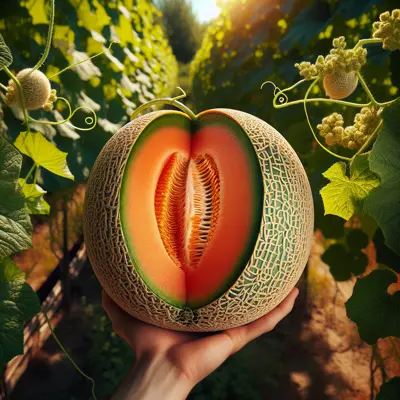
A premium hybrid cantaloupe that lives up to its heavenly name with exceptionally sweet, aromatic flesh and reliable production. Known for its thick, salmon-orange flesh and high sugar content, this variety consistently produces perfectly round melons with excellent shelf life. Ambrosia combines the best traits of heirloom flavor with modern hybrid vigor and disease resistance.
Harvest
86-90d
Days to harvest
Sun
Full sun
Zones
2–11
USDA hardiness
Height
6-9 feet
Planting Timeline
Showing dates for Ambrosia Cantaloupe in USDA Zone 7
All Zone 7 melon →Zone Map
Click a state to update dates
Ambrosia Cantaloupe · Zones 2–11
Growing Details
Succession Planting
Ambrosia is a single-harvest vine crop — each plant sets fruit once and that's the season, so traditional succession planting doesn't really apply. What you can plan instead is a staggered transplant schedule: start one tray of seeds indoors in late March and a second tray in mid-April, then put the first batch in the ground in early May and the second around May 20th. At 86–90 days to harvest, that spacing gives you two loose harvest windows rather than everything ripening the same week in August.
Don't transplant after late May in zone 7. Melons started after that point run straight into Georgia's August heat and humidity peak right when they're trying to size up and cure — daytime highs consistently above 95°F during fruit set drive poor sugar development and increase the odds of cracking before you can pick.
Complete Growing Guide
Plant Ambrosia in full sun with rich, well-draining soil amended with compost, as this hybrid demands consistent nitrogen for vigorous vine development across its 6-9 foot spread. Unlike standard cantaloupes, Ambrosia's high sugar content attracts spider mites and aphids more aggressively, so monitor undersides of leaves weekly and consider preventative neem applications starting at flowering. The variety's 86-90 day maturity requires warm soil—wait until temperatures consistently exceed 70°F before direct seeding, or start indoors 3-4 weeks prior. Provide steady moisture without waterlogging, particularly during fruit set and enlargement stages, since irregular watering cracks this cultivar's netted rind. A practical tip: thin vines to 2-3 main runners and hand-pollinate flowers with a small brush during early bloom to guarantee the heavy fruit set this hybrid is capable of producing, ensuring those signature sweet, salmon-orange melons reach full potential.
Light: Full sun (6 or more hours of direct sunlight a day). Soil: Clay, High Organic Matter, Loam (Silt). Soil pH: Acid (<6.0), Neutral (6.0-8.0). Drainage: Good Drainage, Moist. Height: 6 ft. 0 in. - 9 ft. 0 in.. Spread: 1 ft. 0 in. - 3 ft. 0 in.. Spacing: 12 inches-3 feet. Growth rate: Medium. Maintenance: Medium. Propagation: Seed. Regions: Coastal, Mountains, Piedmont.
Harvesting
Ambrosia cantaloupes reach peak harvest readiness when the skin transitions from green to a light tan or beige netted pattern, the melon feels heavy for its size, and a sweet, musky aroma emanates from the blossom end. The fruit should yield slightly to gentle pressure at the stem end when fully ripe. These melons are typically harvested at the full-slip stage, meaning the stem separates cleanly from the vine with minimal pressure—a reliable indicator specific to this cultivar. Unlike indeterminate varieties, Ambrosia follows a concentrated production pattern, so plan to harvest every two to three days during peak season rather than expecting continuous fruiting. For optimal sweetness, pick melons in early morning when temperatures are cool, as sugars are highest after the night's rest.
Musky-scented, spherical to oblong berry with a rind (pepo), often furrowed with yellow, white or green flesh and many seeds. The rind may be green, yellow, tan, beige or white and the surface may be smooth, rough, warty, scaly, or netted. Seeds white, about 1/2 inch long, narrow. Seeds ripen in August and September.
Color: Gold/Yellow, Green, White. Type: Berry. Length: < 1 inch. Width: < 1 inch.
Garden value: Edible, Showy
Harvest time: Fall
Edibility: Eaten fresh, wrapped in prosciutto, in salads, or as a dessert. Watery, but delicate, flavor. Avoid the seeds as the sprouting seed produces a toxic substance in its embryo.
Storage & Preservation
Store freshly harvested Ambrosia melons at room temperature for 3-5 days to allow full flavor development, then refrigerate for up to one week. Keep whole melons in the crisper drawer at 36-40°F with moderate humidity. Once cut, wrap tightly in plastic wrap and use within 3-4 days.
For preservation, cut flesh into cubes and freeze on baking sheets before transferring to freezer bags – frozen Ambrosia works excellently in smoothies and maintains its sweet flavor for 8-10 months. Dehydrate thin slices at 135°F for 8-12 hours to create concentrated, chewy fruit leather. The high sugar content makes Ambrosia perfect for agua fresca concentrate – puree flesh with lime juice and freeze in ice cube trays for instant summer drinks. Avoid canning due to low acidity levels.
History & Origin
The Ambrosia cantaloupe emerged as a modern hybrid cultivar developed to combine the intensely sweet, aromatic qualities prized in heirloom varieties with the disease resistance and vigorous production of contemporary breeding lines. While specific breeder attribution and introduction year remain difficult to document with certainty, Ambrosia represents the broader advancement in melon breeding that gained momentum in the late twentieth century, when seed companies prioritized hybrid vigor alongside flavor recovery. The variety's development likely drew from North American cantaloupe germplasm, building on decades of breeding work focused on increasing sugar content and shelf life while maintaining the aromatic character that distinguishes superior cantaloupes. Its consistent round shape and thick orange flesh reflect deliberate selection within established breeding programs, though precise genealogical records specific to Ambrosia's origin are not widely published in accessible horticultural literature.
Origin: Africa, Arabian Peninsula, India, Australia
Advantages
- +Exceptionally sweet and aromatic flesh rivals expensive heirloom cantaloupe varieties
- +Thick salmon-orange flesh with creamy texture provides premium eating experience
- +Reliable production with excellent shelf life suitable for home storage
- +Modern hybrid vigor ensures disease resistance better than older cantaloupe varieties
- +Consistently produces perfectly round melons with attractive appearance and marketability
Considerations
- -Susceptible to bacterial wilt spread by cucumber beetles requiring vigilant pest management
- -Requires moderate growing difficulty with attention to watering and nutrition needs
- -Multiple disease vulnerabilities including downy mildew and anthracnose in humid conditions
- -High pest pressure from cucumber beetles, aphids, spider mites demands regular monitoring
Companion Plants
Marigolds — French marigolds specifically — are worth planting at the bed edges. NC State Extension recommends a solid planting of them as a remediation crop in beds with root-knot nematode history, which is a real concern for cucurbits in heavy Georgia clay. Nasturtiums earn space in this bed too: they act as a trap crop for aphids, pulling them off the melon foliage and concentrating them somewhere you can actually deal with them. Basil's volatile oils may give aphids and thrips some confusion, and at 12–18 inches tall it tucks neatly between vines without competing for light.
Fennel is genuinely allelopathic — its root exudates stunt most vegetables within a few feet, melons included, so keep it out of this bed entirely. Cucumbers are a different kind of problem: they share the same bacterial wilt vectors and downy mildew pressure as Ambrosia, and in our zone 7 Georgia garden, grouping them together just turns that corner of the plot into a cucumber beetle magnet. Spread them out by at least 20–30 feet if your layout allows.
Plant Together
Basil
Repels aphids and whiteflies, may improve flavor
Marigolds
Deters cucumber beetles and aphids with strong scent
Nasturtiums
Acts as trap crop for cucumber beetles and squash bugs
Radishes
Deters cucumber beetles and vine borers, quick harvest clears space
Sunflowers
Provides vertical support for vining melons and attracts beneficial insects
Corn
Offers natural trellis support and shade protection
Oregano
Repels ants and cucumber beetles while attracting beneficial insects
Beans
Fix nitrogen in soil and provide ground cover without competing for nutrients
Keep Apart
Cucumber
Shares same pests and diseases, increases risk of cucumber beetle damage
Aromatic herbs (sage, rosemary)
Strong oils can inhibit melon seed germination and growth
Fennel
Allelopathic compounds inhibit growth of most garden plants including melons
Nutrition Facts
Per 100g serving. % Daily Value based on 2,000 calorie diet. Source: USDA FoodData Central (FDC #169092)
Pests & Disease Resistance
Resistance
Resistant to fusarium wilt races 0 and 2, powdery mildew
Common Pests
Cucumber beetles, aphids, spider mites, squash bugs
Diseases
Bacterial wilt, downy mildew, anthracnose, alternaria leaf spot
Troubleshooting Ambrosia Cantaloupe
What you'll see, why it happens, and what to do about it.
Seedlings or young transplants wilting suddenly and collapsing, even with adequate water — vines die fast, often within a few days
Likely Causes
- Bacterial wilt (Erwinia tracheiphila) — transmitted by cucumber beetles feeding on leaves
- High cucumber beetle pressure at the cotyledon or early true-leaf stage, before plants are established
What to Do
- 1.Cover young plants with row cover or wire-and-cloth cone protectors immediately after transplanting; remove when vines start to flower and need pollination
- 2.Scout daily for striped or spotted cucumber beetles — per NC State Extension's IPM guidance, a foliar insecticide applied at the cotyledon stage can retard beetle feeding and slow bacterial wilt spread if beetle pressure is heavy
- 3.Pull and bag any wilted plants entirely; the bacterium persists in beetle guts, not the soil, but leaving infected vines around gives beetles more chances to spread it
Sunken, dry, tan-to-brown rotted patch on the blossom end of developing fruit — flesh underneath is firm and edible but the spot keeps expanding
Likely Causes
- Blossom-end rot — calcium deficiency in the developing fruit caused by uneven soil moisture, not a shortage of calcium in the soil itself
- Overfertilizing with high-nitrogen fertilizers, which drives rapid foliar growth at the expense of calcium uptake
- Soil pH outside the 6.0–6.8 range, limiting calcium availability
What to Do
- 1.Mulch heavily with straw — 3 to 4 inches — and water consistently at 1 to 2 inches per week; NC State Extension notes that fluctuating moisture is the primary trigger
- 2.Back off nitrogen-heavy fertilizers once vines are running; switch to a lower-nitrogen formula or side-dress lightly with compost instead
- 3.Pull a soil test; if pH is below 6.5, lime the bed this fall so it has time to work before next season's planting
Frequently Asked Questions
How long does Ambrosia cantaloupe take to grow from seed to harvest?▼
Can you grow Ambrosia cantaloupe in containers?▼
What does Ambrosia cantaloupe taste like compared to store-bought melons?▼
Is Ambrosia cantaloupe good for beginner gardeners?▼
When should I plant Ambrosia cantaloupe seeds?▼
How do I know when Ambrosia cantaloupe is perfectly ripe?▼
Zone-by-Zone Planting Calendar
| Zone | Indoor Start | Transplant | Direct Sow | Harvest |
|---|---|---|---|---|
| Zone 3 | May – May | June – July | June – August | September – October |
| Zone 4 | April – May | June – June | June – July | September – October |
| Zone 5 | April – April | May – June | May – July | September – October |
| Zone 6 | April – April | May – June | May – July | August – October |
| Zone 7 | March – April | May – May | May – June | August – September |
| Zone 8 | March – March | April – May | April – June | July – September |
| Zone 9 | February – February | March – April | March – May | June – August |
| Zone 10 | January – February | March – March | March – April | June – July |
| Zone 1 | June – June | July – August | July – September | October – August |
| Zone 2 | May – June | July – July | July – August | October – September |
| Zone 11 | January – January | February – February | February – March | May – June |
| Zone 12 | January – January | February – February | February – March | May – June |
| Zone 13 | January – January | February – February | February – March | May – June |
Growing Guides from Wind River Greens
Sources & References
External authority sources used in compiling this guide.
See the Methodology page for how this data is sourced, what's AI-assisted, and known limitations.
More Melons
Charleston Gray Watermelon
Ali Baba Watermelon
Cantaloup Charentais
Watermelon Charleston Gray
Hale's Best Cantaloupe
Cantaloupe Iroquois
Sugar Baby Watermelon
Tiger Baby Watermelon